
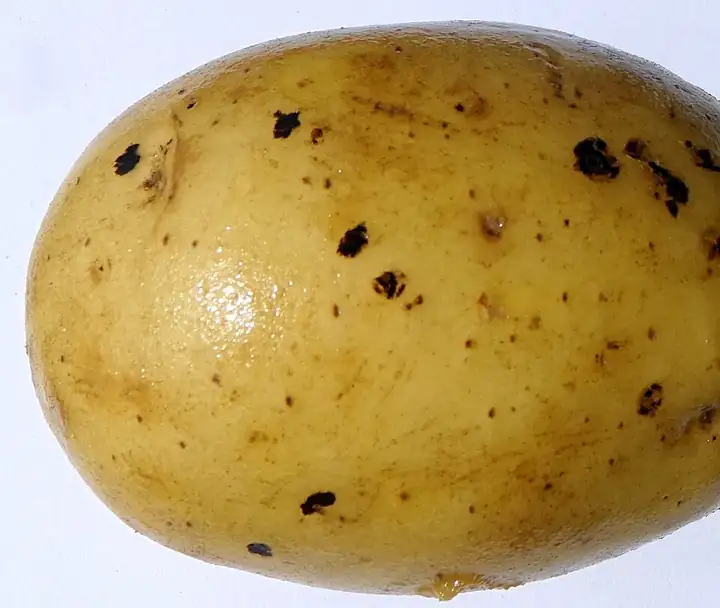
Black scurf and Rhizoctonia canker
Fungus (Rhizoctonia solani)
| Type | Fungus |
|---|---|
| Cause | Fungus (Rhizoctonia solani) |
| When | Sprout damage in the weeks after planting; skin spots at harvest. |
About
A soil fungus that marks potato skins with black crusty spots and can damage young sprouts and stems. The spots are cosmetic, but sprout damage means slow, patchy, weak plants.
Also called black scurf, Rhizoctonia canker, Rhizoctonia stem canker, Rhizoctonia black scurf
How to recognize it
Symptoms
Tubers get hard, black, raised specks on the skin that look like dirt that won't wash off; the flesh underneath is fine. Underground sprouts, stems and stolons get reddish-brown sunken lesions that can kill sprouts or girdle stems, and a grayish-white powdery coating may form on stems at the soil line. Badly hit plants may roll and redden their leaves and form small green tubers above ground.
Worse when
Cold, wet soil after planting, which slows sprouts while the fungus keeps growing; leaving tubers in the ground long after the vines die makes black scurf worse.
How it spreads
Black specks (sclerotia) on seed potatoes and in soil carry the fungus over winter and into new plantings.
When
Sprout damage in the weeks after planting; skin spots at harvest.
What to do, gentlest first
Prevention works best; most sprays only protect healthy leaves and can't cure infected ones. Always read and follow the product label.
Clean certified seed potatoes Prevent
Plant certified seed potatoes with few or no black specks.
Plant shallow into warm soil Prevent
Wait until the soil warms, plant shallowly so sprouts come up fast, and hill soil up gradually after they emerge. Choose well-drained soil and don't overwater.
Rotate Prevent
Don't grow potatoes in the same spot every year; a rotation of about three years helps.
Dig on time and clean up By hand
Harvest once the crop matures instead of leaving tubers in the ground for weeks, and remove plant leftovers after harvest.
Plants it affects
Sources
Photo: Photo: Jerzy Opioła / Wikimedia Commons, CC BY-SA 4.0 (CC BY-SA 4.0). Photo resized for the web.

Planting dates and advice are general guidance; check with your local Cooperative Extension office for your area.