
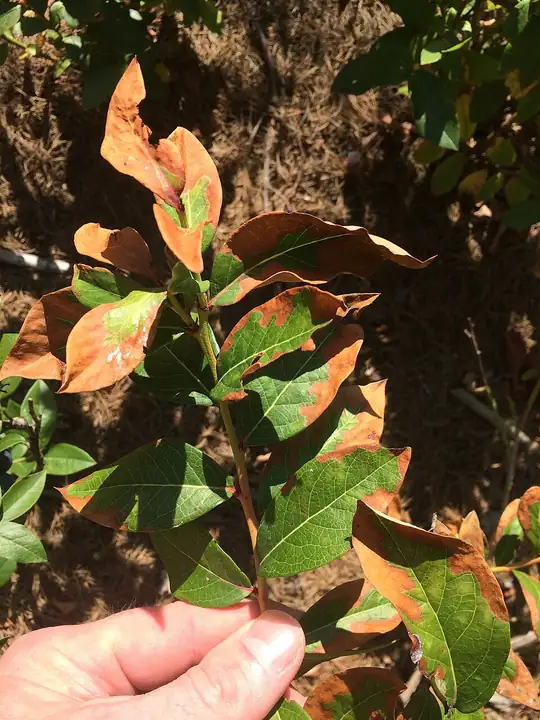
Fertilizer burn
Not an infection: too much fertilizer raises the salt level in the soil, which damages roots and builds up in leaves
| Type | Not an infection |
|---|---|
| Cause | Not an infection: too much fertilizer raises the salt level in the soil, which damages roots and builds up in leaves |
| When | Any time after feeding; worst in hot, dry weather. |
About
Fertilizers are salts, and too much at once can scorch roots and leaves. It is most common in pots, on lawns where spreader passes overlap, and when granules aren't watered in or land on wet leaves.
Also called fertilizer burn, fertiliser burn, fertilizer injury, salt burn, soluble salt damage, salt buildup, excess fertilizer
How to recognize it
Symptoms
Plants wilt and grow slowly, even when the soil is moist. Leaf tips and edges brown and die on both new and old leaves, tender shoots may die back, and conifers get evenly browned needle tips. Pots may show a white or brown crust on the soil or rim, and lawns show brown stripes or dead patches where fertilizer was spilled or doubled up.
Often confused with
Damage spread evenly over the whole plant points to fertilizer burn rather than most diseases or insects. Drought, road salt, dog urine and potassium shortage also brown leaf edges, so think about what was applied recently. Salty or softened water causes the same salt buildup in pots.
Worse when
Heavy or repeated feeding, quick-release fertilizer that isn't watered in, feeding in hot weather or when plants are already dry or stressed, granules on wet leaves, and containers.
How it spreads
It does not spread from plant to plant.
When
Any time after feeding; worst in hot, dry weather.
What to do, gentlest first
This is not an infection, so sprays for diseases won't help. Fix the cause below.
Feed lightly, by a soil test Prevent
Check nutrient levels with a soil test and feed at moderate rates that match what the plant needs.
Even without burn, heavy feeding makes soft growth that draws aphids and mites.
Water before and after feeding Prevent
Fertilize moist soil, keep dry granules off wet leaves, water well afterward, and skip feeding plants stressed by heat or drought.
Flush the salts out By hand
In the garden, water deeply to wash salts below the roots. For pots, scrape off the crust and the top 1/2 to 1 inch of mix, set the pot in a sink, fill it to the top with tepid water a couple of times, let it drain, then add fresh mix.
Flushing works best for quick-release and liquid fertilizers. Badly salted pots may need fresh mix and repotting. Empty saucers so pots don't sit in drained water.
Sources
Photo: Photo: Cityside189 / Wikimedia Commons, CC BY-SA 4.0 (CC BY-SA 4.0). Photo resized for the web.

Planting dates and advice are general guidance; check with your local Cooperative Extension office for your area.