
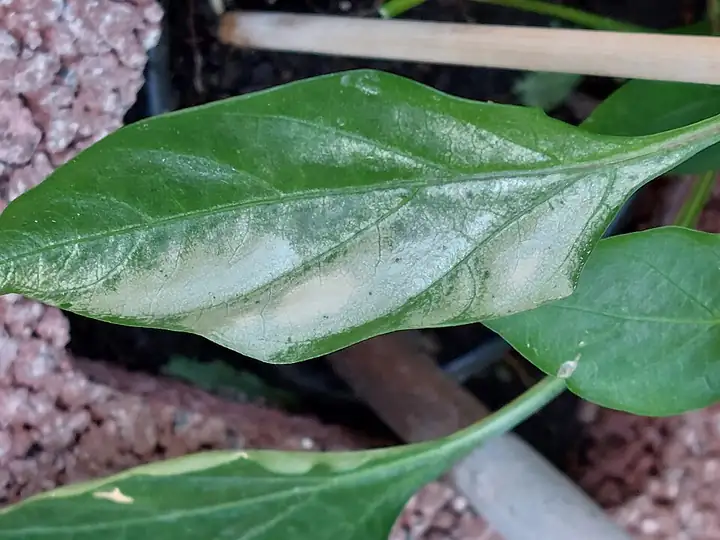
Leaf sunburn
Not an infection: leaves grown in shade or indoors get more sun than they can handle, and the strong light bleaches and overheats them
| Type | Not an infection |
|---|---|
| Cause | Not an infection: leaves grown in shade or indoors get more sun than they can handle, and the strong light bleaches and overheats them |
| When | Spring, when seedlings and houseplants go outside, and sudden sunny spells. |
About
Pale, bleached or brown patches on leaves after a plant moves from indoors or shade into bright sun, or after a sudden sunny spell following cloudy weather. It is different from sunscald on fruit and bark.
Also called leaf sunburn, sunburn, light excess, too much light, sun scorch, leaf burn, leaf bleaching, light or heat source damage
How to recognize it
Symptoms
Leaves on the sunny side turn yellow or whitish, then papery tan to brown in patches; some leaves fold or drop. As little as an hour of strong sun can do it, and badly burned plants can take months to grow new leaves.
Often confused with
Fruit and bark damage from sun is a separate problem (see Sunscald). Wind-dried leaf edges (see Hail and wind damage) and leaf scorch brown the margins rather than the sun-facing face of the leaf.
Worse when
Moving houseplants or seedlings outdoors without hardening off, full afternoon sun, a sudden shift from cloudy to hot, sunny weather, and very strong light indoors.
How it spreads
It does not spread.
When
Spring, when seedlings and houseplants go outside, and sudden sunny spells.
What to do, gentlest first
This is not an infection, so sprays for diseases won't help. Fix the cause below.
Move plants out gradually Prevent
Harden seedlings off over 5 to 14 days, adding an hour or two of sun each day. Set houseplants outdoors for a few hours at a time at first, and keep them in bright shade or morning sun only.
Even sun-loving houseplants should get no more than half a day of morning sun outdoors; afternoon sun is usually too strong.
Trim when new growth comes By hand
Move the plant to shade. Burned leaves won't turn green again; remove the worst once new leaves are growing.
Wait to fertilize until plants have adjusted to the brighter light.
Shade after planting Barrier
Cover new transplants with a basket, upturned pot or row cover for the first few days, or set potted plants under a tree or porch roof.
Plants it affects
Sources
Photo: Photo: Schlaghecken Josef / Wikimedia Commons, CC BY-SA 4.0 (CC BY-SA 4.0). Photo resized for the web.

Planting dates and advice are general guidance; check with your local Cooperative Extension office for your area.