
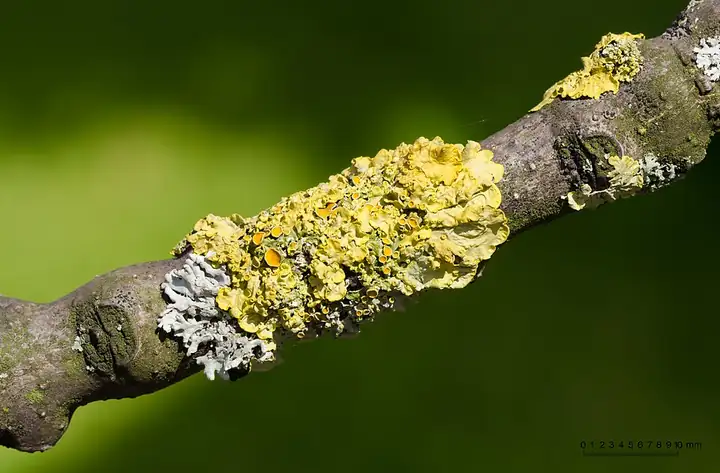
Lichens and moss
Not an infection: lichens and mosses simply grow on the surface of bark, stones and bare soil and take nothing from the plant
| Type | Not an infection |
|---|---|
| Cause | Not an infection: lichens and mosses simply grow on the surface of bark, stones and bare soil and take nothing from the plant |
| When | Year-round. |
About
Lichens are partnerships of a fungus with algae and yeasts that grow as crusts, leafy sheets, scales or tiny branching tufts on bark, rocks and fence posts. Neither lichens nor moss harm trees; moss in a lawn is a sign of thin grass, not the cause of it.
Also called lichen/moss cover, lichens, lichen, lichen on trees, moss, moss on trees, moss in lawn
How to recognize it
Symptoms
Lichens form flat crusts, loose leafy sheets, small scales or little branching tufts on trunks, branches, stones and posts. Moss forms soft mats of tiny leafy plants, often in damp, shady spots and on bare ground where grass is thin.
Often confused with
Lichens are often blamed when a tree declines, because they are easy to see on the bark, but they are not the cause. Look for the real problem, such as roots, site, disease or insects, and get a diagnosis.
Worse when
Lichens grow on any stable, fairly well-lit surface and are sensitive to air pollution. Moss favors damp, shady spots, poor drainage, compacted soil and bare ground.
How it spreads
Moss spreads by wind-blown spores that can wait in the soil a long time until conditions suit it.
When
Year-round.
What to do, gentlest first
This is not an infection, so sprays for diseases won't help. Fix the cause below.
Fix the site for moss in lawns Prevent
Fill low spots and add slope to drain water, core aerate compacted soil, water less often, test soil for phosphorus and potassium, mow shady grass 3 to 4 inches tall, feed lightly in shade (about 1/2 pound of nitrogen per 1,000 square feet), seed shade-tolerant grasses like fine fescue, and prune for more light.
Moss killers (usually iron sulfate or potassium sulfate) work only briefly, and lime usually doesn't help.
Leave lichens alone By hand
Lichens need no control. If the tree they grow on is declining, have a sample checked by a plant diagnostic lab to find the real cause.
Sources
Photo: Photo: Norbert Nagel / Wikimedia Commons, CC BY-SA 3.0 (CC BY-SA 3.0). Photo resized for the web.

Planting dates and advice are general guidance; check with your local Cooperative Extension office for your area.