
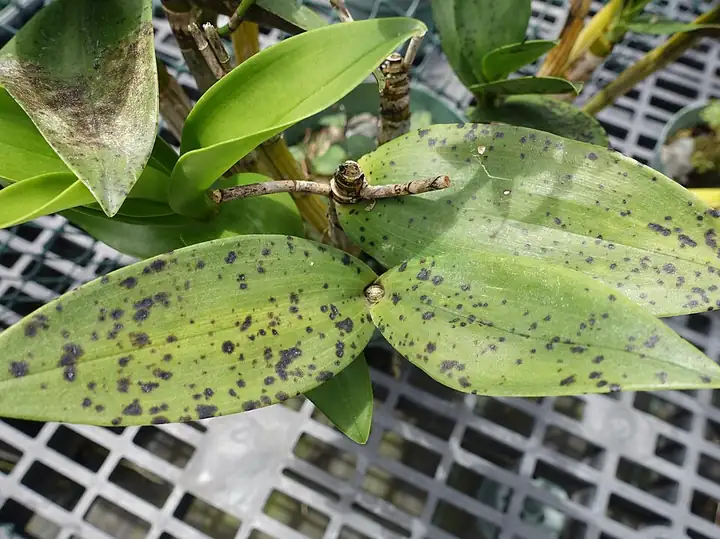
Orchid viruses
Viruses (Cymbidium mosaic virus, a potexvirus, and Odontoglossum ringspot virus, a tobamovirus), spread on hands, tools and pots
| Type | Virus |
|---|---|
| Cause | Viruses (Cymbidium mosaic virus, a potexvirus, and Odontoglossum ringspot virus, a tobamovirus), spread on hands, tools and pots |
| When | Year-round, whenever plants are handled. |
About
Cymbidium mosaic and Odontoglossum ringspot are the two most important orchid viruses, and they often infect the same plant. No insect carries them; they spread almost entirely on cutting tools, hands and pots when orchids are divided, repotted or cut. Infected orchids can't be cured, so clean tools and virus-tested plants are the best defense.
Also called Cymbidium mosaic virus, CymMV, CyMV, Odontoglossum ringspot virus, ORSV, orchid strain of tobacco mosaic virus, TMV-O, orchid virus, orchid mosaic, color break
How to recognize it
Symptoms
Leaves may show yellow or pale streaks, a mosaic, diamond-shaped or ring-shaped spots, or sunken brown to purple-black streaks and patches, often starting on new growth. On moth orchids, yellow, water-soaked spots on new leaves later turn dark and sunken, mostly on the underside. Flowers can develop brown dead streaks a few days to three weeks after opening, or uneven streaks of color (color break), especially in lavender or white cattleyas. Many infected plants show no clear symptoms but grow less vigorously.
Often confused with
Fungal leaf spots, nutrient shortages, Botrytis spots on flowers and sudden temperature swings can all look like these viruses. Only a lab test or test kit can confirm them.
Worse when
Using the same cutting tool on plant after plant, reusing pots, stakes or potting mix, and older plants that have been divided and handled many times.
How it spreads
Sap from an infected plant gets onto knives, pruners, hands and pots and enters the next plant through cuts during dividing, repotting or cutting flowers. Plants touching each other can also spread it. The viruses last a long time on tools and in old potting mix. They are not known to spread in seed, so seedlings are less likely to be infected than older divisions.
When
Year-round, whenever plants are handled.
What to do, gentlest first
Prevention works best; most sprays only protect healthy leaves and can't cure infected ones. Always read and follow the product label.
Start with virus-tested plants Prevent
Buy from growers who sell virus-tested plants, and pass on plants with streaked leaves or flowers. Keep suspect plants apart from the rest of your collection.
Sterilize cutting tools between plants Prevent
Clean tools after every plant. Soak blades at least 5 minutes in fresh 10% bleach (1 part bleach to 9 parts water) or 5% trisodium phosphate, or heat them in a 300°F oven for an hour; flaming also works, or use a new single-edge razor blade for each plant. Keeping two tools lets one soak while you use the other.
Mix bleach solution fresh, and take care when flaming tools dipped in alcohol, because the alcohol will catch fire.
Clean hands, pots and potting mix Prevent
Wash your hands or change disposable gloves between plants, set each plant on a fresh sheet of newspaper while repotting, and handle younger plants before older ones. Don't reuse potting mix or wooden stakes. Soak plastic pots 30 minutes in 10% bleach and rinse, or bake clay pots at 500°F for an hour.
Test and discard infected orchids By hand
There is no cure, and no spray helps. Have suspect plants checked with a lab test or an orchid virus test kit, and throw out plants that test positive instead of dividing or sharing them.
Plants it affects
Sources
Photo: Photo: Plant pests and diseases, CC0, via Wikimedia Commons (CC0). Photo resized for the web.

Planting dates and advice are general guidance; check with your local Cooperative Extension office for your area.