
Pepper mild mottle
Virus (pepper mild mottle virus, a tobamovirus) spread on seed, hands and tools
| Type | Virus |
|---|---|
| Cause | Virus (pepper mild mottle virus, a tobamovirus) spread on seed, hands and tools |
| When | All growing season; often noticed only once fruit develops. |
About
A pepper virus found worldwide in bell, hot and ornamental peppers. It spreads in seed and on hands and tools, and it stays infectious in plant debris until the debris fully breaks down. It does not infect tomatoes or eggplant.
Also called pepper mild mottle virus, PMMoV, pepper mild mottle
How to recognize it
Symptoms
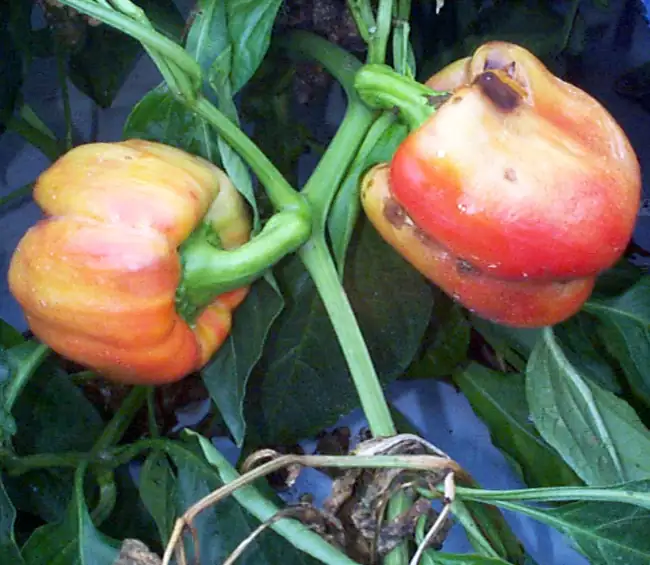
Leaves, especially young ones, are puckered and mottled yellow or light green, and plants infected early stay small. Fruit shows it best: small, lumpy or misshapen, with uneven color, and older fruit may get brown streaks or blotches. Leaf symptoms can be so mild that the problem goes unnoticed until fruit forms.
Often confused with
Other pepper viruses, such as tobacco mosaic and tomato brown rugose fruit virus, can cause similar mottling and fruit damage. A plant disease clinic can confirm which virus it is.
Worse when
Infected seed, frequent handling, and debris or volunteer peppers left in the soil from a sick crop.
How it spreads
Sap carries it on hands, clothing, tools and stakes into tiny wounds, and it arrives in infected seed. Insects don't spread it. Infected plant material stays infectious until it breaks down completely, and smoke from burning sick plants can spread it.
When
All growing season; often noticed only once fruit develops.
What to do, gentlest first
Prevention works best; most sprays only protect healthy leaves and can't cure infected ones. Always read and follow the product label.
Plant tested seed Prevent
Plant only seed that was tested and found free of the virus, and don't save seed from peppers that looked sick.
Heat, acid or trisodium phosphate seed treatments can remove the virus but may lower germination.
Look for tobamovirus-resistant peppers Prevent
Peppers bred with tobamovirus resistance genes (the L genes) can resist this virus; check seed catalogs for PMMoV resistance.
Many common pepper varieties have no resistance.
Handle less and clean up Prevent
Touch plants as little as possible, and wash hands with strong soap and wash clothes often. Clean tools and stakes with household bleach, trisodium phosphate or a 20% nonfat dry milk solution. Pull volunteer peppers and nightshade weeds, and rotate peppers to a new spot.
Remove sick plants carefully By hand
There is no cure. Work around sick plants last, then remove them, along with the healthy-looking plant on each side, without brushing other plants. Bury or compost them far from where you grow peppers.
Don't burn infected plants; the smoke can spread the virus.
Plants it affects
Sources
Photo: Photo: UF/IFAS Pest Alert Web site/Pamela Roberts, CC BY 2.5, via Wikimedia Commons (CC BY 2.5). Photo resized for the web.

Planting dates and advice are general guidance; check with your local Cooperative Extension office for your area.