
Plant viruses
Many different viruses, carried mostly by sap-feeding insects (aphids, thrips, whiteflies, leafhoppers and cucumber beetles), and also on seed, cuttings, hands and tools
| Type | Virus |
|---|---|
| Cause | Many different viruses, carried mostly by sap-feeding insects (aphids, thrips, whiteflies, leafhoppers and cucumber beetles), and also on seed, cuttings, hands and tools |
| When | Spring through fall, whenever the insects that carry them are active. |
About
Viruses are tiny germs that live inside a plant's cells. None can be cured, so the goal is to spot them early, pull sick plants, and keep the insects and weeds that carry them in check. This page covers what they have in common; the guide has its own page for each of the common garden viruses, from cucumber mosaic and tomato spotted wilt to curly top, potato virus Y and the orchid viruses.
Also called viruses, virus, plant virus, viral disease, viral diseases, virus disease, virus diseases
How to recognize it
Symptoms
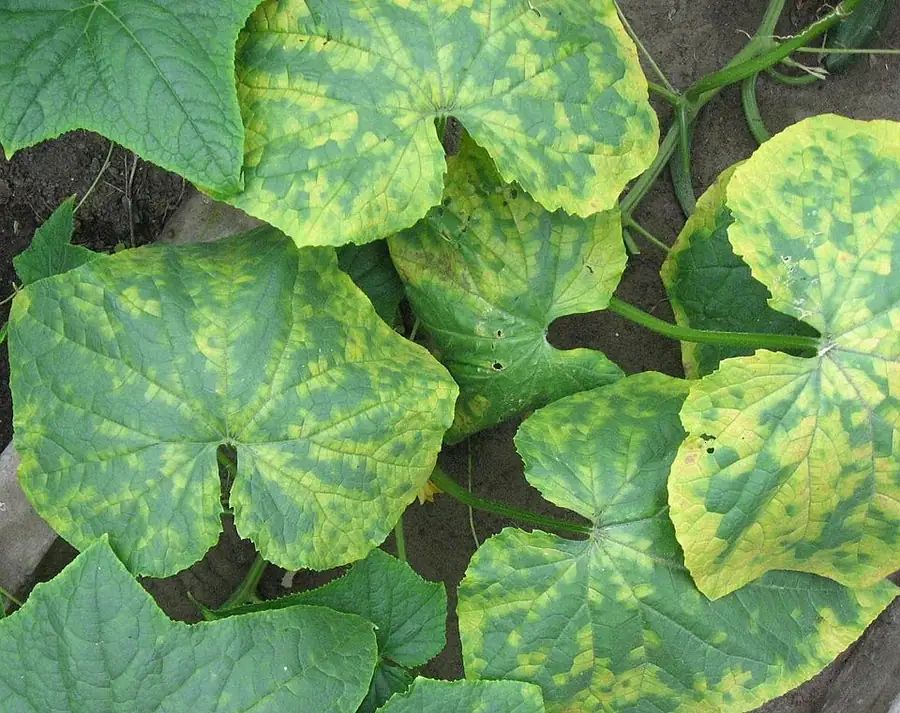
Leaves mottled in light and dark green or yellow (a mosaic), yellow rings, lines or vein patterns, and leaves that pucker, cup, curl or grow narrow and stringy. Plants are often stunted, and fruit can be small, warty, blotchy or misshapen. Signs are usually clearest on the newest growth.
Often confused with
Herbicide drift, nutrient shortages, cold or heat stress, and mite or thrips feeding can all look like a virus. Only a lab test identifies a virus for certain; your county Extension office can help.
Worse when
Busy aphid, thrips or whitefly populations, weeds and perennial plants nearby that carry viruses, seed or cuttings saved from sick plants, and handling tobacco before touching tomatoes or peppers.
How it spreads
Mostly by insects that feed on a sick plant and then a healthy one. Some move on seed, cuttings, bulbs and divisions, and tobacco and tomato mosaic also spread on hands, tools and clothing. Many wait out the winter in weeds and perennials.
When
Spring through fall, whenever the insects that carry them are active.
What to do, gentlest first
Prevention works best; most sprays only protect healthy leaves and can't cure infected ones. Always read and follow the product label.
Resistant varieties and clean seed Prevent
Choose varieties listed as resistant (seed catalogs use codes such as CMV, TSWV or TYLCV), and buy clean seed, transplants, bulbs and cuttings. Don't save seed or take cuttings from plants that looked sick.
Resistance is not immunity, so keep up the other steps too.
Keep weeds down Prevent
Many viruses spend the winter in weeds and perennial plants. Keep weeds out of and around the garden, and don't plant cucumbers, squash, peppers or beans right next to alfalfa or clover.
Pull sick plants and wash up By hand
There's no cure. Pull and bag plants with clear virus signs as soon as you see them, so insects can't carry it to the rest. Wash your hands and tools afterward, and don't use tobacco while handling tomatoes and peppers.
Row covers and reflective mulch Barrier
Floating row cover keeps aphids, whiteflies and thrips off young plants; lift it when crops that need bees start to flower. Silver reflective mulch helps keep aphids and thrips from landing.
Insect sprays rarely stop viruses Organic spray
Aphids pass many viruses in seconds, before any spray can work, so insecticides do little to stop the spread. Where whiteflies or thrips are heavy, soap, oil or neem can lower their numbers.
Follow the label, and spray in the evening when bees aren't flying.
Sources
Photo: Photo: DieterO, Public domain, via Wikimedia Commons. Photo resized for the web.

Planting dates and advice are general guidance; check with your local Cooperative Extension office for your area.