
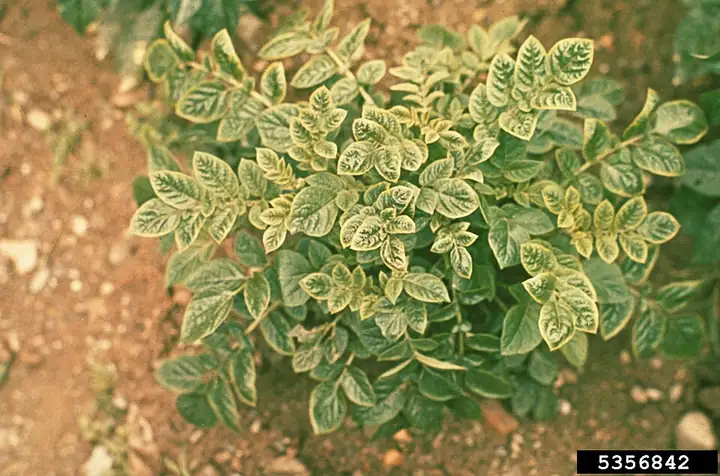
Potato leafroll
Virus (potato leafroll virus, a polerovirus), spread by aphids and infected seed potatoes
| Type | Virus |
|---|---|
| Cause | Virus (potato leafroll virus, a polerovirus), spread by aphids and infected seed potatoes |
About
Potato leafroll is a potato virus that makes leaves roll upward and can leave a brown net of lines inside the tubers. It comes in on infected seed potatoes and is carried by aphids, especially the green peach aphid, which keep it for life. There is no cure, but certified seed, resistant varieties and early aphid control keep it in check.
Also called potato leafroll virus, potato leaf roll virus, PLRV, leaf roll, net necrosis, potato leafroll mosaic
How to recognize it
Symptoms
On plants grown from infected seed, the lower leaves roll upward along the midrib first and turn stiff, dry and leathery, and the plant is often pale yellow and somewhat stunted. Plants infected by aphids during the season show milder rolling of the top leaves, sometimes with pale leaves edged in purple or red. Tubers look normal outside, but in some varieties, such as 'Russet Burbank', fine brown lines or specks run through the flesh from the stem end (net necrosis).
Often confused with
Net necrosis inside tubers can be confused with zebra chip. A lab test confirms the virus.
Worse when
Infected seed potatoes, aphids early in the season (especially green peach aphids), and volunteer potatoes, cull piles and winter weeds such as mustard and shepherd's purse nearby.
How it spreads
Brought in on infected seed tubers, then carried plant to plant by at least 10 kinds of aphids. Once an aphid picks up the virus, it can spread it for the rest of its life, but it does not pass it to its young. A single infected seed piece can start an outbreak if aphids go unchecked.
When
Through the growing season. Plants from infected seed show signs soon after they come up, aphid spread early in the season does the most harm, and net necrosis can get worse in storage.
What to do, gentlest first
Prevention works best; most sprays only protect healthy leaves and can't cure infected ones. Always read and follow the product label.
Plant certified seed potatoes Prevent
Start with certified seed potatoes, which have the lowest virus levels, and never replant tubers from plants that rolled up. Check any potato plants you buy for aphids, too.
Grow resistant varieties Prevent
WSU lists 'Cherokee', 'Katahdin', 'Norgold', 'Penobscot', 'Reliance', 'Sebago', 'Sequoia' and 'White Rose' as resistant to leafroll or net necrosis. 'Russet Burbank', 'Green Mountain' and 'Russet Norkotah' are very prone to it.
Resistant varieties slow the spread, but you still need to watch for aphids.
Clear volunteers and winter weeds Prevent
Remove volunteer potatoes and old cull piles, and keep winter weeds such as mustard and shepherd's purse out of garden edges.
Remove sick plants and tubers By hand
Dig up rolled, yellowed plants along with their tubers. Neighboring plants may be infected without showing it yet, so PNW suggests also removing the three plants on each side.
Tubers from infected plants are safe to eat, but use them fresh rather than storing them for long.
Control aphids early Conventional spray
Unlike many aphid-spread viruses, leafroll is slowed by controlling aphids, especially early and mid-season. Check plants for aphids often and see the aphid page for options.
Sprays protect healthy plants but do not cure infected ones; follow the label and avoid spraying open flowers where bees forage.
Plants it affects
Sources
Photo: Photo: William M. Brown Jr., Bugwood.org, CC BY 3.0, via Wikimedia Commons (CC BY 3.0). Photo resized for the web.

Planting dates and advice are general guidance; check with your local Cooperative Extension office for your area.