
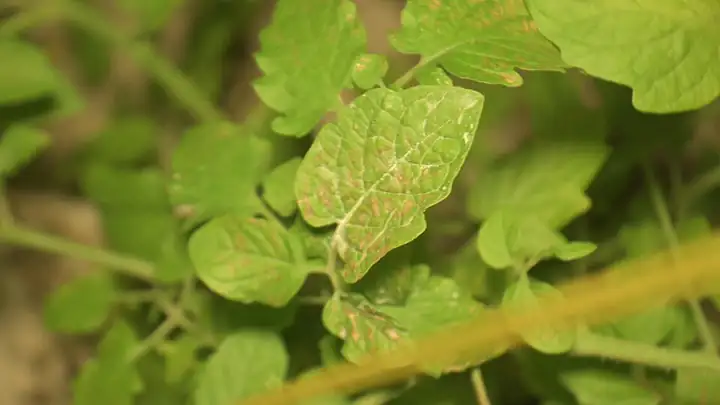
Septoria leaf spot
Fungus (Septoria lycopersici)
| Type | Fungus |
|---|---|
| Cause | Fungus (Septoria lycopersici) |
| When | Summer into fall, whenever weather is warm and wet. |
About
Septoria leaf spot is a very common tomato disease that eats away the foliage from the bottom up. It attacks the leaves; heavy leaf loss weakens plants and in severe cases can kill them.
Also called Septoria leaf spot
How to recognize it
Symptoms
Many small round spots, about the size of a pencil tip, appear on the lowest leaves; they have tan to gray centers, darker edges and often tiny black specks in the middle. Spotted leaves yellow and drop, and the disease works its way up the plant.
Often confused with
Early blight spots are bigger and show target rings. Early on, UMN says Septoria, early blight and bacterial spot are hard to tell apart, but the same care helps all three.
Worse when
Humid, wet weather with temperatures around 68 to 77°F, overhead watering and poor airflow.
How it spreads
The fungus survives in infected plant debris and soil (and on seed or equipment), and rain or watering splashes spores onto the lower leaves; new spots make more spores in about two weeks.
When
Summer into fall, whenever weather is warm and wet.
What to do, gentlest first
Prevention works best; most sprays only protect healthy leaves and can't cure infected ones. Always read and follow the product label.
Rotate and clean up Prevent
Keep tomatoes out of the same spot for two to three years and remove or bury infected plant debris at season's end.
Mulch, stake and water the soil Prevent
Mulch with straw, leaves or fabric, stake or trellis for airflow, space plants well and water the soil rather than the leaves.
Pinch off spotted and lower leaves By hand
Remove spotted leaves as you find them and strip the lower third of the leaves to stop soil splash.
UMN notes most home garden tomatoes do not need a fungicide if you keep up with this.
Copper fungicide Organic spray
Wisconsin and Clemson list copper as a preventive option. Spray before spots spread, and repeat as the label says.
Copper only protects leaves it coats before infection; it will not heal spots already there. It can burn young leaves, especially in weather above 85°F, and some plants are sensitive (Purdue lists celery, strawberry, apple, pear and plum among them). PNW 591 rates copper hydroxide toxic to bees, so spray when bees are not foraging. Follow the label, including the days to wait before harvest.
Chlorothalonil or mancozeb Conventional spray
Clemson rates chlorothalonil very good and mancozeb good for Septoria. They shield healthy leaves; spotted leaves will not recover.
Chlorothalonil is a protectant: it keeps new infections from starting but does not cure existing spots. UC IPM rates it highly hazardous to fish and other aquatic life, and product labels carry a DANGER signal word. Keep it out of water and off flowering plants, wear gloves and eye protection, and follow the label and pre-harvest interval.
Plants it affects
Sources
- extension.umn.edu
- vegpath.plantpath.wisc.edu
- hgic.clemson.edu
- ipm.ucanr.edu
- extension.purdue.edu
- s3.wp.wsu.edu
Photo: Photo: Wolan268, CC0, via Wikimedia Commons (CC0). Photo resized for the web.

Planting dates and advice are general guidance; check with your local Cooperative Extension office for your area.