
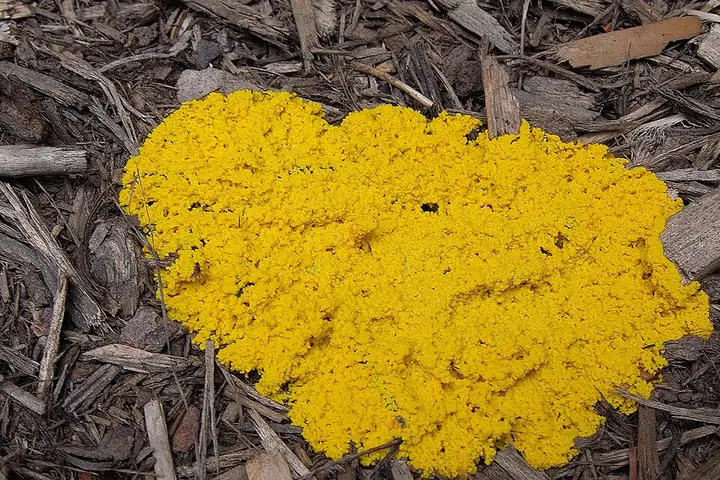
Slime molds
Slime molds (myxomycetes such as Fuligo septica): fungus-like organisms that feed on bacteria and rotting matter, not on plants
| Type | Fungus |
|---|---|
| Cause | Slime molds (myxomycetes such as Fuligo septica): fungus-like organisms that feed on bacteria and rotting matter, not on plants |
| When | Mostly summer, after rain. |
About
Slime molds are odd, harmless organisms that show up on wet mulch and lawns, sometimes as a bright yellow blob that looks like dog vomit or scrambled eggs. They do not infect plants and go away on their own.
Also called slime mold, slime molds, Slime mold, dog vomit slime mold, dog vomit fungus, scrambled egg slime mold, Fuligo septica
How to recognize it
Symptoms
After rain, a slimy white, yellow, orange or red mass from a few inches to 2 feet or more across appears on mulch, leaf litter or grass and can creep slowly over a few days. When conditions change, it stops, changes color and dries into a crusty, dusty spore mass. It can briefly cover and shade small plants or grass.
Worse when
Warm, wet weather after heavy rain, in moist, shady spots with wood or bark mulch, rotting logs or thick thatch.
How it spreads
Wind blows the dusty spores, which survive dry and harsh conditions and sprout again after the next heavy rain.
When
Mostly summer, after rain.
What to do, gentlest first
Prevention works best; most sprays only protect healthy leaves and can't cure infected ones. Always read and follow the product label.
Leave it alone Prevent
Slime molds do not cause plant disease and disappear on their own when the weather dries. Some people enjoy looking at them with a hand lens.
Rake, hose or mow it away By hand
Break it up and let it dry, rake it into the mulch or scoop it out, or wash it off with a strong spray from the hose. On a lawn, mow and rake up thatch.
No spray is needed.
Sources
Photo: Photo: Cbaile19 / Wikimedia Commons, CC0 (CC0). Photo resized for the web.

Planting dates and advice are general guidance; check with your local Cooperative Extension office for your area.