
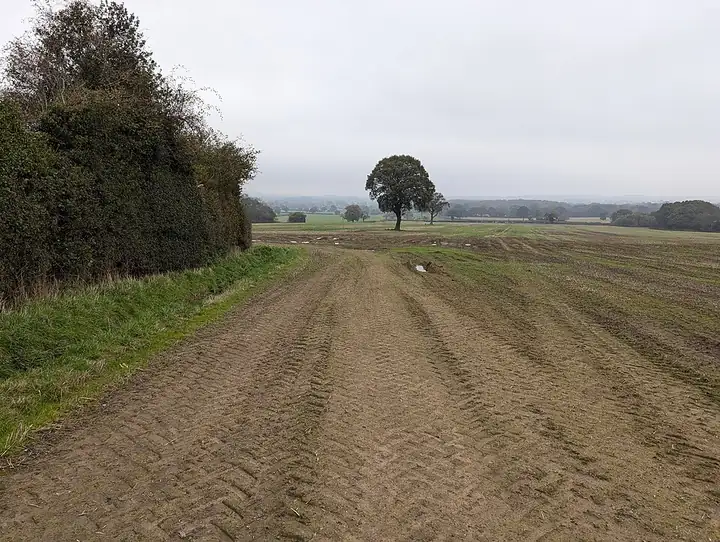
Soil compaction
Not an infection: soil pressed so tight that roots can't get enough air and water
| Type | Not an infection |
|---|---|
| Cause | Not an infection: soil pressed so tight that roots can't get enough air and water |
About
Foot traffic, cars, construction equipment and working wet soil squeeze out the pore spaces roots need for air and water. Compacted ground sheds water, grows weak plants and is hard to fix, so prevention is the best plan.
Also called soil compaction, compacted soil, compaction damage
How to recognize it
Symptoms
Plants grow slowly and show wilting, leaf scorch, early fall color, dieback and a decline that builds over several years; even old trees can die. The soil is hard to dig even when moist, water puddles or runs off, bare paths appear where people walk, and roots run along the surface. A dug spadeful may split into flat, plate-like layers or big, dense clods.
Often confused with
Drought, nutrient shortages, root rot and poor drainage cause similar yellowing and decline, and compaction itself can leave plants short of nitrogen and potassium. To check, push a wire flag into moist soil: 12 inches or more is good, while a flag that bends in less than 4 inches means compacted soil.
Worse when
Clay soil, wet soil (it compacts more easily), heavy equipment, parking under trees, and repeated foot or mower traffic in the same tracks.
How it spreads
It does not spread, but it lasts for years and worsens with repeated traffic.
When
Any time; plant symptoms build slowly over several years, often after construction.
What to do, gentlest first
This is not an infection, so sprays for diseases won't help. Fix the cause below.
Stay off wet soil and use paths Prevent
Dry soil carries weight better than wet soil, so keep feet and machines off wet ground. Make paths official with pavers or mulch, and spread loads with plywood when you must drive on soil.
Protect tree roots during construction Prevent
Fence off the area under trees and shrubs before building starts, and lay double, overlapping plywood where equipment must cross.
Mulch over roots Prevent
Spread about 3 inches of organic mulch over tree and shrub roots to cushion the soil.
Core aerate lawns By hand
Core aeration pulls plugs about 1/2 to 3/4 inch wide and 3 to 4 inches deep. Leave the cores to break down on the lawn.
It only fixes shallow compaction.
Loosen beds and add compost By hand
In vegetable and flower beds, loosen moist (not wet) soil into small clods, not dust, and mix in good compost to keep it from packing again.
Don't dig or till under trees and shrubs; a certified arborist can loosen soil around tree roots with an air spade. Call 811 before digging.
Sources
Photo: Photo: TCExplorer / Wikimedia Commons, CC BY-SA 2.0 (CC BY-SA 2.0). Photo resized for the web.

Planting dates and advice are general guidance; check with your local Cooperative Extension office for your area.