
Tomato brown rugose fruit virus
Virus (tomato brown rugose fruit virus, a tobamovirus) spread on hands, tools, seed and transplants
| Type | Virus |
|---|---|
| Cause | Virus (tomato brown rugose fruit virus, a tobamovirus) spread on hands, tools, seed and transplants |
About
A very contagious virus of tomatoes and peppers, first found in 2014, that leaves fruit wrinkled, blotchy and brown. It spreads on hands, tools and seed, lasts for months on surfaces, and is regulated in seed and transplants in the US. The fruit is safe to eat, but sick plants cannot be cured.
Also called tomato brown rugose fruit virus, ToBRFV, brown rugose fruit virus, tomato brown rugose, rugose fruit virus
How to recognize it
Symptoms
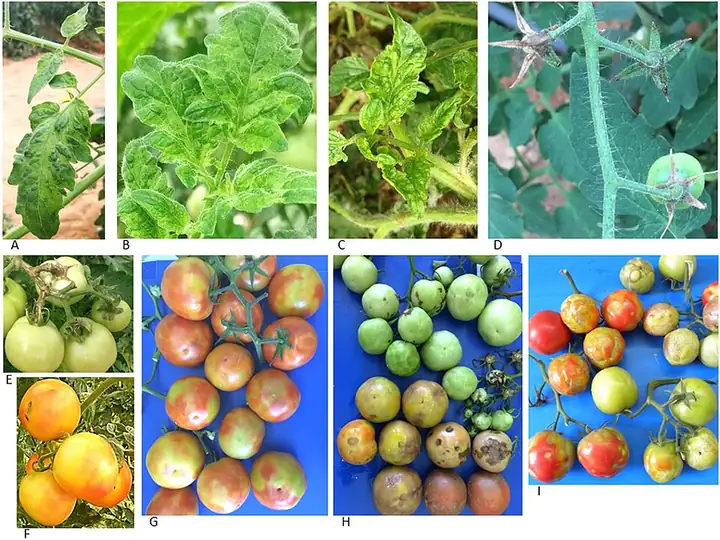
Tomato leaves show light and dark green mottling, clearest on new growth, and may pucker, grow narrow or curl up at the edges. Fruit ripens unevenly with yellow, orange or green blotches and raised, rough, wrinkled brown patches, and the green cap and fruit stems may turn brown. Peppers get puckered, mottled leaves, stunting and similar blotchy fruit. Some infected plants show no signs at all.
Often confused with
Hundreds of viruses infect tomatoes, and tobacco mosaic and tomato mosaic cause similar mottling. Wrinkled, rough brown patches on fruit point to this virus, but only a lab test can confirm it, and common TMV test strips also react to it.
Worse when
Infected seed or transplants, plants that are handled often for pruning, tying and staking, and crowded plantings in greenhouses and high tunnels.
How it spreads
Sap carries it on hands, gloves, tools, stakes and clothing, and it travels long distances in seed and transplants; it can also move in water runoff. It lasts about 2 hours on hands, 3 to 6 months on pots, trays, glass and metal, and from one season to the next in soil and plant debris. Insects are not the main carriers, though bumblebees can move it in greenhouses.
When
Any time plants are growing; worst where plants are handled a lot, such as greenhouses and high tunnels.
Where
Federally regulated in seed and transplants (USDA APHIS); tomatoes and peppers sold for eating have not been regulated since June 2024. It is not widespread in the US, but it has turned up in a few places, including a Florida home garden. If you suspect it, take photos and contact your Extension office or state department of agriculture.
What to do, gentlest first
Prevention works best; most sprays only protect healthy leaves and can't cure infected ones. Always read and follow the product label.
Buy tested seed and transplants Prevent
Buy seed and transplants from suppliers that test for this virus. Don't plant seeds saved from store-bought tomatoes or peppers, since seeds and sap from that fruit can carry it.
Standard tomato mosaic resistance (the Tm-2² gene) does not stop this virus, and Extension sources list no resistant tomatoes yet.
Wash hands and soak tools Prevent
Wash your hands with soap and water for a full minute before and after handling plants. Scrub soil off tools, then soak them for an hour in 1 part household bleach to 9 parts water and rinse.
Mix the bleach solution fresh and use it within 24 hours; wear gloves.
Bag and trash infected plants By hand
There is no cure. Mark suspect plants and don't touch them until they are tested. If the virus is confirmed, or you got a seed recall notice, bag the plants with their soil and put them in the trash, not the compost, and skip tomatoes and peppers in that spot for 2 years.
Report it first: your state may ask for a sample before you throw the plants away.
Plants it affects
Sources
Photo: Photo: Luria N, Smith E, Reingold V, Bekelman I, Lapidot M, Levin I, et al., CC BY-SA 4.0, via Wikimedia Commons (CC BY-SA 4.0). Photo resized for the web.

Planting dates and advice are general guidance; check with your local Cooperative Extension office for your area.