
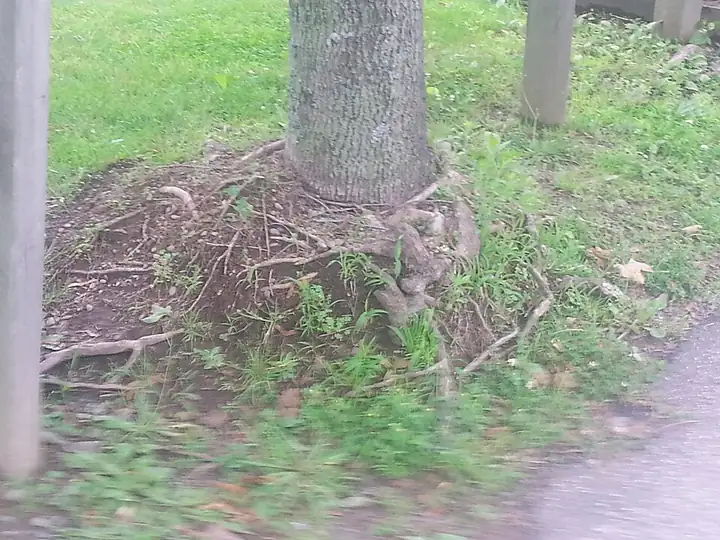
Volcano mulching
Not an infection: mulch piled deep against a tree trunk keeps bark wet and starves roots of air
| Type | Not an infection |
|---|---|
| Cause | Not an infection: mulch piled deep against a tree trunk keeps bark wet and starves roots of air |
| When | Any time; harm builds over years. |
About
A 'mulch volcano' is wood chips or bark heaped against a trunk, sometimes a foot deep or more. It looks tidy, but it rots bark, shelters bark-chewing voles, smothers roots, and can lead to girdling roots.
Also called volcano mulching, mulch volcano, mulch volcanoes, mulch piled against trunk, too much mulch
How to recognize it
Symptoms
Mulch is mounded up the trunk so you can't see where the trunk flares out into roots. Bark under the pile stays damp and can decay or be chewed by voles. Over time the tree grows slowly and declines, especially young trees still getting established.
Often confused with
Decline from deep planting, girdling roots or compaction looks similar and often happens alongside it. Pull the mulch back and look for a normal trunk flare.
Worse when
Adding fresh mulch every year without checking how deep the old layer is, and young trees with thin bark.
How it spreads
It does not spread from plant to plant.
When
Any time; harm builds over years.
What to do, gentlest first
This is not an infection, so sprays for diseases won't help. Fix the cause below.
Mulch wide and shallow Prevent
Keep mulch about 2 to 4 inches deep. On young trees, spread it out to the branch tips; on big trees, cover at least a 4- to 5-foot circle.
Check the depth each year and add only what has broken down.
Pull mulch away from the trunk By hand
Rake the pile back so bare soil shows for 2 to 3 inches around the trunk, like a donut hole.
Check the trunk flare By hand
If the flare is still buried, gently remove soil to find it, and look for bark damage or circling roots. A certified arborist can help.
Sources
Photo: Photo: NY State IPM Program at Cornell University / Wikimedia Commons, CC BY 2.0 (CC BY 2.0). Photo resized for the web.

Planting dates and advice are general guidance; check with your local Cooperative Extension office for your area.