
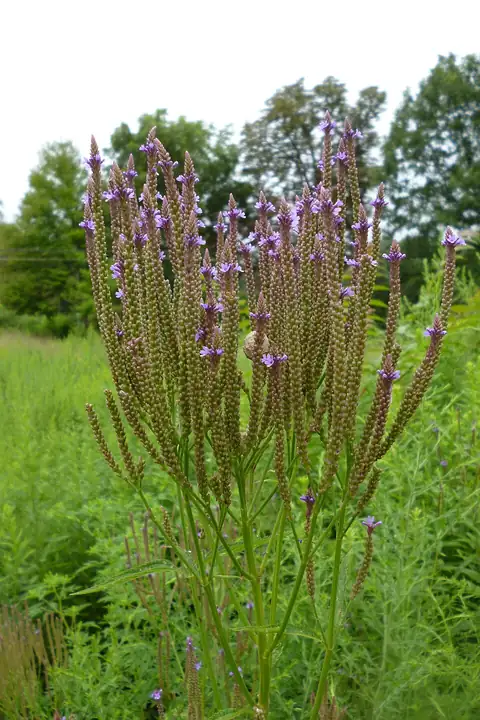
Blue vervain
Verbena hastata · Verbena family (Verbenaceae)
| Hardiness zones | 3 to 8 |
|---|---|
| Sun | full sun to part shade |
| Water | high |
| Life cycle | perennial |
| Frost | Hardy: takes frost |
About Blue vervain
Blue vervain is a native perennial with slender, candelabra-like spikes of small violet-blue flowers in mid to late summer. It likes moist soil and is a top nectar plant for bees, including specialist verbena bees, butterflies and moths; cardinals, sparrows and juncos eat the seeds.
Hardy in zones 3-8 (NC State).
When to plant
Timing is counted from your average last spring frost (and first fall frost). Sow & Tell works out the actual dates for your ZIP code.
Grow from seed or stem cuttings (NC State). Plants reach 2-5 feet tall and 1-2.5 feet wide.
Soil
Moist to occasionally wet clay, loam or sandy soil.
Plant in moist to occasionally wet soil (clay, loam or sand) in sun or part shade; no special soil preparation is described.
Harvest
Grown for pollinators rather than a harvest. Flowers open a few at a time from the bottom of each spike upward, so the show lasts for weeks.
Diseases and problems
Southern bacterial wilt
In the kitchen
Safety: Not an edible plant. NC State notes that large doses cause vomiting and diarrhea and that it may interfere with blood pressure medicine and hormone therapy.
Pets: Not listed by the ASPCA
Sources
Photo: Photo: Cbaile19 / Wikimedia Commons, CC0 (CC0). Photo resized for the web.

Planting dates and advice are general guidance; check with your local Cooperative Extension office for your area.