
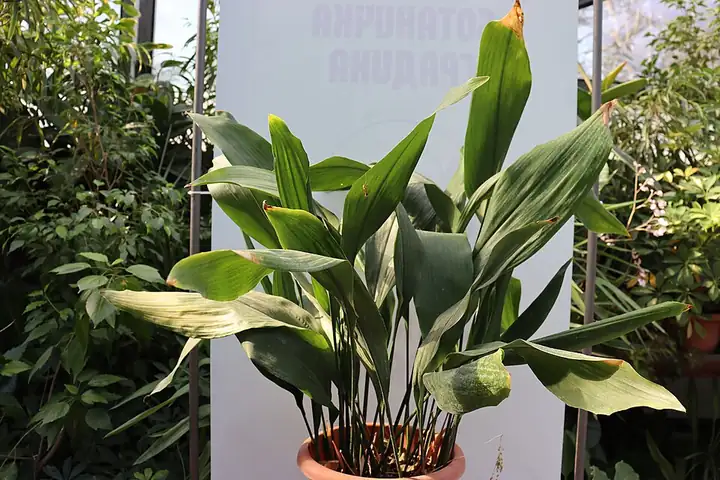
Cast iron plant
Aspidistra elatior · Asparagus family (Asparagaceae)
| Hardiness zones | 7 to 11 |
|---|---|
| Sun | shade |
| Water | low |
| Life cycle | perennial |
| Frost | Tender: killed by frost |
About Cast iron plant
The cast iron plant is a slow, clumping evergreen from Japan with tall, leathery, dark green leaves that rise straight from the soil, like a hosta that never dies back (NC State). It earned its names, cast iron plant and barroom plant, by putting up with neglect, deep shade and spittoon-lined barrooms. UF/IFAS calls it a bulletproof houseplant for dim homes and offices, and in the South it is a common shade groundcover.
Hardy outdoors in zones 7-11, where it is planted as a shade groundcover (NC State, UF/IFAS); elsewhere it is grown indoors and can summer outdoors in shade once nights stay above about 50 F.
When to plant
Timing is counted from your average last spring frost (and first fall frost). Sow & Tell works out the actual dates for your ZIP code.
Usually bought as a nursery plant; it spreads slowly by rhizomes into a wider clump (UF/IFAS, NC State).
Growing it indoors
- Light: One of the best plants for dim rooms and deep shade; it can't take direct sun, which burns the leaves, and needs brighter light only if you want it to flower (NC State, UF/IFAS, MU Extension).
- Water: Water regularly from spring through fall when the top inch is dry, and sparingly in winter; it tolerates dry spells far better than soggy mix (NC State, UF/IFAS). Use a pot with drainage and empty the saucer, since overwatering is the classic way to rot houseplant roots (Wisconsin).
- Temperature: MU Extension lists nights around 50 F, and since it is hardy outdoors to zone 7 (NC State), a cool room won't hurt it; keep it sheltered from cold winter winds.
- Feeding: It doesn't need regular feeding but responds to a little fertilizer in spring or summer (UF/IFAS); skip it in winter (MU Extension).
- Repotting: It grows slowly and does well in containers (NC State); move it up one pot size in spring only when roots fill the pot or poke out the drainage holes (Wisconsin's general rule).
Soil
A rich, well-drained potting mix; it tolerates poor, dry soil and acid to alkaline conditions (NC State, UF/IFAS).
Pot in a rich, well-drained potting mix; it tolerates poorer, drier soil too (NC State, UF/IFAS).
Feeding
- Spring or summer: balanced houseplant fertilizer. It doesn't need regular feeding but responds to a light application in spring or summer (UF/IFAS); follow the label.
- Winter: none. Skip feeding while no new growth is showing (MU Extension).
Overwatering and overfeeding hurt it more than neglect does; let it be (UF/IFAS, Wisconsin).
Varieties (12)
NC State names 13 cultivars; 12 are listed ('Okame' is the same plant as 'Variegata' and is noted there). UF/IFAS notes variegated kinds grow less vigorously than plain green ones.
| Variety | Type | Days | Notes |
|---|---|---|---|
| China Star | Speckled | Heavily speckled leaves. | |
| Ginga Giant | Speckled | Wide, dark green leaves flecked with yellow. | |
| Hoshi-zora | Speckled | Green leaves dotted with yellow or white. | |
| Milky Way | Speckled | Leaves covered in small white spots. | |
| Well Spotted | Speckled | Many spots across the leaves. | |
| Goldfeather | Striped | Yellow-gold stripes running the length of the leaves. | |
| Goldspike | Striped | A single yellow stripe down the upper middle of each leaf. | |
| Lennon's Song | Striped | Wide, tall leaves with yellow variegation. | |
| Mangetsu | Striped | Green and white striped leaves with white speckles. | |
| Variegata | Striped | White stripes along green leaves; also sold as 'Okame', with irregular white streaks. | |
| Asahi | White-tipped | Pale green leaves frosted with white toward the airbrushed tips. | |
| Sekko-kan | White-tipped | White stripes along the leaves, with the tips turning fully white as they mature. |
Diseases and problems
Root and crown rot
In the kitchen
Safety: Not listed as poisonous; NC State tags it non-toxic and pet friendly.
Pets: Non-toxic to dogs, cats and horses (ASPCA).
Sources
- plants.ces.ncsu.edu
- gardeningsolutions.ifas.ufl.edu
- aspca.org
- extension.missouri.edu
- hort.extension.wisc.edu
Photo: Photo: Dandarmkd, CC BY-SA 4.0, via Wikimedia Commons (CC BY-SA 4.0). Photo resized for the web.

Planting dates and advice are general guidance; check with your local Cooperative Extension office for your area.