
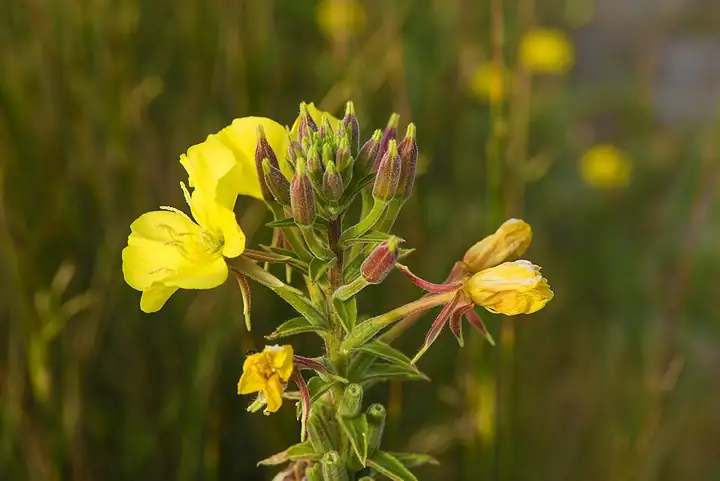
Evening primrose (common evening primrose)
Oenothera biennis · Evening primrose family (Onagraceae)
| Hardiness zones | 4 to 9 |
|---|---|
| Sun | full sun to part shade |
| Water | low |
| Life cycle | biennial |
| Frost | Hardy: takes frost |
| Spacing | 12 to 36 inches |
About Evening primrose (common evening primrose)
Common evening primrose is a native biennial: a leafy rosette the first year, then 3-7 foot stalks of yellow flowers that open at dusk. Night-flying moths pollinate it, hummingbirds visit, and many birds eat the seeds. Its seeds are the source of evening primrose oil.
Hardy in zones 4-9 (NC State); each plant flowers in its second summer and then dies, but it reseeds freely.
When to plant
Timing is counted from your average last spring frost (and first fall frost). Sow & Tell works out the actual dates for your ZIP code.
Easy to grow from seed, which sprouts within about four weeks; plants bloom in their second year and usually self-sow (NRCS). Seed can stay alive in the soil for decades (NC State).
Soil
Well-drained soil of almost any kind, including gravelly, rocky, sandy or clay soil; it is very drought tolerant.
Plant in well-drained soil in full sun or light afternoon shade; it grows even in gravelly, rocky or clay soil and is very drought tolerant.
Feeding
It self-sows freely and seed lasts for years in the soil, so pull unwanted seedlings early.
Harvest
Flowers open at dusk and close the next day, June to September. It spreads by self-seeding, so pull extra seedlings to keep it in bounds.
Diseases and problems
Leaf spot, Powdery mildew
In the kitchen
The roots were boiled and eaten like potatoes, and young leaves were cooked as greens (NRCS).
Safety: Evening primrose oil can cause stomach upset and headaches, and it may raise bleeding risk with blood thinners such as warfarin (MSKCC). NCCIH says it may be safe in pregnancy but the evidence is not conclusive, while MSKCC advises pregnant women not to take it, so ask a doctor first.
Pets: Not listed by the ASPCA; its 'Primrose' entry is a different plant (Primula vulgaris), which it lists as toxic to dogs, cats and horses.
Sources
- plants.ces.ncsu.edu
- plants.sc.egov.usda.gov
- invasiveplantatlas.org
- nccih.nih.gov
- mskcc.org
- aspca.org
- aspca.org
- aspca.org
Photo: Photo: Christian Ferrer / Wikimedia Commons, CC BY-SA 4.0 (CC BY-SA 4.0). Photo resized for the web.

Planting dates and advice are general guidance; check with your local Cooperative Extension office for your area.