
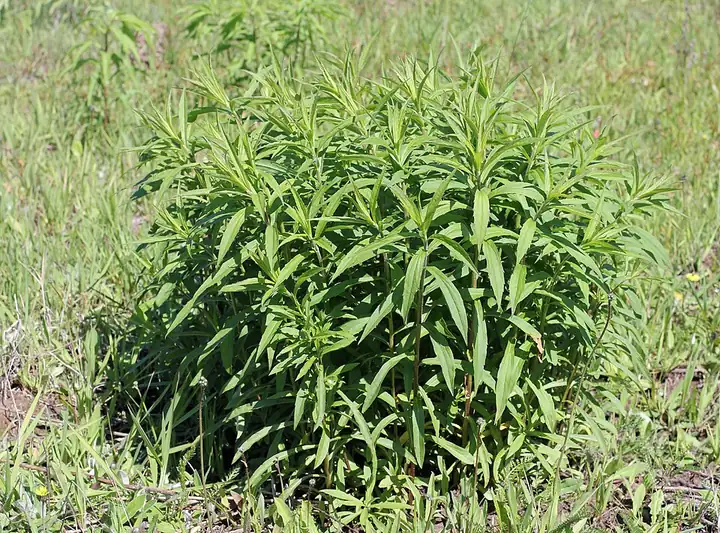
Goldenrod
Solidago species, such as gray goldenrod (S. nemoralis) · Daisy family (Asteraceae)
| Hardiness zones | 2 to 9 |
|---|---|
| Sun | full sun |
| Water | low |
| Life cycle | perennial |
| Frost | Hardy: takes frost |
| Spacing | 36 to 72 inches |
About Goldenrod
Goldenrods are native perennials with plumes of small yellow flowers from late summer into fall, a key late-season food for bees, butterflies and other pollinators; birds eat the seeds. Goldenrod is often wrongly blamed for fall hay fever. Its pollen is too heavy to blow around and is carried by insects; the real culprit is wind-pollinated ragweed, which blooms at the same time.
NC State lists zones 2-8 for goldenrods as a group and 3-9 for gray goldenrod; check the species you choose.
When to plant
Timing is counted from your average last spring frost (and first fall frost). Sow & Tell works out the actual dates for your ZIP code.
Grow from divisions, seed or stem cuttings. Fresh seed sprouts without special treatment, though a cold, moist period may help. Many goldenrods spread by creeping roots and self-seeding, so divide clumps every 2-3 years to keep them in bounds.
Soil
Average to dry, well-drained soil; goldenrod tolerates poor, rocky, sandy or clay soil.
Plant in average to dry, well-drained soil in full sun; goldenrod tolerates poor soil and needs no soil enrichment.
Feeding
Many goldenrods spread aggressively by rhizomes and seed; divide clumps every 2-3 years and remove flower heads before seed ripens.
Harvest
Grown for fall color and pollinators, with blooms from about July into October. Cut stems for fresh or dried bouquets, and snip off flower heads before seed ripens if you want less self-seeding.
Varieties (14)
14 garden cultivars are documented in two nonprofit trials (Chicago Botanic Garden, zone 5b, 1990s; Mt. Cuba Center, Delaware, 2021-2023) plus NC State and Wisconsin extension pages. Many of the best garden goldenrods in these trials were straight native species, not named cultivars.
| Variety | Type | Days | Notes |
|---|---|---|---|
| Wichita Mountains | Goldenrod cultivar | Upright clump 2.5-4 ft tall with bottlebrush-like spikes of yellow flowers. | |
| Baby Gold | Hybrid goldenrod | Fountain-shaped clump about 3-3.5 ft tall with dense sprays of bright yellow flowers. Very popular with small bees. | |
| Baby Sun | Hybrid goldenrod | Short, upright, clump-forming plant about 2 ft tall that rarely flops. One of the earliest goldenrods to bloom. | |
| Goldenmosa | Hybrid goldenrod | Clump about 2.5 ft tall with yellow flowers. | |
| Goldkind (Golden Baby) | Hybrid goldenrod | Tight, sturdy clump about 2-2.5 ft tall covered in golden-yellow flowers. Only minor mildew and no rust in the Chicago trial. | |
| Little Lemon ('Dansolitlem') | Hybrid goldenrod | Compact clump about 2 ft tall with pale yellow flowers. | |
| Sweety ('Barseven') | Hybrid goldenrod | Dwarf, mounding plant only 1-1.5 ft tall; small yellow flowers fade to white over a long bloom. | |
| Peter Pan | Hybrid goldenrod (also called 'Goldstrahl'; may come from European S. virgaurea) | Mounding clump about 2.5-3 ft tall with showy, long-lasting lemon-yellow flowers. | |
| Crown of Rays | Hybrid goldenrod (also sold as 'Strahlenkrone') | Vase-shaped clump about 2-2.5 ft tall with bright yellow flowers. Can rebloom after the first flowers are cut. | |
| Variegata | Solidago flexicaulis (zigzag goldenrod) | Leaves splashed with gold, brightest in spring and early summer; sulfur-yellow flowers in fall. Grows in shade and spreads by rhizomes at a moderate pace. | |
| Golden Rockets | Solidago rigida subsp. humilis (stiff goldenrod) | Clump about 2-2.5 ft tall with silvery leaves and yellow flowers. Tolerates salt and dry roadside-type spots. | |
| Fireworks | Solidago rugosa (wrinkleleaf goldenrod) | Arching sprays of tiny yellow flowers like a fireworks burst; about 4-5 ft tall and spreading slowly to 6 ft or more across. Top-rated goldenrod in both the Chicago and Mt. Cuba trials, with little mildew or rust. | |
| Solar Cascade | Solidago shortii (Short's goldenrod) | Mounding, spreading plant 4.5-5 ft tall with dark stems. A favorite of bumblebees. | |
| Golden Fleece | Solidago sphacelata (autumn goldenrod) | Compact, mounding plant about 1.5-3 ft tall with heart-shaped leaves at the base and one-sided sprays of bright yellow flowers. Makes a low border or ground cover. |
Pests to watch for
Aphids, Annual cicadas (dog-day cicadas), Lace bugs (azalea and chrysanthemum lace bugs)
Diseases and problems
Rust, Powdery mildew, Leaf spot
In the kitchen
Young leaves are edible and are used for herbal tea (NC State).
Safety: Goldenrod can cause allergic reactions in people sensitive to daisy-family plants. For European goldenrod remedies, the European Medicines Agency advises against use in pregnancy, while breastfeeding, in children under 12, together with prescription water pills (diuretics), or by people told to limit fluids because of serious heart or kidney disease.
Pets: Not listed by the ASPCA
Sources
Photo: Photo: George Chernilevsky / Wikimedia Commons, Public domain. Photo resized for the web.

Planting dates and advice are general guidance; check with your local Cooperative Extension office for your area.