
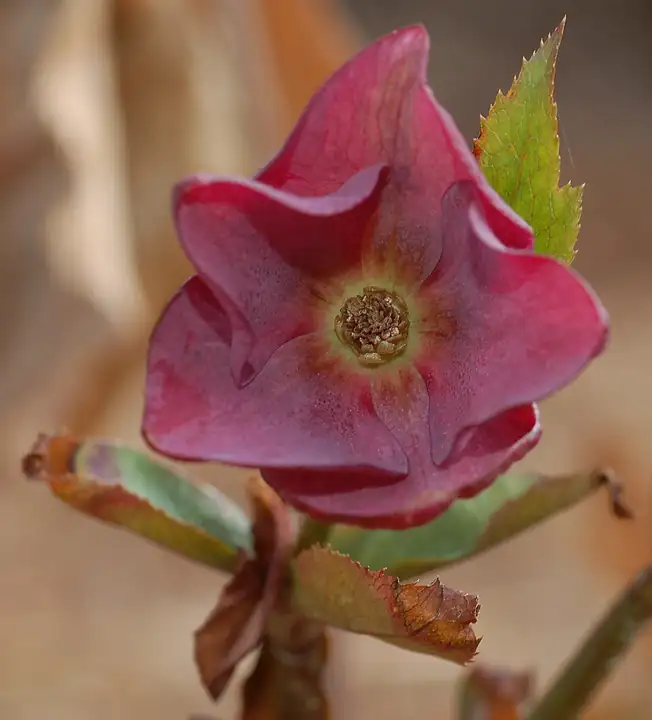
Hellebore (Lenten rose)
Helleborus x hybridus (Lenten rose; H. orientalis hybrids) and H. niger (Christmas rose) · Buttercup family (Ranunculaceae)
| Hardiness zones | 3 to 9 |
|---|---|
| Sun | part shade |
| Water | moderate |
| Life cycle | perennial |
| Frost | Hardy: takes frost |
| Spacing | 12 to 36 inches |
About Hellebore (Lenten rose)
Hellebores are tough, shade-loving evergreen perennials that bloom in late winter and early spring, and early pollinators feed on their nectar (NC State). Deer and rabbits leave them alone. All parts are poisonous, and they self-sow; the NC Invasive Plant Council calls hellebores potentially invasive, though a low threat.
Lenten rose is hardy in zones 4-9 and Christmas rose in zones 3-8 (NC State, Clemson). They are evergreen in warm climates. The NC Invasive Plant Council regards all hellebores as potentially invasive (low threat) because they self-seed.
When to plant
Timing is counted from your average last spring frost (and first fall frost). Sow & Tell works out the actual dates for your ZIP code.
Plant nursery plants under deciduous trees, where they get winter sun and summer shade, and mulch 2 inches deep (Clemson). Seedlings that pop up take 2-3 years to bloom; some types can be divided in late fall or early winter.
Soil
Moist but well-drained soil rich in organic matter, neutral to slightly limy; hellebores won't take soggy soil (NC State, Clemson).
Enrich the soil with organic matter and make sure it drains; hellebores like neutral to slightly alkaline soil (Clemson).
Feeding
Fertilizer is seldom needed; wet soil and bright winter sun are the usual problems (Clemson, NC State).
Harvest
Flowers last a long time on the plant and in water; float blooms in a bowl (NC State). Cut off the old, tattered leaves when new ones come up in late winter, and cut back flowering stems after bloom (Clemson, NC State). Wear gloves.
Varieties (18)
| Variety | Type | Days | Notes |
|---|---|---|---|
| Double Fantasy | Christmas rose (H. niger) | Semi-double, outward-facing ruffled white flowers on tall stems. | |
| HGC Jacob | Christmas rose (H. niger) | Large, long-lasting white flowers that age to green, tinged pink in cold weather. | |
| Cinnamon Snow | Hybrid hellebore | White flowers that age to pink on cinnamon-red stalks. | |
| Ivory Prince | Hybrid hellebore | Compact and vigorous; burgundy-pink buds open to flat, cup-shaped white flowers that age to rose and chartreuse. | |
| Penny's Pink | Hybrid hellebore | Pink and chartreuse flowers, marbled leaves and pink stems; 12-24 in tall. | |
| Silver Lace | Hybrid hellebore | Silvery, leathery leaves and lime-green cup flowers. | |
| Ice N' Roses series | Hybrid hellebore (H. x glandorfensis) | Glossy dark green leaves; Clemson notes good disease resistance. NC State lists a pink form ('COSEH 4200'). | |
| Frostkiss series | Hybrid hellebore (H. x iburgensis) | Marbled, bluish leaves. | |
| Winter Ballet series | Hybrid hellebore (H. x lemperii) | Large, upright-facing flowers. | |
| Orientalis Red | Lenten rose | Maroon-red flowers on a sturdy 1-2 ft clump. | |
| Dark and Handsome | Lenten rose (H. x hybridus) | Double flowers in near-black to purple-black over glossy leaves. | |
| Double Ellen Pink | Lenten rose (H. x hybridus) | Ruffled, layered pink double flowers. | |
| Double White | Lenten rose (H. x hybridus) | Fully double, cup-shaped white flowers on a clump. | |
| Painted Doubles | Lenten rose (H. x hybridus) | Double white flowers with deep maroon-red centers; 12-18 in tall; takes full shade. | |
| Purple Ruffles | Lenten rose (H. x hybridus) | Cup-shaped purple flowers on a tough 18-24 in clump. | |
| Sparkling Diamond | Lenten rose (H. x hybridus) | White flowers over deep green leaves; 12-15 in tall. | |
| Winter Delights Violet | Lenten rose (H. x hybridus) | Violet flowers; about 15 in tall. | |
| Royal Heritage | Lenten rose (seed strain) | Mixed colors from purple and pink to rose and light green, some spotted, over glossy dark leaves. |
Pests to watch for
Aphids, Slugs, Brown garden snail, Leafminers
Diseases and problems
Downy mildew, Gray mold (Botrytis), Leaf spot, Crown rot, Hellebore black death (virus)
In the kitchen
Safety: All parts are poisonous, fresh or dried: they contain heart-acting glycosides, and eating them can burn the mouth and cause vomiting, cramps, diarrhea and nervous symptoms. The sap can irritate skin, so wear gloves (NC State).
Pets: Toxic to dogs, cats and horses (ASPCA, Lenten rose and Christmas rose entries): glycosides, saponins and protoanemonin can cause drooling, belly pain, diarrhea, colic and depression.
Sources
Photo: Photo: Derek Ramsey (Ram-Man), CC BY-SA 2.5, via Wikimedia Commons (CC BY-SA 2.5). Photo resized for the web.

Planting dates and advice are general guidance; check with your local Cooperative Extension office for your area.