
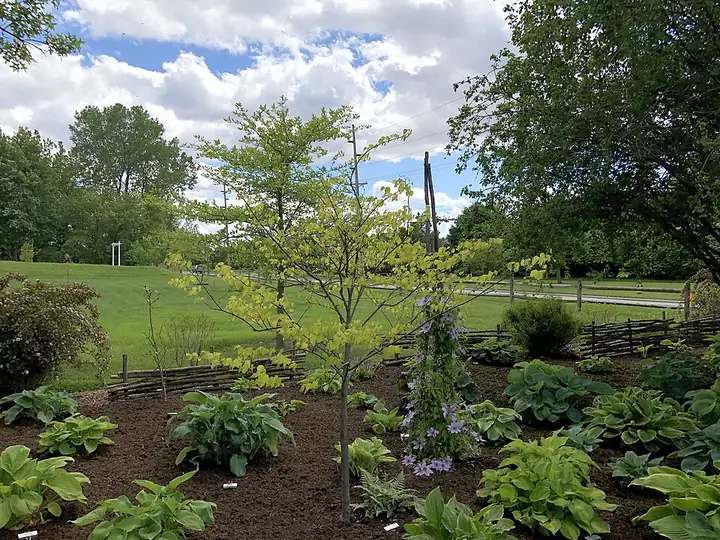
Hosta (plantain lily)
Hosta spp. and hybrids (incl. H. plantaginea, H. sieboldiana, H. fortunei) · Asparagus family (Asparagaceae)
| Hardiness zones | 3 to 9 |
|---|---|
| Sun | part shade |
| Water | moderate |
| Life cycle | perennial |
| Frost | Hardy: takes frost |
| Spacing | 12 to 36 inches |
About Hosta (plantain lily)
Hostas are the classic shade perennial, grown for big mounds of green, blue, gold or variegated leaves. There are about 22 species and more than 2,000 named kinds, from 4-inch miniatures to giants over 2 feet tall (NC State). Summer flower spikes in white or lavender are a bonus, and some, like H. plantaginea, are fragrant. Deer, slugs and voles love them.
Hardy in zones 3-9 (NC State). They need a couple of months below 40 F in winter to rest (NC State).
When to plant
Timing is counted from your average last spring frost (and first fall frost). Sow & Tell works out the actual dates for your ZIP code.
Plant container hostas or divisions in spring before the leaves unfold, or in early fall; space them 1-3 feet apart and water well (Clemson). Divide every 3-5 years in early spring as the shoots come up (NC State). Blue-leaved kinds need the most shade; give all of them afternoon shade.
Soil
Moist, well-drained soil rich in organic matter, slightly acidic; hostas hate soggy soil, especially in winter (NC State, Clemson).
Work in plenty of organic matter such as compost; hostas need well-drained soil (Clemson, NC State).
Feeding
- Early spring, after new growth starts: slow-release balanced fertilizer. Scatter a light amount around the plant and water it in; avoid heavy rates (Clemson). Follow a soil test.
Give at least 1 inch of water a week when rain doesn't, more in sun, heat or under thirsty tree roots (Clemson). Too much fertilizer is a common mistake.
Harvest
Flowers come from early summer into fall, depending on the kind: H. fortunei in late spring to early summer, fragrant H. plantaginea in late August and September (Clemson). Cut off flower stalks after bloom to keep the plant putting energy into leaves, and clear dead leaves in fall to cut down on slugs and disease.
Varieties (18)
| Variety | Type | Days | Notes |
|---|---|---|---|
| Empress Wu | Giant | Huge dark green leaves; up to about 50 in tall and 9 ft wide. | |
| Sum and Substance | Giant | Thick, glossy, corrugated chartreuse-gold leaves; about 30 in tall and 60 in wide; leaves resist slugs; best color with some sun. | |
| Elegans | Giant (H. sieboldiana) | Blue, puckered, wavy leaves; white flowers. | |
| August Moon | Large | About 20 in tall with a 30 in spread. | |
| Gold Standard | Large | Chartreuse to gold leaves with a dark green edge; about 20 in tall and 36 in wide. | |
| Guacamole | Large | Wide, shiny chartreuse-gold leaves with green edges; white flowers. | |
| Royal Standard | Large (H. plantaginea type) | White flowers; about 18 in tall and 38 in wide. | |
| Blue Cadet | Medium | Heart-shaped blue to dark green leaves; lavender flowers. | |
| Fire and Ice | Medium | Dark green leaves with a white center; lavender flowers. | |
| Fire Island | Medium | Bright yellow to chartreuse rippled leaves; lavender flowers. | |
| Francee | Medium | Dark green leaves with a narrow white edge; lavender flowers; about 24 in tall and 36 in wide. | |
| Halcyon | Medium | Thick blue-green leaves; lavender-blue flowers; needs shade to stay blue. | |
| June | Medium | Blue-green leaves with a light green to chartreuse center. | |
| Patriot | Medium | Dark green leaves with a wide white margin; about 12 in tall and 30 in wide. | |
| Minuteman | Medium to large | Dark green leaves with bright white edges; takes more sun and heat than most. | |
| Blue Mouse Ears | Small | Round, thick blue-green leaves; about 8 in tall and 19 in wide. | |
| Golden Tiara | Small | Green leaves with a gold edge; purple flowers; about 1 ft tall and 2 ft wide; good for edging. | |
| Mini Skirt | Small | About 7 in tall; wavy blue-green leaves with wide cream edges. |
Pests to watch for
Slugs, Brown garden snail, Deer, Rabbits, Voles, Foliar nematodes, Root-knot nematodes
Diseases and problems
Hosta virus X, Anthracnose, Crown rot, Southern blight, Leaf spot
In the kitchen
Safety: Grown as an ornamental. NC State notes the leaves of some species are cooked and eaten in Korea and Japan, but garden hostas are not grown or sold as food.
Pets: Toxic to dogs, cats and horses (ASPCA): saponins can cause vomiting, diarrhea and depression.
Sources
Photo: Photo: Mbrickn / Wikimedia Commons, CC BY 4.0 (CC BY 4.0). Photo resized for the web.

Planting dates and advice are general guidance; check with your local Cooperative Extension office for your area.