
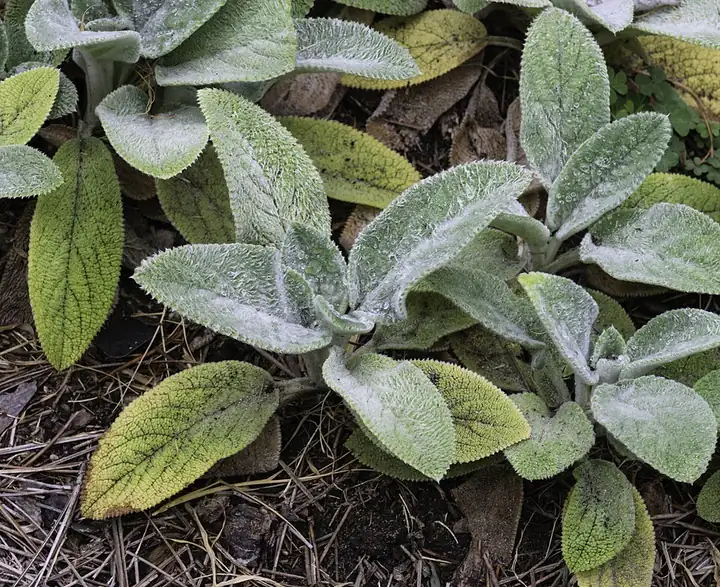
Lamb's ear
Stachys byzantina · Mint family (Lamiaceae)
| Hardiness zones | 4 to 9 |
|---|---|
| Sun | full sun to part shade |
| Water | low |
| Life cycle | perennial |
| Frost | Hardy: takes frost |
About Lamb's ear
Lamb's ear is grown for its soft, woolly, silver leaves that kids love to touch. It makes a low, spreading groundcover for sunny, dry spots, with fuzzy spikes of small pink-purple flowers in early summer (NC State). It can spread aggressively and get weedy where it's happy.
Hardy in zones 4-9 (NC State); its leaves rot in long humid, rainy spells, so it struggles in muggy Southern summers.
When to plant
Timing is counted from your average last spring frost (and first fall frost). Sow & Tell works out the actual dates for your ZIP code.
Plant in spring in sun with some afternoon shade in hot areas; in hot, humid places plant it on a slope to reduce rot (NC State). Divide every 2-4 years. Stems root where they touch the ground, so it spreads on its own.
Soil
Average, dry to medium, very well-drained soil; avoid overwatering (NC State).
Plant in average, very well-drained soil; no rich amendments needed (NC State).
Feeding
Overwatering and wet leaves cause rot; water only until it is settled, then let it get by on rain (NC State).
Harvest
Flower spikes come May to July (NC State). Many gardeners cut them off to keep the leaves tidy and the plant compact; 'Helene von Stein' and 'Silver Carpet' rarely bloom.
Varieties (7)
NC State documents these 7 ('Big Ears' and 'Helene von Stein' are the same plant).
| Variety | Type | Days | Notes |
|---|---|---|---|
| Cotton Boll | Flower spikes look like rows of cotton balls; gray-green leaves. | ||
| Helene von Stein (Big Ears) | Larger leaves; handles summer heat better; rarely flowers. | ||
| Primrose Heron | Yellow spring leaves; pink flowers. | ||
| Silky Fleece | Small, white, woolly leaves; lilac-plum flowers. | ||
| Silver Carpet | Low groundcover type that rarely blooms. | ||
| Silver Queen | Named by NC State without a description. | ||
| Striped Phantom | Variegated leaves. |
Diseases and problems
Leaf rot, Root rot
In the kitchen
Pets: Not listed as toxic by the ASPCA.
Sources
Photo: Photo: PumpkinSky / Wikimedia Commons, CC BY-SA 4.0 (CC BY-SA 4.0). Photo resized for the web.

Planting dates and advice are general guidance; check with your local Cooperative Extension office for your area.