
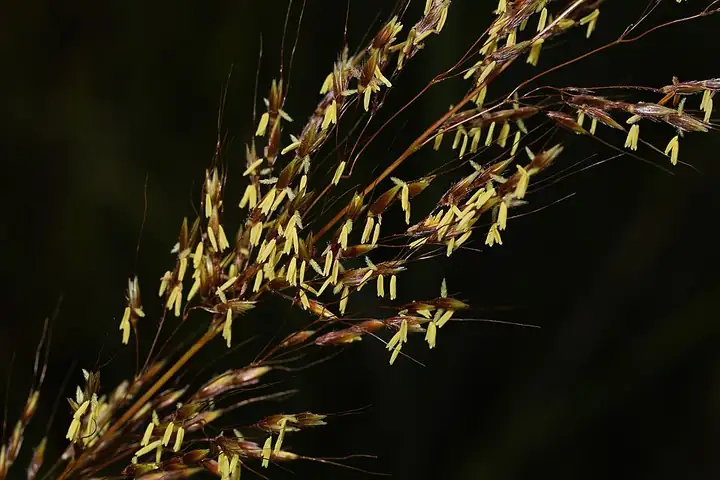
Little bluestem
Schizachyrium scoparium · Grass family (Poaceae)
| Hardiness zones | 3 to 9 |
|---|---|
| Sun | full sun |
| Water | low |
| Life cycle | perennial |
| Frost | Hardy: takes frost |
About Little bluestem
Little bluestem is a native prairie bunchgrass with fine blue-green leaves that turn warm copper and orange in fall and hold that color all winter (NC State). It is tough in heat, clay and poor soil. Its seeds feed sparrows, juncos and other birds, and skipper caterpillars live in its clumps (USDA NRCS).
Hardy in zones 3-9 (NC State, USDA NRCS).
When to plant
Timing is counted from your average last spring frost (and first fall frost). Sow & Tell works out the actual dates for your ZIP code.
Plant in spring. From seed, sow 1/8-1/4 inch deep in a firm, weed-free bed in spring; it is slow to establish (USDA NRCS). Keep mulch away from the crown (NC State).
Soil
Well-drained soil from sand to clay, including poor soil; it is deep-rooted and fairly drought tolerant (NC State, USDA NRCS).
No amendments needed; it thrives in poor, well-drained soil (NC State).
Feeding
Too much nitrogen makes grasses weak, floppy and prone to disease (Clemson). Water thoroughly after planting and watch closely the first few weeks; established clumps want about 1 inch of water a week from rain or irrigation. Keep mulch off the crown (NC State).
Varieties (12)
Garden cultivars from NC State; conservation releases from USDA NRCS, which lists them without traits.
| Variety | Type | Days | Notes |
|---|---|---|---|
| Aldous | Conservation release | Released 1966 for Kansas. | |
| Blaze | Conservation release | Released 1967 for Nebraska and Kansas. | |
| Camper | Conservation release | Released 1973 for Nebraska and Kansas. | |
| Cimmaron | Conservation release | Released 1979 for Kansas and Oklahoma. | |
| Suther | Conservation release | Released 2008 for North Carolina. | |
| Blue Heaven | Ornamental | Taller and more upright, with steel-blue leaves tinted purple. | |
| Carousel | Ornamental | Named by NC State without a description. | |
| Ha Ha Tonka | Ornamental | Blue-green leaves with fine hairs that catch the light. | |
| Prairie Blues | Ornamental | Named by NC State without a description. | |
| Standing Ovation | Ornamental | Wide blue leaves with red tips; red to maroon fall color. | |
| The Blues | Ornamental | Blue leaves with red stems. | |
| Twilight Zone | Ornamental | Purplish leaves. |
In the kitchen
Pets: Not listed as toxic by the ASPCA.
Sources
Photo: Photo: Judy Gallagher / Wikimedia Commons, CC BY 2.0 (CC BY 2.0). Photo resized for the web.

Planting dates and advice are general guidance; check with your local Cooperative Extension office for your area.