
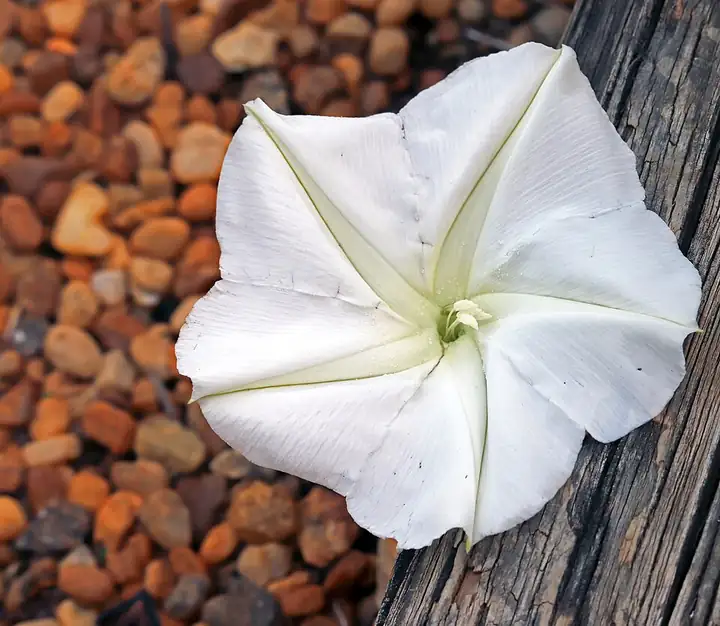
Moonflower
Ipomoea alba · Morning glory family (Convolvulaceae)
| Hardiness zones | 9 to 12 |
|---|---|
| Sun | full sun |
| Water | moderate |
| Life cycle | tender perennial (grown as an annual) |
| Frost | Tender: killed by frost |
About Moonflower
Moonflower is a big, tropical cousin of morning glory whose sweet-scented white flowers, up to 6 inches across, unfurl at dusk and close the next morning. Night-flying moths, including sphinx moths, visit the blooms, which makes it a favorite for patios and evening gardens (NC State, UF/IFAS). It is native to Florida, Mexico and Central and South America; the seeds are poisonous, like other morning glories.
Perennial only in about zones 9-12 (UF/IFAS, NC State); grown as a summer annual elsewhere. Georgia's seed law lists it as a prohibited noxious weed seed.
When to plant
Timing is counted from your average last spring frost (and first fall frost). Sow & Tell works out the actual dates for your ZIP code.
- Start seeds indoors: 4 to 8 weeks before the last frost
- Set out plants: 1 to 2 weeks after the last frost
- Sow seeds outdoors: up to 2 weeks after the last frost
Nick the seed coat with a file or sandpaper and soak seeds overnight in warm water. It needs a long, warm season, so start seeds indoors 6-8 weeks (UF/IFAS) or 4-6 weeks (NC State) before the last frost and plant out 1-2 weeks after it, once the soil is warm; direct-sown plants bloom later in summer. No sourced count from sowing to bloom. To keep a plant over winter, grow it in a large container and bring it indoors before frost (NC State).
Soil
Moist, well-drained soil with good fertility (UF/IFAS, Illinois).
Choose a sunny spot with moist, well-drained, reasonably fertile soil (Illinois, UF/IFAS).
Feeding
- Through the growing season: balanced garden fertilizer. Illinois Extension says moonflower likes ample moisture and fertility; we found no sourced rate or schedule, so follow the label and a soil test.
Don't rush it into cold soil; the vine grows slowly until the weather turns hot (NC State, UF/IFAS).
Harvest
Blooms from late July until cold weather; each flower opens at sunset and lasts one night (UF/IFAS). For seed, let pods ripen and dry on the vine in fall, then air-dry and shell them (UF/IFAS).
Varieties (2)
Extension sources name only 2 moonflower cultivars, without traits; most seed is sold simply as moonflower.
| Variety | Type | Days | Notes |
|---|---|---|---|
| Belle de Nuit | Ipomoea alba | ||
| Giant White | Ipomoea alba |
In the kitchen
Keeping it: Store saved seed dry, in a closed container at room temperature, until spring planting (UF/IFAS).
Safety: The seeds are poisonous (NC State: low severity): they can cause vomiting, and large amounts may cause hallucinations. Keep saved seed out of reach of children.
Pets: Not listed by name, but the ASPCA lists morning glories (Ipomoea spp., the genus moonflower belongs to) as toxic to dogs, cats and horses: indole alkaloids cause vomiting, and many seeds may cause hallucinations. NC State lists moonflower seeds as a problem for dogs, cats and horses.
Sources
- plants.ces.ncsu.edu
- gardeningsolutions.ifas.ufl.edu
- blogs.ifas.ufl.edu
- extension.illinois.edu
- homegarden-cahnr.media.uconn.edu
- planttalk.colostate.edu
- aspca.org
- aspca.org
- ams.usda.gov
Photo: Photo: Don McCulley / Wikimedia Commons, CC0 (CC0). Photo resized for the web.

Planting dates and advice are general guidance; check with your local Cooperative Extension office for your area.