
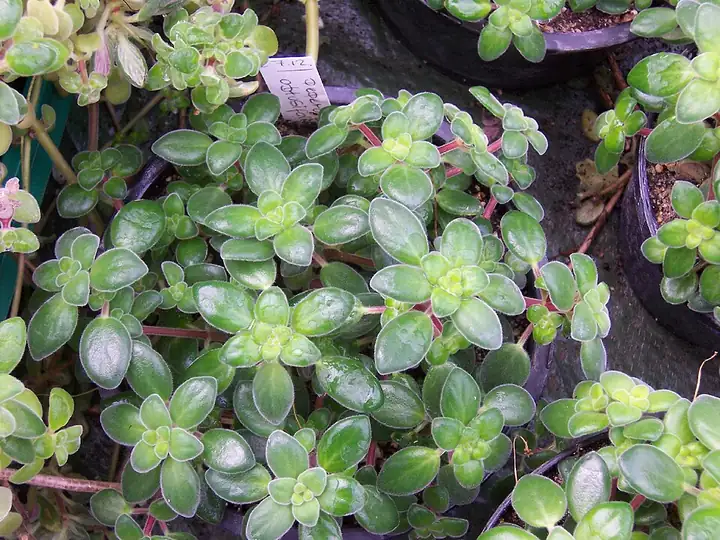
Peperomia
Peperomia obtusifolia, P. caperata, P. argyreia and about 1,000 other species · Pepper family (Piperaceae)
| Hardiness zones | 10 to 12 |
|---|---|
| Sun | part shade |
| Water | low |
| Life cycle | perennial |
| Frost | Tender: killed by frost |
About Peperomia
Peperomias are small, tidy tropical plants from Florida, Mexico, Central and South America with thick, often glossy or rippled leaves on pink or red stems. The baby rubber plant (P. obtusifolia), watermelon peperomia (P. argyreia) and ripple plant (P. caperata) are the ones you see most, and they suit a desk or a north windowsill because they stay under about 15 inches and forgive a missed watering (NC State, Clemson). They are one of the few popular houseplants the ASPCA lists as non-toxic to cats and dogs.
Hardy outdoors only in zones 10-12 (NC State, for P. obtusifolia); it is grown indoors everywhere and can summer outdoors in a bright shady spot once nights stay consistently above 60 F (Clemson).
When to plant
Timing is counted from your average last spring frost (and first fall frost). Sow & Tell works out the actual dates for your ZIP code.
Usually bought as a small nursery plant, or started from a leaf or stem cutting (Clemson, NC State).
Growing it indoors
- Light: An east or south window with no direct sun is ideal, it tolerates somewhat low light near a big north window, and the plain-green kinds sit in low light for months without stress, but direct or strong sun scorches the leaves (Clemson, NC State).
- Water: Let the mix dry out between waterings, then water thoroughly, let the pot drain and put it back in its saucer; MU Extension sums it up as 'drench, then dry'. Overwatering is the main way to kill one, giving yellow leaves, leaf drop and root rot, so water even less in winter.
- Humidity: It prefers medium to low humidity (NC State), though Clemson says a humidifier helps in dry winter air.
- Temperature: Clemson waits for nights consistently above 60 F before moving it outdoors, MU Extension suggests nights around 65 F, and NC State says it dislikes drafty spots.
- Feeding: Feed only during active growth in spring and summer, either an occasional low-strength liquid houseplant fertilizer or one dose of slow-release granules a year (Clemson).
- Repotting: It doesn't need yearly repotting and can stay in the same pot for several years; when it is pot-bound, move it in spring to a pot only slightly larger (Clemson, MU Extension).
Soil
A well-drained houseplant or cactus potting mix in a pot with a drainage hole; it rots in mix that stays wet (Clemson, NC State).
Pot in a well-drained houseplant or cactus potting mix in a container with a drainage hole (Clemson, NC State).
Feeding
- Spring and summer, while new leaves are coming: low-strength liquid houseplant fertilizer, or slow-release granules. Clemson feeds an occasional dose of a low-strength liquid fertilizer through the growing season, or one application of slow-release granules a year; water first and never feed a dry or wilted plant (MU Extension).
- Fall and winter: none. Skip feeding whenever no new growth is showing (Clemson, MU Extension).
Overfeeding and overwatering do more harm than hunger; it grows slowly and lives for years in the same pot of lean mix (Clemson).
Varieties (12)
Clemson names 10 commonly sold species and NC State names 6 cultivars of the baby rubber plant; the species are listed here as groups since that is how they are sold.
| Variety | Type | Days | Notes |
|---|---|---|---|
| Ripple plant (P. caperata) | Patterned-leaf | Deeply rippled, puckered leaves in burgundy-red or green with silver, about 10 in tall and wide; many named cultivars. | |
| Watermelon peperomia (P. argyreia) | Patterned-leaf | Rounded leaves striped silver and green like a watermelon rind on red stems; small and bushy at about 8 in, good for an office. | |
| Alba | Thick-leaved upright | Baby rubber plant with creamy white young leaves and red-tinged stems that green up as they mature. | |
| Baby rubber plant (P. obtusifolia) | Thick-leaved upright | Thick, rounded, succulent-like glossy leaves, solid green or variegated, on an upright bushy plant 6 in to 2 ft; needs little water and is the easiest of the bunch. | |
| Gold Tip | Thick-leaved upright | Baby rubber plant with marbled variegation and gold leaf tips. | |
| Minima | Thick-leaved upright | A compact baby rubber plant with small, dense green leaves. | |
| Raindrop peperomia (P. polybotrya) | Thick-leaved upright | Shiny green teardrop leaves on a 12 in plant; often confused with the Chinese money plant but easier to grow. | |
| Red-edged peperomia (P. clusiifolia) | Thick-leaved upright | Up to 12 in tall with dark green leaves rimmed in red; the slow-growing variegated 'Ginny' has green and cream leaves with a pink edge. | |
| Variegata | Thick-leaved upright | A baby rubber plant with glossy green leaves edged and splashed in cream. | |
| Creeping buttons (P. rotundifolia) | Trailing | Small round green or variegated leaves set close along trailing stems, like string of turtles with plainer, bigger leaves. | |
| Cupid peperomia (P. serpens) | Trailing | Heart-shaped glossy mid-green leaves, also in a variegated form, that trail from a hanging pot like a small philodendron. | |
| String of turtles (P. prostrata) | Trailing | Tiny round leaves patterned like turtle shells on thread-thin trailing stems; sensitive to overwatering. |
Pests to watch for
Mealybugs, Twospotted spider mite, Fungus gnats, Scale insects, Whiteflies
Diseases and problems
Root and crown rot, Fungal leaf spot
In the kitchen
Safety: NC State lists no poison hazard for the baby rubber plant and tags it pet friendly, and Clemson says most peperomias are considered safe for pets; still, don't let children chew any houseplant.
Pets: Non-toxic to dogs and cats (ASPCA, listed as baby rubber plant, Peperomia obtusifolia); NC State also tags it non-toxic for horses.
Sources
Photo: Photo: Dysmorodrepanis, CC BY-SA 3.0, via Wikimedia Commons (CC BY-SA 3.0). Photo resized for the web.

Planting dates and advice are general guidance; check with your local Cooperative Extension office for your area.