
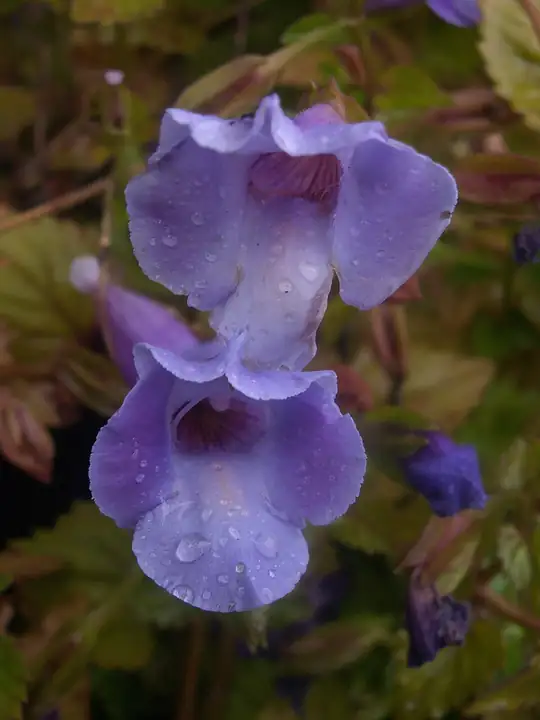
Torenia (wishbone flower)
Torenia fournieri and trailing Torenia hybrids · Lindernia family (Linderniaceae)
| Hardiness zones | 10 to 11 |
|---|---|
| Sun | part shade |
| Water | moderate |
| Life cycle | tender perennial (grown as an annual) |
| Frost | Tender: killed by frost |
About Torenia (wishbone flower)
Torenia is a small shade-tolerant annual with snapdragon-like flowers in blue, violet, pink, white and yellow; look inside and two stamens meet in a little wishbone. Compact seed-grown types stay 6-8 inches tall for edging, while trailing hybrids such as Summer Wave and Catalina spill out of baskets and handle summer heat and humidity (Clemson, UF/IFAS). Wisconsin Extension lists it as a good replacement where impatiens downy mildew has struck.
Treated as a summer annual; it may live through winter in zones 10-11 (UF/IFAS).
When to plant
Timing is counted from your average last spring frost (and first fall frost). Sow & Tell works out the actual dates for your ZIP code.
- Start seeds indoors: 6 to 8 weeks before the last frost
- Set out plants: up to 2 weeks after the last frost
Start compact types from seed indoors 6-8 weeks before the average last frost and plant out after frost (mid to late April in South Carolina); trailing hybrids set no seed and are sold only as plants (Clemson). No days-to-bloom count is sourced. NC State notes torenia can be brought indoors for winter, so a potted plant can be moved inside before frost.
Soil
Rich, moist soil with good drainage, mulched to keep roots cool; use well-drained potting mix in containers (NC State, Clemson).
Plant in rich, moist, well-drained soil, or a well-drained potting mix in containers (NC State, Clemson).
Feeding
- Every 2-4 weeks through the growing season: liquid or water-soluble fertilizer. UF/IFAS suggests feeding every 2-4 weeks; Clemson feeds trailing types in pots every two weeks.
Water regularly, but don't let plants sit in soggy soil (UF/IFAS); wet, crowded plants are prone to root rot and gray mold (Oklahoma State).
Harvest
Blooms from spring until frost. It needs no deadheading (Clemson); pinch young plants for a bushier shape (NC State).
Varieties (7)
Extension sources document 7 torenia series, mostly without sizes.
| Variety | Type | Days | Notes |
|---|---|---|---|
| Duchess series | Compact torenia (T. fournieri) | Compact seed-grown torenia in purple, pink or white. | |
| Kauai series | Compact torenia (T. fournieri) | Upright, compact seed-grown torenia in purple, pink or white, usually with a white throat and a yellow dot. | |
| Little Kiss series | Compact torenia (T. fournieri) | Compact; colors include Little Kiss Blue and Little Kiss Rose Picotee. | |
| Vertigo series | Compact torenia (T. fournieri) | Compact torenia in purple, pink or white. | |
| Catalina series | Trailing torenia hybrid | Trailing, in several colors; handles summer heat and humidity. | |
| Moon series | Trailing torenia hybrid | Trailing, in several colors; handles summer heat and humidity. | |
| Summer Wave series | Trailing torenia hybrid | Vigorous trailing plants that handle heat, heavy rain and the odd dry spell; good for summer baskets. |
Diseases and problems
Root rot, Gray mold, Powdery mildew
In the kitchen
Pets: Not listed by the ASPCA (no entry for wishbone flower or torenia).
Sources
- plants.ces.ncsu.edu
- hgic.clemson.edu
- gardeningsolutions.ifas.ufl.edu
- gardeningsolutions.ifas.ufl.edu
- extension.okstate.edu
- hort.extension.wisc.edu
- aspca.org
- aspca.org
Photo: Photo: Cbaile19 / Wikimedia Commons, CC0 (CC0). Photo resized for the web.

Planting dates and advice are general guidance; check with your local Cooperative Extension office for your area.