
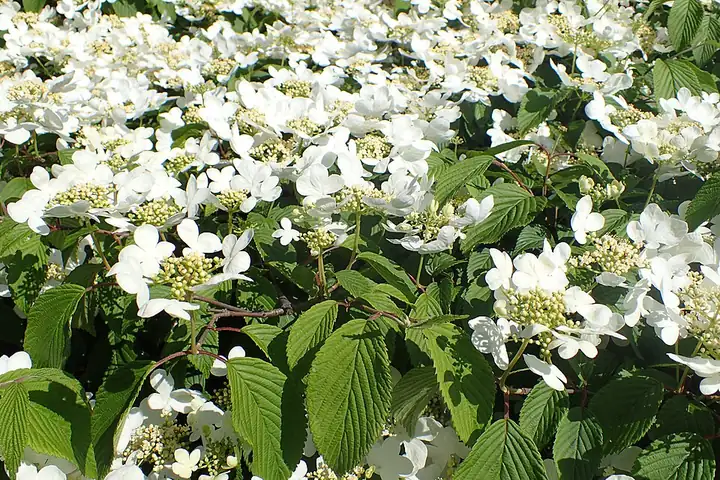
Viburnum
Viburnum dentatum (arrowwood), V. carlesii (Koreanspice), V. plicatum (doublefile and Japanese snowball), V. x burkwoodii, V. prunifolium (blackhaw), V. nudum (possumhaw), V. dilatatum (linden) and other ornamental viburnums · Viburnum family (Viburnaceae, formerly Adoxaceae)
| Hardiness zones | 2 to 10 |
|---|---|
| Sun | full sun to part shade |
| Water | moderate |
| Life cycle | perennial |
| Frost | Hardy: takes frost |
| Soil pH | 5.5–6.5 |
| Spacing | 48 to 120 inches |
About Viburnum
Viburnums are a large, easygoing group of deciduous and evergreen shrubs with flat, domed or snowball clusters of white flowers in spring, many of them fragrant, followed by red, blue or black berries that birds eat (Clemson). Natives such as arrowwood, blackhaw and possumhaw are great wildlife shrubs. Linden viburnum from Asia is considered invasive in some states and a significant potential threat in North Carolina, and NC State tags doublefile viburnum as weedy. American cranberrybush has its own page.
Arrowwood is hardy in zones 2-8, and the group as a whole spans zones 4-10 (NC State). Evergreen kinds such as laurustinus and sweet viburnum suit the warm South. Linden viburnum is invasive in some states.
When to plant
Timing is counted from your average last spring frost (and first fall frost). Sow & Tell works out the actual dates for your ZIP code.
Fall is the ideal planting time in the Southeast; spring-planted container shrubs need extra water through their first summer (Clemson). Space 4-10 ft apart by mature size. For heavy berry set, plant two or more different seedlings or cultivars of the same species together.
Soil
Moist, rich, slightly acid soil; mix in organic matter so the root zone holds 10-20 percent, then mulch with 4-6 inches of pine straw or 2-3 inches of bark (Clemson).
Mix in organic matter so the root zone holds 10-20 percent; viburnums like moist, rich soil at pH 5.5-6.5 (Clemson).
Feeding
- Spring to early summer after new growth starts, only if a soil test shows a need: slow-release complete fertilizer in a 3:1:2 ratio, or what the soil test calls for. Spread evenly from the trunk out to the drip line and water it in; a typical soil-test rate for shrubs is about 2 lb of 12-6-6 per 100 sq ft (Clemson). Follow a soil test.
Water is what new shrubs need most: daily for the first 2 weeks, every 2-3 days through week 12, then weekly until the roots spread (at least two growing seasons), using about a quarter to a third of the nursery pot's volume each time (UMN). Deep-soak even established viburnums in long dry spells; spring-planted container plants need extra summer water (Clemson).
Harvest
Most bloom in spring (March to May); Koreanspice opens clove-scented flowers in March-April. Berries ripen from summer into fall. Prune right after bloom to keep next year's flowers, and don't deadhead if you want berries (Clemson, NC State).
Varieties (17)
| Variety | Type | Days | Notes |
|---|---|---|---|
| Blue Muffin | Arrowwood (V. dentatum), native | 5-7 ft tall, 2-4 ft wide; intense blue fruit. | |
| Autumn Jazz | Arrowwood, native | Vase-shaped, 8-10 ft tall and 10-12 ft wide; red, yellow, orange and burgundy fall color. | |
| Chicago Lustre | Arrowwood, native | Upright, about 10 ft; glossy dark leaves, deep purple berries. | |
| Dark Tower | Blackhaw (V. prunifolium), native | Tree form 12-15 ft tall and 8-12 ft wide; blue fruit turning black. | |
| Mohawk | Burkwood (V. x burkwoodii) | Red buds, spicy fragrance, 7-8 ft; orange to red-purple fall color; resists bacterial leaf spot. | |
| Mary Milton | Doublefile | NC State notes it is less invasive than other doublefiles. | |
| Shasta | Doublefile | About 10 ft tall and 12 ft wide (6-8 ft tall per NC State); pure white clusters; red fruit turning black. | |
| Mariesii | Doublefile (V. plicatum f. tomentosum) | Layered, horizontal branches with large white lacecap clusters. | |
| Compactum | European cranberrybush (V. opulus) | 4-5 ft, very dense, heavy fruit set, red fall color. | |
| Cayuga | Fragrant snowball (V. x carlcephalum) | Usually 4-6 ft; pink buds open to white, mildly fragrant flowers; highly tolerant of bacterial leaf spot and powdery mildew. | |
| Chesapeake | Hybrid (Cayuga x V. utile) | Semi-evergreen, 6 ft tall and 10 ft wide; white April flowers. | |
| Conoy | Hybrid (V. utile x V. burkwoodii) | Dense evergreen, 5 ft tall and 8 ft wide; leaves often purple in winter. | |
| Alleghany | Lantanaphyllum (V. x rhytidophylloides) | Dark leaves, heavy bloom, resists bacterial leaf spot. | |
| Spring Bouquet | Laurustinus (V. tinus), evergreen | Compact 5-6 ft with red stems; winter to early spring bloom. | |
| Michael Dodge | Linden viburnum | Bright yellow fruit on 8-10 ft shrubs. | |
| Erie | Linden viburnum (V. dilatatum) | 10 ft tall; coral-red fruit into spring; insect and disease resistant. | |
| Winterthur | Possumhaw (V. nudum), native | 6 ft tall and wide; glossy leaves turning red; pink fruit maturing blue. |
Pests to watch for
Viburnum leaf beetle, Aphids, Scale insects, Twospotted spider mite, Thrips, Whiteflies
Diseases and problems
Bacterial leaf spot, Leaf spots, Powdery mildew, Downy mildew, Botryosphaeria canker, Road salt injury
In the kitchen
Safety: NC State gives no poison rating for the viburnums on this page.
Pets: Not on the ASPCA toxic plant lists.
Sources
- hgic.clemson.edu
- plants.ces.ncsu.edu
- plants.ces.ncsu.edu
- plants.ces.ncsu.edu
- plants.ces.ncsu.edu
- hort.cornell.edu
- aspca.org
- aspca.org
- extension.rutgers.edu
- extension.rutgers.edu
- extension.rutgers.edu
- extension.rutgers.edu
- hgic.clemson.edu
- extension.umn.edu
Photo: Photo: Krzysztof Ziarnek (Kenraiz) / Wikimedia Commons, CC BY-SA 4.0 (CC BY-SA 4.0). Photo resized for the web.

Planting dates and advice are general guidance; check with your local Cooperative Extension office for your area.