
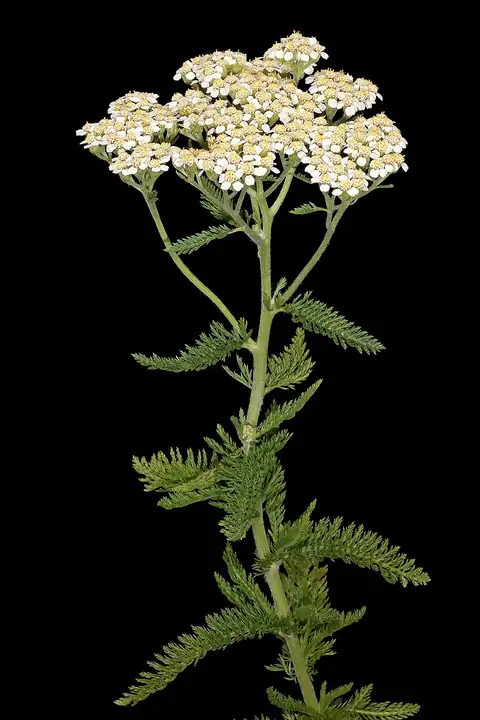
Yarrow
Achillea millefolium · Daisy family (Asteraceae)
| Hardiness zones | 3 to 9 |
|---|---|
| Sun | full sun |
| Water | low |
| Life cycle | perennial |
| Frost | Hardy: takes frost |
| Soil pH | 6.0–8.0 |
| Spacing | 12 to 36 inches |
About Yarrow
Yarrow is a tough, ferny-leaved perennial with flat clusters of tiny flowers that draw bees, butterflies and other insects. It thrives in dry, sunny spots but spreads aggressively by roots and seed.
NC State lists common yarrow as hardy in zones 3-9.
When to plant
Timing is counted from your average last spring frost (and first fall frost). Sow & Tell works out the actual dates for your ZIP code.
Grow from seed or divide established clumps. Watch that it does not spread beyond where you want it.
Soil
Well-drained loam or sandy soil; drought tolerant, and wet soil can cause root rot.
Plant in full sun in well-drained soil; yarrow grows in poor, dry or sandy soil and a wide pH range. No fertilizer is needed.
Feeding
Yarrow does not need fertilizer; stems flop over in overly wet or fertile soil.
Harvest
Grown for its flowers and the insects they feed rather than for a harvest; divide spreading clumps to keep them in bounds.
Varieties (21)
| Variety | Type | Days | Notes |
|---|---|---|---|
| Apricot Delight | Common yarrow (A. millefolium) | Flowers in pink, apricot and red shades. | |
| Cerise Queen | Common yarrow (A. millefolium) | Magenta flowers. | |
| New Vintage Rose | Common yarrow (A. millefolium) | Rose-pink flowers. | |
| Paprika | Common yarrow (A. millefolium) | Brick-red flowers with yellow centers. | |
| Peachy Seduction | Common yarrow (A. millefolium) | Peachy-pink flowers. | |
| Pink Grapefruit | Common yarrow (A. millefolium) | Deep rose flowers that fade to pink. | |
| Red Velvet | Common yarrow (A. millefolium) | Red flowers that resist fading. | |
| Salmon Beauty | Common yarrow (A. millefolium) | Salmon-pink flowers that fade to creamy yellow. | |
| Saucy Seduction | Common yarrow (A. millefolium) | Rose-pink flowers with white centers. | |
| Strawberry Seduction | Common yarrow (A. millefolium) | Red flowers with gold centers. | |
| Summer Pastels | Common yarrow (A. millefolium) | About 2 ft tall with strong-stemmed clusters in a mix of pastel pinks, reds, yellows, salmons, lilacs and whites. | |
| Altgold | Fernleaf yarrow (A. filipendulina) | Shorter fernleaf yarrow, about 2 ft, with gold flowers. | |
| Cloth of Gold | Fernleaf yarrow (A. filipendulina) | Tall, about 5 ft, with gold flower heads. | |
| Coronation Gold | Fernleaf yarrow (A. filipendulina) | 2-3 ft plants with yellow flower heads up to 4 in across. | |
| Gold Plate | Fernleaf yarrow (A. filipendulina) | Gold flower heads; one of the tallest yarrows. | |
| Angelique | Hybrid yarrow | 2-3 ft plants with dark red flowers. | |
| Appleblossom | Hybrid yarrow | 18-24 in plants with lilac-pink flowers. | |
| Galaxy series | Hybrid yarrow | Hybrids of common yarrow and A. taygetea in many colors. | |
| Moonshine | Hybrid yarrow | Compact 18-24 in plants with sulfur-yellow flowers over evergreen foliage; an early bloomer. | |
| Ortels Rose | Hybrid yarrow | 12-18 in plants with pink flowers; a very strong grower. | |
| Terracotta | Hybrid yarrow | 2-3 ft plants; flowers open peach and age to tawny terracotta orange. |
Diseases and problems
Root rot in wet soil, Powdery mildew (rare)
In the kitchen
Safety: People allergic to daisy-family plants such as ragweed should not use yarrow, and skin reactions have been reported; the European Medicines Agency limits it to ages 12 and up. Handling the plant can cause contact dermatitis (NC State).
Pets: Toxic to dogs, cats and horses (ASPCA): can cause vomiting, diarrhea, colic, drooling, loss of appetite, skin irritation and depression
Sources
Photo: Photo: SAplants, CC BY-SA 4.0, via Wikimedia Commons (CC BY-SA 4.0). Photo resized for the web.

Planting dates and advice are general guidance; check with your local Cooperative Extension office for your area.