
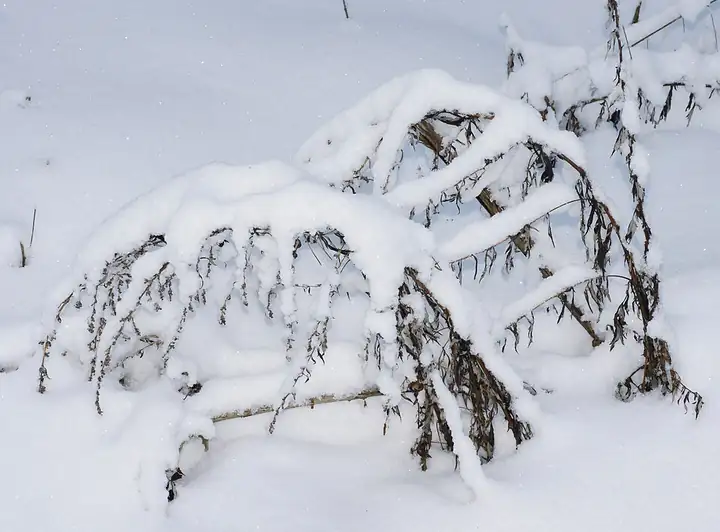
Mugwort
Artemisia vulgaris
| Type | Broadleaf |
|---|---|
| Life cycle | Perennial |
| Family | Aster family (Asteraceae) |
| Origin | Introduced from elsewhere |
| Most common in | Northeast |
About
Mugwort is an aggressive, mum-scented perennial that spreads through beds and lawns by tough rhizomes. It often arrives hidden in nursery root balls and is very hard to dig out once established.
Also called common mugwort, chrysanthemum weed, wild wormwood, common wormwood, felon herb
How to identify it
Look for
Leaves are deeply cut, look a lot like chrysanthemum leaves, and have white woolly hairs on the underside; crushed leaves smell like mums. Plants can grow 4 to 6 feet tall if not mowed, with small greenish-yellow flowers in spikes in late summer. Tough rhizomes spread underground.
Look-alikes
Garden mums have no white hairs under the leaves and no running rhizomes. Common ragweed has more finely cut leaves without white undersides.
Where it grows
Landscape beds (it thrives in mulched beds), lawns, roadsides and disturbed ground.
When
Shoots come up in early spring, it flowers from about July to September, and tops die back after frost.
How it spreads
Mainly by rhizomes that regrow from small pieces and move in soil and nursery root balls; seed is rarely produced in the US.
Most common in
| Northeast | Very common here |
|---|---|
| Southeast | Common here |
| South Central | Occasional here |
| Midwest | Common here |
| Great Plains | Occasional here |
| Mountain West | Occasional here |
| Southwest | Occasional here |
| Pacific Northwest | Occasional here |
| California | Occasional here |
| Alaska | Occasional here |
| Hawaii | Occasional here |
What to do, gentlest first
Start at the top. Weed killers are a last step; always read and follow the label.
Check new plants and soil Prevent
Inspect root balls of new nursery plants and loads of soil or mulch for white rhizomes before planting.
Pull again and again By hand
Keep pulling or cutting off the leafy shoots every time they appear to starve the rhizomes; one pulling will not do it.
Never till mugwort; each root piece becomes a new plant.
Smother it Barrier
Cover the patch with black plastic, or thick layers of newspaper topped with mulch, and leave it in place to block all light.
Ordinary mulch alone doesn't stop it.
Systemic spot treatment Conventional spray
Spot-treat leaves with glyphosate in late summer or early fall so it moves down to the roots; dichlobenil in winter or clopyralid on young shoots are other options. Common pre-emergent weed preventers don't work.
Read and follow the label; many lawn and brush herbicides also kill garden plants. Protect nearby plants from spray.
Uses, wildlife and pets
Pets
Not listed by the ASPCA.
Sources
Photo: Photo: Robert Flogaus-Faust / Wikimedia Commons, CC BY 4.0 (CC BY 4.0). Photo resized for the web.

Planting dates and advice are general guidance; check with your local Cooperative Extension office for your area.