
Pokeweed
Phytolacca americana
| Type | Broadleaf |
|---|---|
| Life cycle | Perennial |
| Family | Pokeweed family (Phytolaccaceae) |
| Origin | Native to the US |
| Most common in | Northeast, Southeast, Midwest |
About
A big native perennial with purple stems and dark berries that birds plant along fences and garden edges. All parts are poisonous, especially the root, and the grape-like berries tempt children.
Also called American pokeweed, common pokeweed, poke, pokeberry, pigeon berry
How to identify it
Look for
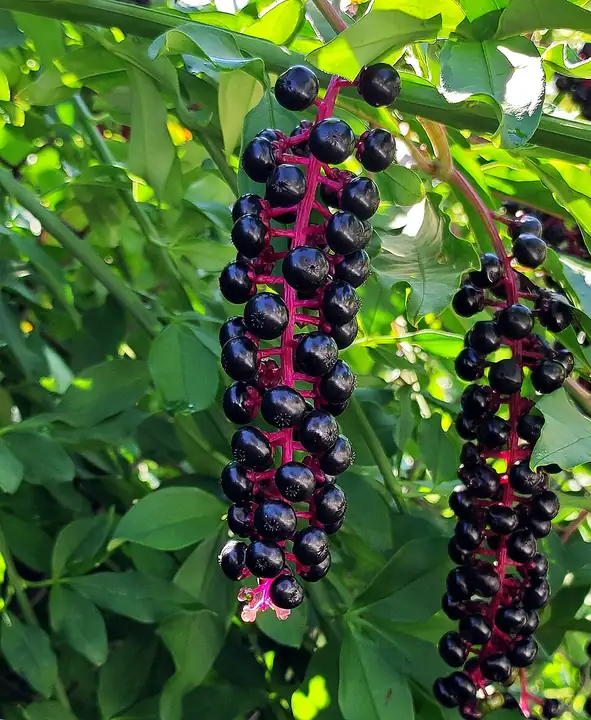
Thick, smooth stems turn bright purple-red and grow 4 to 10 feet tall. Large, simple, smooth leaves reach about a foot long and smell unpleasant when crushed. Long, drooping clusters of small white flowers turn into glossy purple-black berries, and a huge white taproot sits below.
Look-alikes
Grapes grow on woody vines, while pokeberries hang on soft red stalks. Elderberry is a woody shrub with compound leaves and berries in broad, flat-topped clusters; pokeweed is non-woody, with big single leaves and berries in drooping strings.
Where it grows
Fence rows, woodland openings, pastures, field and garden edges, and anywhere birds drop seed.
When
Shoots come up in spring, flowers open from summer into early fall, and berries ripen from late summer into fall.
How it spreads
Birds eat the berries and spread the seeds; plants come back each year from the large taproot.
Most common in
| Northeast | Very common here |
|---|---|
| Southeast | Very common here |
| South Central | Common here |
| Midwest | Very common here |
| Great Plains | Occasional here |
| Mountain West | Not found here |
| Southwest | Occasional here |
| Pacific Northwest | Occasional here |
| California | Occasional here |
| Alaska | Not found here |
| Hawaii | Not found here |
What to do, gentlest first
Protect yourself first. Weed killers are a last step; always read and follow the label.
Gloves and watch the fence lines Prevent
Wear gloves to handle it. Look for new seedlings each spring under fences, trees and anywhere birds perch.
Teach children not to eat wild berries.
Dig young plants before they flower By hand
Dig out seedlings and young plants, taproot and all, before flowers and berries form.
Wear gloves. Bag berry clusters for the trash so birds don't spread them.
Uses, wildlife and pets
For wildlife
Robins, cedar waxwings, warblers and mammals such as raccoons, opossums and foxes eat the berries, and stem-nesting bees use the dead stalks.
Pets
Toxic to dogs, cats and horses (ASPCA); NC State Extension rates the whole plant poisonous.
Sources
- plants.ces.ncsu.edu
- poison.org
- extension.umd.edu
- plants.ces.ncsu.edu
- plantsservices.sc.egov.usda.gov
- aspca.org
Photo: Photo: Terragio67 / Wikimedia Commons, CC BY-SA 4.0 (CC BY-SA 4.0). Photo resized for the web.

Planting dates and advice are general guidance; check with your local Cooperative Extension office for your area.