
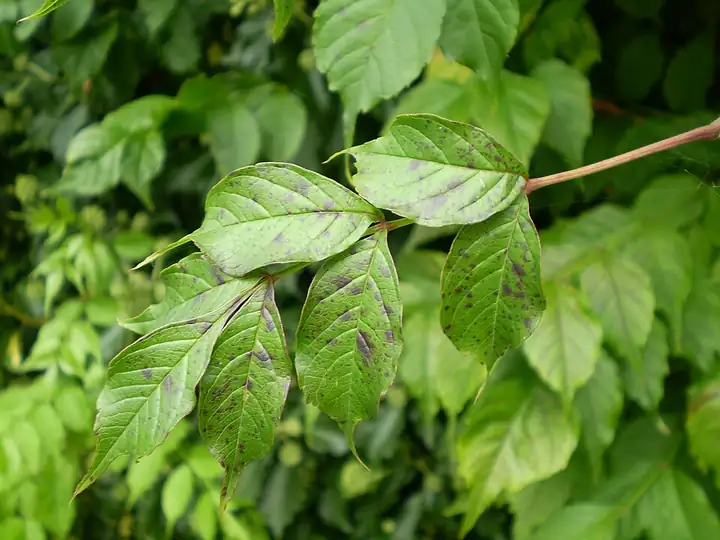
Trumpet creeper
Campsis radicans
| Type | Vine |
|---|---|
| Life cycle | Perennial |
| Family | Trumpet-creeper family (Bignoniaceae) |
| Origin | Native to the US |
| Most common in | Southeast, South Central |
About
A native woody vine of the central and eastern US with big orange-red trumpet flowers that hummingbirds love. It's only weedy because it suckers and self-seeds freely, popping up in beds, lawns and fence lines far from the parent vine.
Also called trumpet vine, cow-itch, hellvine, devil's shoestring, foxglove vine
How to identify it
Look for
Leaves are opposite and compound, with 7 to 11 toothed leaflets. The vine climbs with aerial rootlets and can reach 30 to 40 feet. Orange-red, trumpet-shaped flowers up to 3 inches long bloom in summer, followed by long bean-like pods 3 to 5 inches long that split open.
Where it grows
Fence rows, woodland edges, roadsides, old fields and garden beds near a planted vine.
When
Leafs out in spring, flowers from about June or July through September, and pods often hang on through winter.
How it spreads
By root suckers that pop up away from the vine and by seedlings from the seeds in its pods.
Most common in
| Northeast | Common here |
|---|---|
| Southeast | Very common here |
| South Central | Very common here |
| Midwest | Common here |
| Great Plains | Occasional here |
| Mountain West | Not found here |
| Southwest | Not found here |
| Pacific Northwest | Not found here |
| California | Not found here |
| Alaska | Not found here |
| Hawaii | Not found here |
What to do, gentlest first
Protect yourself first. Weed killers are a last step; always read and follow the label.
Site it where suckers can be mowed Prevent
If you keep one, plant it beside pavement or a mowed lawn so suckers can't run into beds, and prune hard in late winter or early spring to keep it in bounds.
Dig suckers and pull seedlings By hand
Dig out root suckers as soon as they appear and pull seedlings while small. Keep at it; it resprouts from roots left behind.
Gloves help if your skin is sensitive to the sap.
Glyphosate or triclopyr Conventional spray
Spray the leaves or wipe them with a sponge, or cut the vine and apply herbicide to the fresh stump within a few hours. Avoid soil-active brush killers in home landscapes.
Read and follow the label. Many lawn and brush killers also harm garden plants, so keep spray and drift off anything you want to keep.
Uses, wildlife and pets
For wildlife
Hummingbirds are its main pollinators, and it hosts the plebeian sphinx moth.
Pets
Not listed as toxic by the ASPCA
Sources
Photo: Photo: Rob Hille / Wikimedia Commons, Public domain. Photo resized for the web.

Planting dates and advice are general guidance; check with your local Cooperative Extension office for your area.