
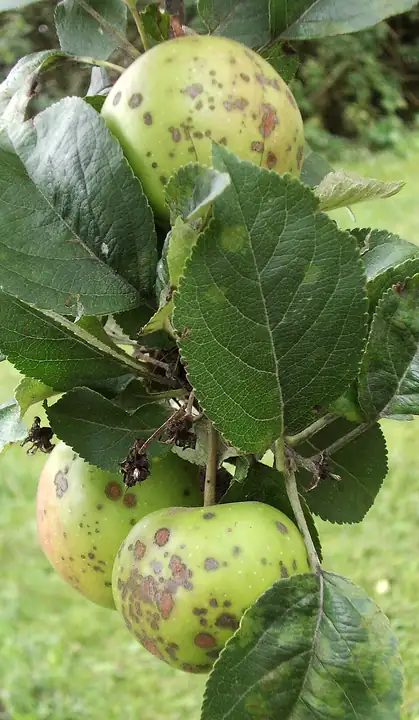
Apple scab
Fungus (Venturia inaequalis)
| Type | Fungus |
|---|---|
| Cause | Fungus (Venturia inaequalis) |
| When | Spring from green tip through early summer, with repeat cycles in wet summers. |
About
A common fungal disease of apples and crabapples that spots leaves and fruit. Badly spotted leaves can drop by midsummer, and infected fruit turn corky and may crack.
Also called apple scab
How to recognize it
Symptoms
Leaves get round, olive-green, velvety spots up to half an inch across with feathery edges that darken and run together. Heavily spotted leaves yellow and fall by midsummer. Fruit get olive spots that turn brown and corky, and fruit infected very young can crack and grow lopsided.
Worse when
Warm, rainy springs; spores need several hours of wet leaf surface to infect.
How it spreads
The fungus spends the winter in fallen infected leaves and shoots spores into the air in spring; new spots make more spores in 9 to 17 days, spread by wind and splashing rain.
When
Spring from green tip through early summer, with repeat cycles in wet summers.
What to do, gentlest first
Prevention works best; most sprays only protect healthy leaves and can't cure infected ones. Always read and follow the product label.
Grow scab-resistant apples Prevent
Varieties bred to resist scab include Liberty, Enterprise, GoldRush, Pristine, Williams' Pride, Freedom, Redfree and Dayton, and Honeycrisp is rated resistant.
Resistant trees can still get other diseases, such as cedar-apple rust, powdery mildew or fire blight, so check each variety for those too.
Clean up fallen leaves Prevent
Rake up and destroy, bury or compost fallen leaves before snow, or chop them finely with a mulching mower so they rot faster. A fall nitrogen or urea application on chopped leaves helps them break down.
Prune for airflow Prevent
Space branches and remove water sprouts and upright suckers so leaves dry quickly after rain.
Sulfur or lime sulfur Organic spray
For edible apples, powdered or wettable sulfur or lime sulfur can protect new growth. Start at half-inch green tip and repeat on the label's interval (often 7 to 10 days, shorter in rainy spells) until most petals have fallen.
Sprays only protect; they do not clear existing spots. Lime sulfur applied soon after captan can burn leaves and flower buds, and lime sulfur is no longer registered for backyard use in California. Do not spray during bloom with any all-purpose product that contains an insecticide, because it kills pollinators (UMN); UC IPM's pesticide database also says not to let sulfur drift onto flowering plants. Follow the label.
Captan Conventional spray
Captan is the other home-garden option for edible apples, on the same green-tip-to-petal-fall schedule.
Do not follow captan with lime sulfur. Follow the label and pre-harvest interval.
Plants it affects
Sources
Photo: Photo: Jan Homann, Public domain, via Wikimedia Commons. Photo resized for the web.

Planting dates and advice are general guidance; check with your local Cooperative Extension office for your area.