
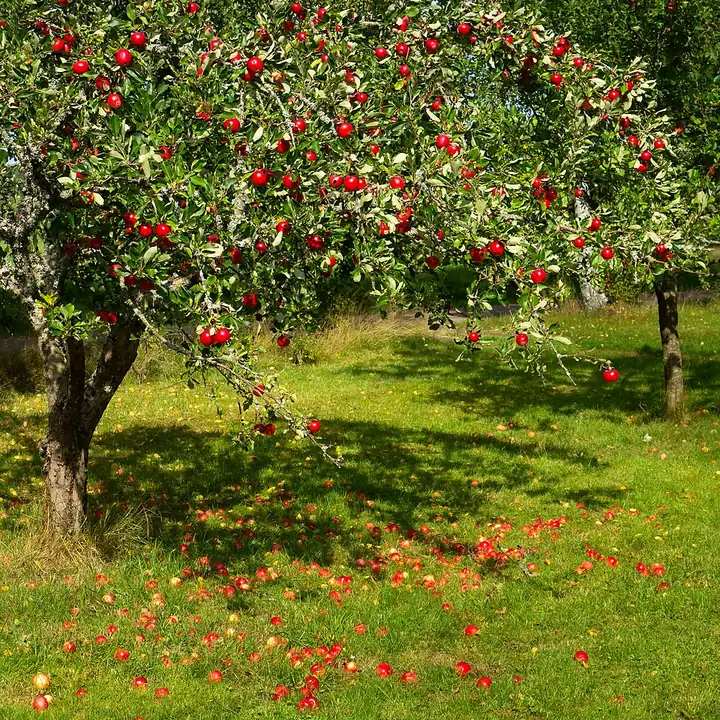
Apple (backyard tree)
Malus domestica · Rose family (Rosaceae)
| Hardiness zones | 3 to 9 |
|---|---|
| Sun | full sun |
| Water | moderate |
| Life cycle | perennial |
| Frost | Hardy: takes frost |
| Soil pH | 6.0–7.0 |
| Spacing | 72 to 300 inches |
About Apple (backyard tree)
A backyard apple tree on a dwarfing rootstock can start bearing 2 to 3 years after planting. Most apples need a second variety nearby for pollination, and the trees need regular care to fight pests and diseases.
NC State lists zones 4-9 and University of Minnesota recommends extra-hardy varieties for zone 3; each variety needs a certain number of chill hours below 45 F (NC State advises 750 or more there), so choose one rated for your area.
When to plant
Timing is counted from your average last spring frost (and first fall frost). Sow & Tell works out the actual dates for your ZIP code.
- Set out plants: from 4 weeks before to 2 weeks after the last frost
In cold areas plant bare-root trees as soon as the soil can be worked and potted trees after frost (University of Minnesota); in North Carolina late fall or early winter is best. Dwarf trees (6-8 feet apart) bear 2-3 years after planting; standard trees (20-25 feet apart) can take up to 8. Plant two varieties, or a crabapple, for pollination.
Soil
Most soils work if there is no standing water; good drainage is essential.
Test the soil first and aim for a pH of about 6 to 7; you can mix up to one-third compost or peat into the backfill, but most of it should be the native soil.
Feeding
- Late winter or early spring, from the second year on, only if last year's shoots were short (dwarf trees often start bearing in 2-3 years, standard-size trees can take 6-10): compost, or a balanced fertilizer such as 10-10-10 if a soil test calls for it. Follow a soil test; without one, NC State suggests about 3/4 to 1 lb of 10-10-10 per year of tree age, spread on the soil inside and outside the drip line and kept 6 inches from the trunk.
Skip feeding when young trees grow more than about 12-18 inches a year (bearing trees 8-12 inches), because too much growth cuts fruiting and invites fire blight.
Harvest
Watch for the background skin color to change from green to greenish-yellow, then taste: an unripe apple is starchy, while a ripe one has aromatic flavor even if tart.
Apples give one crop a year, from mid-August to October depending on variety. Thin fruit to one or two per cluster (or 4-6 inches apart) when marble-sized in late June to early July to avoid heavy crops only every other year.
Varieties (64)
| Variety | Type | Days | Notes |
|---|---|---|---|
| Cortland | Classic all-purpose apple | Sweet to tart. Medium fruit whose white flesh is slow to brown, so it is good in salads. Susceptible to scab and fire blight. | |
| Golden Delicious | Classic all-purpose apple | Honey-sweet. Yellow fruit, excellent fresh and for cooking; Virginia Tech calls it the best all-around variety. Doesn't store as long as some. Moderately susceptible to fire blight. | |
| McIntosh | Classic apple | Stores well but is at its best soon after picking. Too watery for pies; good for sauce. Susceptible to fire blight. | |
| Gala | Classic dessert apple | Crisp, dense and aromatic, with balanced sweetness. Red-orange stripes over yellow. Best fresh; poor for cooking. Very susceptible to fire blight. | |
| Red Delicious | Classic dessert apple | Sweet; older strains with green striping taste better than modern all-red ones. Red fruit best eaten fresh. Resistant to fire blight. | |
| Haralson | Cold-hardy all-purpose apple | Medium, red-striped fruit that keeps 4 to 5 months; a favorite for pie. Some resistance to scab and fire blight. | |
| Honeycrisp | Cold-hardy dessert apple | Very crisp and very juicy, with an aromatic, sweet flavor. Medium to large fruit that is slow to brown when cut and keeps 7 months or more in storage. Some resistance to scab and fire blight. | |
| Honeygold | Cold-hardy dessert apple | Sweet, crisp and juicy. Golden to yellow-green fruit that keeps 2 to 3 months. Susceptible to scab and fire blight. | |
| Regent | Cold-hardy dessert apple | Crisp and juicy with a balanced flavor. Red-striped fruit that keeps 4 to 5 months. Susceptible to scab and fire blight. | |
| SnowSweet | Cold-hardy dessert apple | Sweet and low in acid. Large bronze-red fruit whose flesh is slow to brown after cutting; keeps about 1 to 2 months. Good for fresh eating, cooking and processing. | |
| Sweet Sixteen | Cold-hardy dessert apple | Crisp, juicy and very sweet, with a spicy, cherry-candy note. Medium to large red-striped fruit that keeps 5 to 8 weeks. Some resistance to scab and fire blight. | |
| Triumph | Cold-hardy dessert apple | Pleasantly tart and well balanced. Best for fresh eating. Very good tolerance of apple scab. | |
| SweeTango (Minneiska) | Cold-hardy early apple | Very crunchy and juicy with a sweet-tart flavor. Red blush over a yellow background. A cross of Honeycrisp and Zestar!. | |
| Zestar! | Cold-hardy early apple | Crunchy and juicy with a balanced sweet-tart flavor. Large red fruit that keeps 6 to 8 weeks. Prone to scab; some fire blight resistance. | |
| Jonagold | Dessert and cooking apple | Sweet-tart. Green-yellow fruit, good fresh and excellent for cooking; does not store well. | |
| Chehalis | Disease-resistant apple | Yellow apple with good natural scab resistance but prone to mildew. Thin skin bruises easily. Good fresh and for sauce, too soft for pies. | |
| CrimsonCrisp | Disease-resistant apple | Moderately tart. Stores well. Fully resistant to apple scab but susceptible to fire blight. | |
| Enterprise | Disease-resistant apple | Tart. Medium to large red fruit with a tough skin. Immune to scab, resistant to fire blight and cedar-apple rust, moderately resistant to powdery mildew. | |
| Freedom | Disease-resistant apple | Crisp, juicy and sweet, with a spicy note. Orange-red fruit. Immune to scab but only moderately resistant to fire blight. | |
| GoldRush | Disease-resistant apple | Sweet-tart; the flavor mellows in cold storage. Medium to large yellow fruit. Immune to scab and resistant to powdery mildew, but susceptible to cedar-apple rust. | |
| Liberty | Disease-resistant apple | Similar to McIntosh but firmer. Medium red fruit over yellow. Immune to scab and resistant to fire blight, cedar-apple rust and powdery mildew. | |
| Pixie Crunch | Disease-resistant apple | Small, crisp red apple. Immune to scab; moderately susceptible to fire blight and susceptible to cedar-apple rust. | |
| Prima | Disease-resistant apple | Bright red over yellow; best eaten fresh from the tree because it softens quickly in storage. Good mildew resistance, and Utah State rates it resistant to fire blight. | |
| Pristine | Disease-resistant early apple | Crisp, with a good balance of sweet and tart. Clean-finished yellow fruit that keeps about a month; bruises easily. Good field resistance to scab and low fire blight and mildew risk. | |
| Williams' Pride | Disease-resistant early apple | Good flavor with a slightly acidic edge. Red stripes over yellow. Resistant to scab and fire blight but can get powdery mildew. Does not keep as long as later apples. | |
| Topaz | Disease-resistant late apple | Tart and distinctive. Stores very well. Moderately resistant to fire blight. | |
| Sansa | Early dessert apple | Balanced, with both sweet and tart notes. A Gala cross with firm, attractive bicolor fruit that is a bit below medium size. Keeps 6 to 8 weeks. Susceptible to fire blight. | |
| Akane | Early red apple | Tart and distinctive, compared to Jonathan. Bright red, smallish fruit that holds on the tree for weeks but does not keep long in storage. Moderately resistant to fire blight. | |
| Paula Red | Early red apple | Balanced, neither very sweet nor very tart. Good for fresh eating, cooking and processing, but does not store well. Very susceptible to fire blight. | |
| Ginger Gold | Early yellow apple | Mild and sweet with a hint of tartness. Yellow apple, excellent fresh and good for cooking and salads; its flesh resists browning. Very susceptible to fire blight. | |
| Frostbite (MN447) | Extra-hardy apple | Intensely sweet, firm and juicy; UMN compares the flavor to sugarcane and molasses. Small to medium fruit (about 2.2 to 2.6 inches) with maroon-red stripes; keeps 3 to 4 months. Good for cider and drying. | |
| Esopus Spitzenburg | Heirloom apple | An old New York apple dating to the early 1800s. | |
| Jonathan | Heirloom apple | Juicy and sweet-tart. Juicy; used fresh, in baking and frozen. Keeps up to 3 months. Susceptible to fire blight. | |
| Newtown Pippin | Heirloom apple | A historic variety still found in old western Washington orchards. | |
| Northern Spy | Heirloom apple | Heirloom favored for baking and desserts; stores well but bruises easily. Moderately susceptible to fire blight. | |
| Wealthy | Heirloom apple | Slightly tart. Medium fruit for eating and cooking; does not store long. Resistant to scab and fire blight. | |
| Winesap | Heirloom apple | Tart, with a wine-like note. Red apple for salads, cooking and cider; stores well. Moderately resistant to fire blight. | |
| Rome Beauty | Heirloom baking apple | Slightly tart to sweet-tart. Large red fruit, especially good for baking. Very susceptible to fire blight. | |
| Bramley's Seedling | Heirloom cooking apple | An old English cooking apple, large to very large, firm and crisp; an excellent pie apple. Good natural resistance to scab and mildew. | |
| Wolf River | Heirloom cooking apple | Offers partial resistance to apple scab. | |
| Ashmead's Kernel | Heirloom russet apple | Sweet-tart with some spicy notes. An English russet apple from about 1700, used fresh, in cooking and for hard cider. Good natural scab resistance; stores well. | |
| Gravenstein | Heirloom sauce apple | Sweet-tart with strong apple flavor when cooked into sauce. A top sauce apple; both red and common strains are grown. | |
| Yellow Transparent | Heirloom summer apple | Sweet. An old summer apple for fresh eating and sauce; does not store well. Fairly disease resistant overall but susceptible to fire blight. | |
| Chestnut Crab | Large-fruited crabapple | Rich, intense and nutty. A big crabapple with russeted skin; moderately resistant to scab and fire blight. Keeps about 4 to 5 weeks. | |
| Idared | Late cooking apple | Similar to Jonathan. Good for sauce and processing; keeps 2 to 3 months. Very susceptible to fire blight. | |
| York | Late cooking apple | Tart; tastes best after about two months in storage. Red apple, good fresh and excellent for cooking. | |
| Braeburn | Late dessert apple | Sweet yet complex. Keeps several months. Moderately susceptible to fire blight. | |
| Cameo | Late dessert apple | Blends traits of Golden Delicious and Red Delicious. Good fresh and in desserts, and keeps well for a long time. Moderately susceptible to fire blight. | |
| Pink Lady | Late dessert apple | Oblong fruit that bruises easily. | |
| Stayman (Snapp Stayman) | Late heirloom-era apple | Very flavorful, tart and high in acid. Keeps up to about 7 months in storage. Tends to drop fruit early. | |
| Melrose | Late keeping apple | Mostly red fruit, often with some russet. Used both fresh and for cooking, and keeps very late into winter. | |
| Mutsu (Crispin) | Late yellow apple | Sweet, juicy and complex, with a delicate spicy note. Large yellow fruit that keeps a long time; good fresh, baked and in sauce. Resists powdery mildew but is susceptible to scab and fire blight. | |
| Fuji | Late-keeping dessert apple | Sweet, with crisp, juicy white flesh. Stores for many months. Very susceptible to fire blight; can get bitter rot. | |
| Anna | Low-chill apple | Sweet, slightly tart and crisp, with good flavor. Fruit about 2.25 to 2.5 inches with a half-red blush; keeps 6 to 8 weeks refrigerated. Upright to semi-spreading tree. | |
| Dorsett Golden | Low-chill apple | Sweet and tart, with crisp flesh; UF/IFAS says the fruit resembles Golden Delicious. Golden fruit about 2 to 2.5 inches with a light red blush; a bit smaller and firmer than Anna. Keeps 6 to 8 weeks refrigerated. | |
| Ein Shemer | Low-chill apple | Fair. Light yellow fruit with some red. Turns mealy if left too long and keeps no more than about two weeks. | |
| TropicSweet | Low-chill apple | Sweeter and firmer than Anna. About a third red blush; the skin can russet. Semi-spreading tree of medium height. | |
| Empire | McIntosh-type apple | Sweet-tart. Red fruit, excellent fresh; Virginia Tech calls it the best McIntosh-type apple. | |
| Jonamac | McIntosh-type apple | Like McIntosh but more tart. A McIntosh x Jonathan cross for cooking, desserts and salads; a fair keeper. Moderately susceptible to fire blight. | |
| Spartan | McIntosh-type apple | Dark red with crisp, cream-white flesh; stores well. A McIntosh x Newtown Pippin cross that can overbear, so thin fruit for good size. | |
| Mollie's Delicious | Moderate-chill apple | Good flavor. Large fruit with a yellow background. | |
| Arkansas Black | Southern heirloom apple | Tart-sweet. Dark red fruit, better for cooking than fresh eating. Tolerates heat. | |
| Lodi | Summer apple | Tart. Yellow-green fruit for pies, sauce and cider; stores poorly. Very susceptible to fire blight. | |
| Granny Smith | Tart cooking apple | Tart; excellent for cooking. Very susceptible to fire blight. |
Pests to watch for
Aphids, Stink bugs, Tarnished plant bug, Potato leafhopper, Leafhoppers, Eriophyid mites (rust, bud, blister and gall mites), Boxelder bugs, Opossum, Ground squirrels, Porcupine, Spongy moth (formerly gypsy moth), Periodical cicadas, Granulate ambrosia beetle, Roundheaded appletree borer, Flatheaded appletree borer, Obliquebanded leafroller, Pear sawfly (pearslug, cherry slug), European red mite, Codling moth, Plum curculio, Apple maggot, Oriental fruit moth, Spotted lanternfly, Rose chafer, Eastern tent caterpillar, Green June beetle (fig-eater), Leaffooted bugs, Deer, Rabbits, Tree squirrels, Birds, Winter moth, Cankerworms (fall and spring cankerworms), Dogwood borer
Diseases and problems
Apple scab, Fire blight, Cedar apple rust, Powdery mildew, Summer fruit rots, Winter injury, Nitrogen deficiency, Black walnut toxicity, Crown gall, Sunscald, Herbicide injury, Frost and freeze injury, Cedar-quince rust, Bitter rot, Sooty blotch and flyspeck, Armillaria root rot, Gray mold (Botrytis), Tomato and tobacco ringspot
In the kitchen
Eaten fresh or cooked, and pressed for cider.
Keeping it: Keep apples cold: in a sealed bag in the refrigerator they last about 3 weeks, and longer in a cool, dark cellar. Store them away from onions and other strong smells.
Pets: Toxic to dogs, cats and horses (ASPCA): stems, leaves and seeds contain cyanogenic glycosides, especially as leaves wilt; signs include brick-red gums, dilated pupils and trouble breathing
Sources
- plants.ces.ncsu.edu
- content.ces.ncsu.edu
- content.ces.ncsu.edu
- extension.umn.edu
- aspca.org
- extension.psu.edu
Photo: Photo: W.carter, CC0, via Wikimedia Commons (CC0). Photo resized for the web.

Planting dates and advice are general guidance; check with your local Cooperative Extension office for your area.