
Blackleg (potato)
Bacteria (Pectobacterium and Dickeya species, formerly called Erwinia)
| Type | Bacteria |
|---|---|
| Cause | Bacteria (Pectobacterium and Dickeya species, formerly called Erwinia) |
| When | From emergence through summer, and in storage. |
About
A bacterial rot of potato stems that starts from infected seed potatoes. The same bacteria cause soft rot of tubers, in the ground and in storage.
Also called blackleg, black leg, potato blackleg, aerial stem rot
How to recognize it
Symptoms
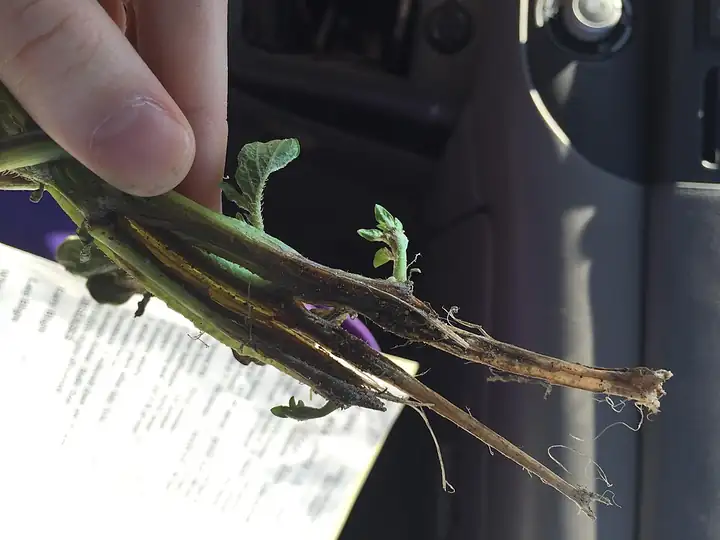
Stems turn black and slimy, starting at or below the soil line and moving upward. Leaves on those stems yellow, wilt or brown, and plants may collapse, or seed pieces may rot before they ever come up. Tubers can get soft, slimy, mushy rot.
Often confused with
Other diseases and disorders can look like blackleg, and the two kinds of bacteria can't be told apart in the field, so a lab test is the sure way.
Worse when
Cool, wet soil at planting followed by warm weather, poorly drained or waterlogged soil, too much nitrogen or water, and warm storage.
How it spreads
Infected or contaminated seed potatoes, knives used to cut seed, soil water, splashing rain and insects; it survives in crop debris, weeds, volunteer potatoes and cull piles.
When
From emergence through summer, and in storage.
What to do, gentlest first
Prevention works best; most sprays only protect healthy leaves and can't cure infected ones. Always read and follow the product label.
Certified seed, planted whole Prevent
Plant certified seed potatoes and use small whole ones when you can. If you cut seed, clean the knife and let pieces heal before planting.
Plant into warm, well-drained soil Prevent
Plant when the soil is at least 50°F in a well-drained spot, don't water before sprouts come up, and avoid overhead watering and extra nitrogen.
Rotate and remove volunteers Prevent
Rotate out of potatoes and pull volunteer potatoes and weeds. Beans, peas and grains are good crops to follow, since they aren't hosts.
Carrots, parsnips, broccoli, corn and sunflowers can also carry these bacteria.
Clean up and dig gently By hand
Get rid of cull piles and leftover potatoes. Dig after vines are fully dead, in dry weather, without bruising; brush off soil but don't wash tubers before storing.
Copper (aerial stem rot only) Organic spray
Purdue notes copper may reduce the spread of the rot on upper stems.
Copper can't stop infection that starts from the seed piece. Follow the label.
Plants it affects
Sources
Photo: Photo: Jspychalla / Wikimedia Commons, CC BY-SA 4.0 (CC BY-SA 4.0). Photo resized for the web.

Planting dates and advice are general guidance; check with your local Cooperative Extension office for your area.