
Common corn smut
Fungus (Ustilago maydis)
| Type | Fungus |
|---|---|
| Cause | Fungus (Ustilago maydis) |
| When | Midsummer, as ears develop. |
About
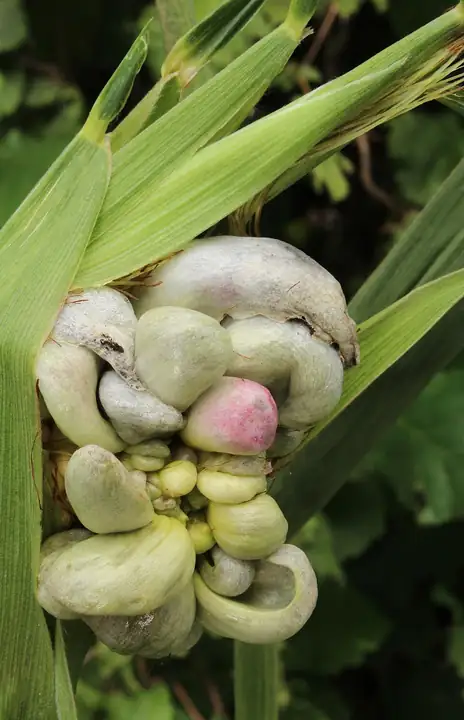
Corn smut forms large, swollen galls on ears, tassels and stalks of sweet corn and other corn. Young galls are eaten as a delicacy called huitlacoche in Mexico.
Also called smut, common smut, corn smut
How to recognize it
Symptoms
Silvery-white to greenish swellings grow on ears, kernels, tassels, leaves or stalks, reaching 4 to 5 inches across. Inside they turn into masses of powdery black spores, and the galls eventually rupture.
Worse when
Warm weather (79 to 93°F) with moderate rain, plant injuries from hail, insects or cultivation, and poor or excessive nitrogen.
How it spreads
Spores survive several years in soil and corn residue and spread by wind and splashing water; infection often enters through the silks or wounds.
When
Midsummer, as ears develop.
What to do, gentlest first
Prevention works best; most sprays only protect healthy leaves and can't cure infected ones. Always read and follow the product label.
Resistant varieties Prevent
Plant sweet corn varieties with smut resistance.
Avoid injuries and balance fertility Prevent
Take care not to wound plants when weeding, and fertilize based on a soil test rather than piling on nitrogen.
Rotate Prevent
Move corn to a new spot to let spores in the soil die off.
Remove galls before they burst By hand
Cut off and destroy galls while they are still firm and white, before they release spores.
Fungicides do not work Conventional spray
UMass says fungicides will not control common smut.
Plants it affects
Sources
Photo: Photo: Holger Krisp, CC BY 3.0, via Wikimedia Commons (CC BY 3.0). Photo resized for the web.

Planting dates and advice are general guidance; check with your local Cooperative Extension office for your area.