
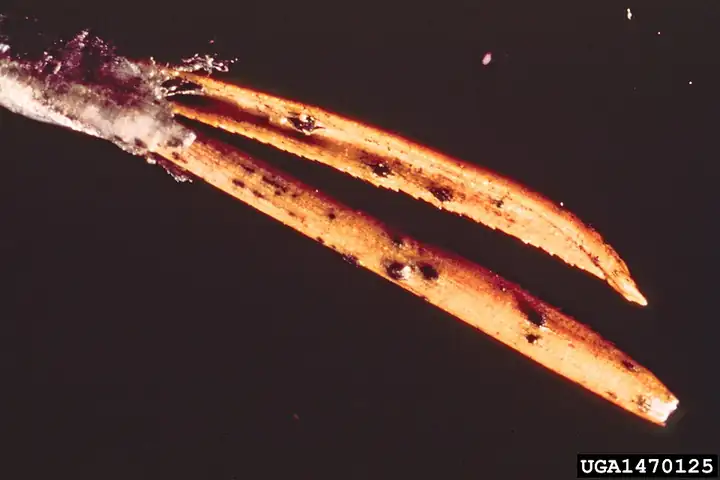
Diplodia tip blight
Fungi (Diplodia sapinea, formerly Sphaeropsis sapinea, and related Diplodia species)
| Type | Fungus |
|---|---|
| Cause | Fungi (Diplodia sapinea, formerly Sphaeropsis sapinea, and related Diplodia species) |
| When | Infects new shoots in spring; spores are made from spring through fall. |
About
Diplodia tip blight is the most common disease of two-needled pines such as Austrian, Scots, red and mugo pine, and it can also show up on other conifers including spruces and junipers. Year after year it kills new shoots, mostly on older or stressed trees, until whole branches die.
Also called Diplodia tip blight, diplodia tip blight, Diplodia shoot blight, Sphaeropsis blight, Diplodia blight, pine tip blight
How to recognize it
Symptoms
New shoots turn brown and die in spring, often before their needles finish growing, so dead tips have needles of uneven length; tips may ooze a lot of resin. Tiny black fruiting dots form on infected needles and on older cones. Over years the browning spreads down branches, and stressed trees can get cankers and die.
Often confused with
European pine sawfly and pine shoot moths also kill pine tips; look for the insects, chewed needles or tunnels. Borers cause heavy resin flow too, but Diplodia leaves no tunnels.
Worse when
Wet weather in spring when new shoots are soft, drought stress, hail and insect wounds, and crowded roots or other site stress.
How it spreads
Spores splash and blow in rain and travel on insects and pruning tools; the fungus spends the winter in infected shoots, bark, cones and needle litter.
When
Infects new shoots in spring; spores are made from spring through fall.
Where
Common in Midwest landscapes, especially on Austrian pines.
What to do, gentlest first
Prevention works best; most sprays only protect healthy leaves and can't cure infected ones. Always read and follow the product label.
Choose other evergreens Prevent
Avoid planting Austrian pine and other two-needled pines where Diplodia is common, especially where cool, wet springs are followed by drought.
Keep trees unstressed Prevent
Water deeply in dry spells (about 1 inch a week for established trees, more for trees planted within three years). Mulch out to the drip line, keeping mulch about 4 inches from the trunk, and fertilize only if a soil test says to.
Prune out dead tips and pick up cones By hand
In dry weather, cut dead shoots at least 6 to 8 inches below the damage (Ohio State suggests 2 feet on lightly diseased trees), and remove fallen cones from under the tree. Burn where allowed or bury the debris.
Disinfect tools between cuts with 70% alcohol or 10% bleach; rinse and oil them after bleach.
Thiophanate-methyl alternated with chlorothalonil (or propiconazole, azoxystrobin) Conventional spray
After pruning, spray just before bud break and repeat at 10- to 14-day intervals until new shoots finish growing. Once bud sheaths open, sprays are unlikely to help.
Fungicides prevent infection but do not cure it. Do not use thiophanate-methyl alone, because the fungus can become resistant. UC IPM rates chlorothalonil high in hazard to people and to fish and other water life. Big trees are best left to an arborist; follow the label.
Plants it affects
Sources
Photo: Photo: A. Steven Munson, USDA Forest Service, Bugwood.org / Wikimedia Commons, CC BY 3.0 US (CC BY 3.0 US). Photo resized for the web.

Planting dates and advice are general guidance; check with your local Cooperative Extension office for your area.