
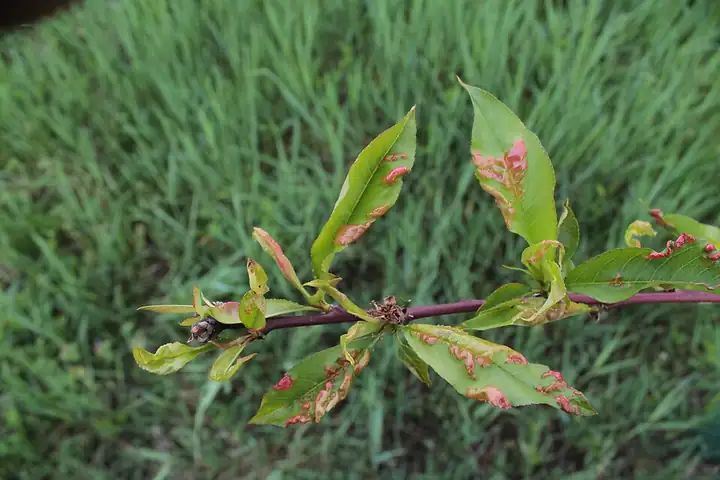
Peach leaf curl
Fungus (Taphrina deformans)
| Type | Fungus |
|---|---|
| Cause | Fungus (Taphrina deformans) |
About
A spring leaf disease of peaches and nectarines that makes new leaves thick, puckered and red. A well-timed dormant spray usually keeps it in check, but nothing fixes leaves once they have curled.
Also called peach leaf curl, leaf curl
How to recognize it
Symptoms
About two weeks after leaves come out, patches turn reddish, thicken and pucker so the leaf curls. The puckered areas turn yellow, then grayish-white and powdery as spores form, and the leaves drop; bad years defoliate the tree. Shoots can be stunted, and fruit occasionally get corky, cracked patches.
Often confused with
Early symptoms can look like frost damage; the thick, red, blistered puckering is the giveaway.
Worse when
Cool, wet springs; infection needs more than about 12 hours of wetness below about 61°F around bud swell and leaf-out, and stops when weather turns warm and dry.
How it spreads
Spores live on the tree's bark and buds year-round and wash into opening buds with spring rain or irrigation splash.
When
Symptoms show in spring; the prevention window is fall after leaf drop and late winter before bud swell.
What to do, gentlest first
Prevention works best; most sprays only protect healthy leaves and can't cure infected ones. Always read and follow the product label.
Choose resistant varieties Prevent
Redhaven and related kinds, Frost, Indian Free, Muir, Q-1-8, Avalon Pride and Oregon Curl Free peaches and Kreibich nectarine resist leaf curl.
Help an infected tree recover Prevent
Reduce stress on an infected tree: water about an inch a week in dry spells, fertilize in a balanced way and thin the fruit to lighten its load.
Dormant copper (or lime sulfur where still sold) Organic spray
Spray once in fall after most leaves have dropped, and in wet climates again in late winter as flower buds begin to swell but before green leaf tips show (UC IPM). Wettable-powder or copper soap products are options; lime sulfur is still listed for home use in the Pacific Northwest.
Spraying after leaves curl does not help. Repeated yearly copper can build up in soil and harm aquatic life. Lime sulfur is no longer registered for backyard use in California. Follow the label.
Chlorothalonil (dormant) Conventional spray
A dormant chlorothalonil spray on the same fall and late-winter timing is an alternative to copper.
Chlorothalonil is a protectant, not a cure. UC IPM rates it highly hazardous to fish and other aquatic life and its acute toxicity as high (DANGER signal word). Keep it out of water, wear gloves, long sleeves and goggles, and follow the label.
Plants it affects
Sources
Photo: Photo: I.Sáček, senior, CC0, via Wikimedia Commons (CC0). Photo resized for the web.

Planting dates and advice are general guidance; check with your local Cooperative Extension office for your area.