
Potassium deficiency
Not an infection: the plant is not getting enough potassium, from sandy, leached soil or from roots that can't take it up
| Type | Not an infection |
|---|---|
| Cause | Not an infection: the plant is not getting enough potassium, from sandy, leached soil or from roots that can't take it up |
| When | Any time during the growing season, starting on older leaves. |
About
Potassium helps plants move water and handle stress. Most soils hold enough, so real shortages show up mainly in sandy, heavily watered soil, in pots, and in fruit trees on sandy ground; elsewhere, the same symptoms usually point to root trouble.
Also called potassium shortage, potash deficiency, lack of potassium, low potassium, K deficiency
How to recognize it
Symptoms
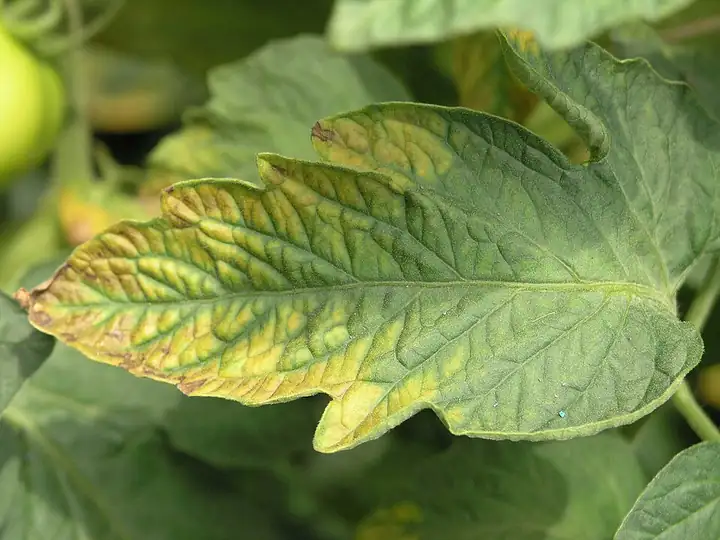
Older leaves yellow first at the tips and edges, then the edges turn brown and dry, like a scorch, while the newer leaves stay green. Leaves may crinkle, curl or roll at the edges and drop early, and plants are stunted. On conifers, older needles turn dark blue-green, then yellow to reddish brown, with brown tips.
Often confused with
Nitrogen shortage yellows the whole older leaf rather than starting at the edges, and magnesium shortage yellows older leaves between green veins. Iron chlorosis hits the newest leaves, not the oldest. Drought, fertilizer or road salt, compaction, root damage and high pH can cause the same edge scorch (sodium from salt even causes potassium-shortage symptoms), so a soil test or leaf tissue test confirms it.
Worse when
Sandy, fast-draining soil with frequent watering, thin topsoil, heavy leaching, potting mixes, and very high magnesium levels.
How it spreads
It does not spread from plant to plant.
When
Any time during the growing season, starting on older leaves.
What to do, gentlest first
This is not an infection, so sprays for diseases won't help. Fix the cause below.
Soil test first Prevent
If you suspect a shortage, test the soil and follow the report. Check for soggy, compacted or damaged roots, since feeding won't fix those.
Mulch with organic matter Prevent
Spread organic mulch under plants. Organic matter and clay hold potassium in the soil.
Add potassium only when needed Prevent
Use potassium sulfate or a slow-release potassium product at soil-test or label rates. If magnesium is also low, add both, because too much of either one blocks the other.
In sandy soil, quick-dissolving potassium products wash away fast. Don't use potassium chloride (muriate of potash) where salt is a problem. Follow the label.
Plants it affects
Sources
Photo: Photo: Goldlocki / Wikimedia Commons, CC BY-SA 3.0 (CC BY-SA 3.0). Photo resized for the web.

Planting dates and advice are general guidance; check with your local Cooperative Extension office for your area.