
Potato virus Y
Virus (potato virus Y, a potyvirus), spread by aphids and infected seed potatoes
| Type | Virus |
|---|---|
| Cause | Virus (potato virus Y, a potyvirus), spread by aphids and infected seed potatoes |
About
Potato virus Y is one of the most common potato viruses, and it also infects tomatoes and peppers. It usually arrives in a garden on infected seed potatoes, and aphids then carry it to nearby plants in seconds. There is no cure, so clean seed and quick removal of sick plants matter most.
Also called potato virus Y, PVY, PVYNTN, potato tuber necrotic ringspot disease, PTNRD, tuber necrotic ringspot
How to recognize it
Symptoms
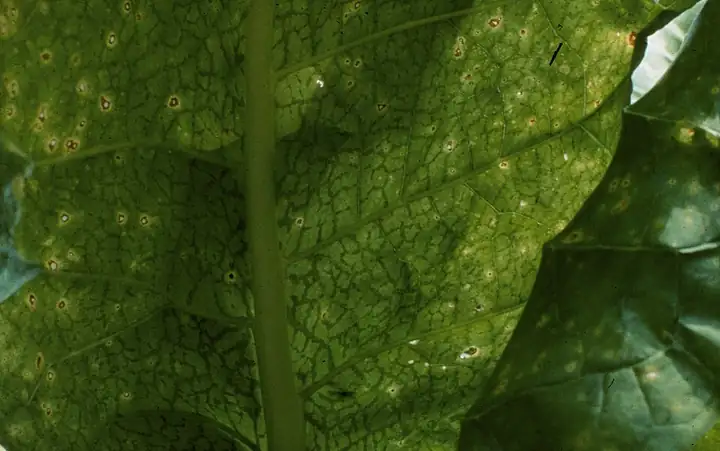
Leaves show a light and dark green or yellow mosaic, may look crinkled and thicker than normal, and with some strains get brown or black dead streaks along the veins, easiest to see on the leaf undersides. Plants may be stunted, drop leaves or have dying shoot tips. Signs range from barely visible to severe, depending on the strain and the variety. The common PVYNTN strain can cause sunken brown rings on the tuber skin that reach into the flesh, along with cracks, and plants make fewer, smaller potatoes.
Often confused with
Mild infections are easy to miss, and other potato viruses such as potato leafroll also stunt plants. A lab test is the only sure way to tell; your county Extension office can help.
Worse when
Planting grocery-store, saved or uncertified seed potatoes, lots of aphids, and volunteer potatoes, cull piles or nightshade-family weeds nearby.
How it spreads
Mostly brought into the garden in infected seed potatoes. Aphids pick up the virus with a quick taste of an infected leaf and pass it to the next plant they probe within seconds, then lose it until they feed on another sick plant. It also moves on knives used to cut seed pieces. It survives winter in infected tubers, volunteer potatoes and weeds such as nightshade and wild ground cherry.
When
From emergence through harvest, with the most spread when winged aphids are flying. Tuber rings show up at harvest.
What to do, gentlest first
Prevention works best; most sprays only protect healthy leaves and can't cure infected ones. Always read and follow the product label.
Plant certified seed potatoes Prevent
Buy certified seed potatoes instead of planting grocery potatoes or tubers you saved. In Washington, look for the blue certification tag. Skip any seed potatoes that are cracked.
Certified seed is low in virus but not guaranteed virus-free.
Remove volunteers and weeds Prevent
Dig out volunteer potatoes that sprout from last year's crop and put them in the trash. Keep nightshade, wild ground cherry and other weeds down so the virus has fewer places to survive.
Clean the knife when cutting seed Prevent
If you cut seed potatoes into pieces, clean and disinfect the knife between batches, since the virus can travel on cutting tools.
Choose varieties with care Prevent
Varieties differ a lot in how badly they react; 'Yukon Gold', for example, is very prone to tuber rings. Ask your county Extension office which varieties hold up best in your area.
No potato variety is fully immune to all strains.
Pull sick plants early By hand
Check plants often and pull any with mosaic, streaked veins or stunting, tubers and all, so aphids have less virus to spread. Infected plants never recover.
Aphid sprays help little Organic spray
Most insect-killing sprays do little against this virus, because aphids pass it on within seconds, before the spray can work. Cornell notes that mineral oil sprays made for this purpose can lower spread by coating aphid mouthparts, but they are mainly used on farms.
No spray cures an infected plant; always follow the label.
Plants it affects
Sources
Photo: Photo: R.J. Reynolds Tobacco Company Slide Set, CC BY 3.0, via Wikimedia Commons (CC BY 3.0). Photo resized for the web.

Planting dates and advice are general guidance; check with your local Cooperative Extension office for your area.