
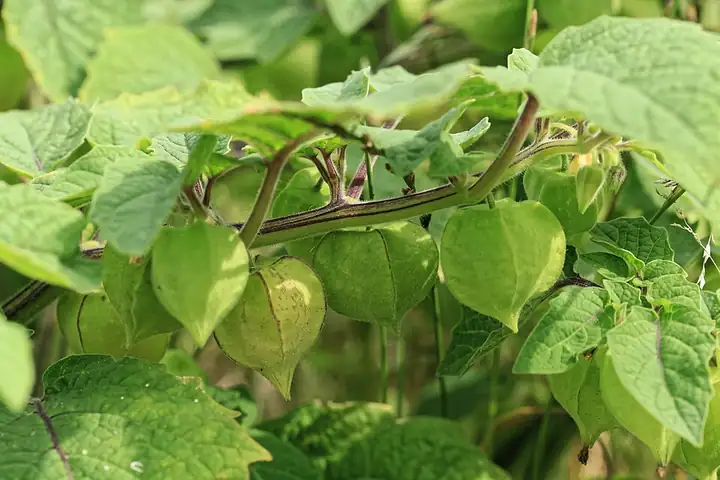
Ground cherry
Physalis pruinosa, P. grisea and P. pubescens · Nightshade family (Solanaceae)
| Hardiness zones | 3 to 11 |
|---|---|
| Sun | full sun |
| Water | moderate |
| Life cycle | annual |
| Frost | Tender: killed by frost |
| Soil pH | 6.0–6.5 |
| Spacing | 18 to 24 inches |
| Days to harvest | 70 to 77 days |
About Ground cherry
Ground cherries are low, sprawling tomato relatives, usually under 30 inches tall, that bear small golden fruit inside papery husks. The fruit has a sweet and tangy flavor. Grow them much like tomatillos; ripe fruit drops to the ground, and plants reseed themselves readily.
Grown as a warm-season annual in every zone; set plants out only after the danger of frost has passed (University of Minnesota).
When to plant
Timing is counted from your average last spring frost (and first fall frost). Sow & Tell works out the actual dates for your ZIP code.
- Start seeds indoors: 6 to 7 weeks before the last frost
- Set out plants: 2 to 4 weeks after the last frost
Start seed indoors 6 to 7 weeks before planting out, 1/4 inch deep, keeping the mix at 75-85 F until seedlings appear (University of Minnesota). Harden off and transplant 2 to 4 weeks after the last frost (Penn State). Days to harvest count from transplanting: fruit usually ripens 10 to 11 weeks after plants go into the garden (Penn State). Seeds can take up to three weeks to sprout indoors, so be patient (Penn State).
Soil
Well-drained soil kept evenly moist; 2 to 3 inches of straw mulch helps (Penn State). Plants tolerate some heat and drought (University of Minnesota).
Aim for a slightly acid pH of 6.0-6.5 (Penn State) and add fertilizer only as a soil test calls for.
Feeding
Ground cherries may not need extra fertilizer beyond basic nitrogen (University of Minnesota); water at the base, about 1 inch a week, rather than with sprinklers.
Harvest
Pick up fruit that has dropped, or pick when the husk is dry and tan and the fruit inside is golden (University of Minnesota; Penn State). Left in their husks, they keep about two weeks in the refrigerator (University of Minnesota), and Penn State reports up to two to three months.
Ground cherries keep growing and flowering all season: fruit starts about 10-11 weeks after transplanting and keeps coming from late summer into fall until cool weather slows it. Gather dropped fruit often, water deeply and regularly, mulch, and go easy on nitrogen, which gives leaves instead of flowers.
Varieties (3)
University of Minnesota Extension says ground cherry varieties are limited and names three. We found no other neutral source describing more.
| Variety | Type | Days | Notes |
|---|---|---|---|
| Aunt Molly's | Ground cherry | Sweet and tangy. Recommended for Minnesota gardens. | |
| Goldie | Ground cherry | Sweet and tangy. Recommended for Minnesota gardens. | |
| Pineapple | Ground cherry | Sweet and tangy. Recommended for Minnesota gardens. |
Pests to watch for
Cutworms, Tomato hornworm, Colorado potato beetle, Potato psyllid (tomato psyllid)
Diseases and problems
Verticillium wilt, Early blight, Anthracnose, Late blight, Mosaic viruses, Potato virus Y
In the kitchen
Eaten fresh or dried, or made into jam, preserves, pies, cakes and salsa (Penn State).
Keeping it: Leave them in their husks in a cool spot and use within a week or two; for longer keeping, freeze them.
Safety: Eat only fully ripe, golden fruit. The leaves and the unripe green fruit contain toxins, with the highest levels in immature berries (Penn State).
Pets: Not listed by the ASPCA
Sources
Photo: Photo: Frank Vincentz / Wikimedia Commons, CC BY-SA 3.0 (CC BY-SA 3.0). Photo resized for the web.

Planting dates and advice are general guidance; check with your local Cooperative Extension office for your area.