
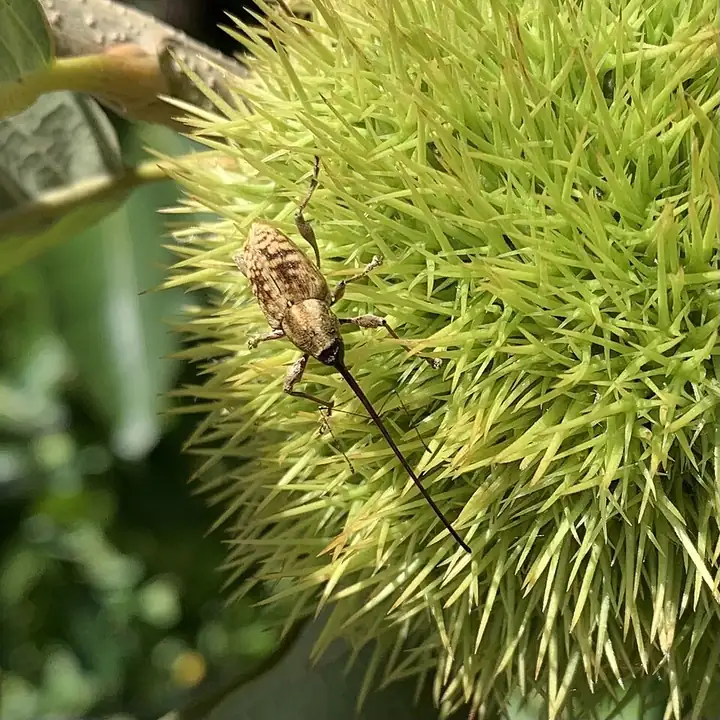
Chestnut weevils
Small chestnut weevil and large chestnut weevil
| Type | Insect |
|---|---|
| Pressure by region | High pressure: Midwest |
About
Two weevils, the small and the large chestnut weevil, lay their eggs in developing chestnuts. The University of Missouri calls them the greatest risk to a chestnut crop.
Spotting it
Damage
The grubs eat out the inside of the nut, so the kernel is ruined. Grown grubs then leave the nuts and go into the soil (University of Missouri).
How to find it early
From midsummer, sharply jar the branches over a sheet and count the weevils that drop (University of Missouri).
When
Adults from late May through August; damage shows at and after harvest in September and October.
Life cycle
Small weevils come out of the soil from late May through July and large weevils from late July through August, and both lay eggs in the nuts. Grown larvae leave the nuts and spend 1 to 3 years in the soil before they emerge as adults (University of Missouri).
What to do, gentlest first
Start at the top. Sprays are a last step; always read and follow the product label.
Pick up nuts often Prevent
Gather fallen nuts at least every other day during the 2- to 4-week drop so grubs have less time to finish and escape into the soil (University of Missouri; UC).
Hot-water treat the harvest By hand
Soak harvested nuts in water held at 122 F for 30 minutes, then cool them right away to about 32-34 F, to kill grubs inside (University of Missouri).
Hold the temperature steady with a thermometer and chill the nuts right after treatment.
Carbaryl (large orchards) Conventional spray
In large orchards, the University of Missouri suggests three carbaryl sprays 10 days apart starting in mid-August, timed by jarring counts.
Meant for orchards, not a single backyard tree. Follow the label.
Plants it goes after
Pressure by region
Only two sources rated it: the University of Missouri calls the weevils the biggest chestnut pest in Missouri, and UC calls the chestnut weevil a minor pest in California. All other regional ratings are estimates based on where chestnuts are grown.
| Northeast | Moderate |
|---|---|
| Southeast | Moderate |
| South Central | Low |
| Midwest | High pressure |
| Great Plains | Low |
| Mountain West | Low |
| Southwest | Low |
| Pacific Northwest | Low |
| California | Low |
| Alaska | Low |
| Hawaii | Low |
Ratings come from extension sources where available; some are estimates, as noted above.
Sources
Photo: Photo: Neal Kelso / Wikimedia Commons, CC BY 4.0 (CC BY 4.0). Photo resized for the web.

Planting dates and advice are general guidance; check with your local Cooperative Extension office for your area.