
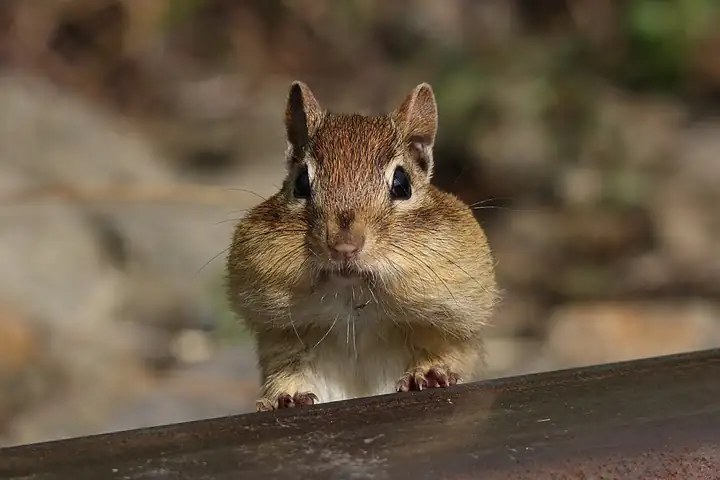
Chipmunks
Eastern chipmunk (Tamias striatus) in the East; the least chipmunk and other western chipmunks in the Rocky Mountains, western Great Plains and West
| Type | Animal |
|---|---|
| When | Spring through fall; mostly inactive in winter. |
| Pressure by region | Moderate: Northeast, Southeast, Midwest, Mountain West |
About
Small striped ground squirrels, about 5 to 6 inches long and about 3 ounces, that carry food in their cheek pouches. They dig up bulbs and planted seeds and nibble seedlings, and in the vegetable garden they go for strawberries and tomatoes.
Spotting it
Damage
Look for dug-up bulbs and seeds, bitten or missing strawberries and tomatoes, and neat 2-inch burrow holes with no pile of dirt around them. Burrows under patios, steps, walls and foundations can cause structural damage.
How to find it early
Chipmunks have stripes on the face as well as the back; ground squirrels do not. Watch beds in early morning and late afternoon, when chipmunks are most active, and look for small open holes near rock piles, outbuildings and shrub plantings.
When
Spring through fall; mostly inactive in winter.
Life cycle
Eastern chipmunks mate in early spring and again in early summer, and each litter of 2 to 5 young is born after about 31 days. They spend winter mostly inactive in their burrows, waking to eat stored food, and adults may live up to three years.
What to do, gentlest first
Start at the top. Sprays are a last step; always read and follow the product label.
Plant what they skip and reduce cover Prevent
Choose bulbs chipmunks find less tasty, such as daffodils or crocus. Avoid unbroken plantings of ground cover and shrubs that link woods to the house, and keep bird feeders 15 to 30 feet from buildings or take them down for the season.
Hardware cloth Barrier
Enclose bulb beds and vulnerable plants in 1/4-inch hardware cloth at planting time.
Trapping rules vary Trap
Pennsylvania lets landowners remove chipmunks that are causing damage, while Massachusetts makes it illegal to trap an animal and move it somewhere else. UNH Extension does not recommend live-trapping and moving chipmunks, because released animals with no burrow often die.
Keep children and pets away from set traps, and avoid direct contact with trapped chipmunks. This guide does not recommend poison baits, which put pets, children and other wildlife at risk. Trapping and relocating wildlife is regulated by state law, and the rules differ from state to state. Check with your state wildlife agency or your county Extension office before you set a trap.
Bulb repellents Repellent
Taste repellents with bittering agents or ammonium soaps of higher fatty acids can help protect bulbs, seeds and foliage.
Follow the label, use only products labeled for food crops on anything you will eat, and keep children and pets off treated areas until dry.
Plants it goes after
Pressure by region
The eastern chipmunk is common throughout the eastern United States, and the least chipmunk lives across much of the Rocky Mountain region and western Great Plains (Colorado State). No regional severity source was found, so ratings other than Alaska are estimates. Alaska is rated absent because the Alaska Department of Fish and Game says chipmunks don't range west into Alaska; the Hawaii rating is an estimate.
| Northeast | Moderate |
|---|---|
| Southeast | Moderate |
| South Central | Low |
| Midwest | Moderate |
| Great Plains | Low |
| Mountain West | Moderate |
| Southwest | Low |
| Pacific Northwest | Low |
| California | Low |
| Alaska | Not found here |
| Hawaii | Low |
Ratings come from extension sources where available; some are estimates, as noted above.
Sources
- extension.psu.edu
- extension.entm.purdue.edu
- extension.unh.edu
- umass.edu
- homegarden.cahnr.uconn.edu
- teller.extension.colostate.edu
- adfg.alaska.gov
Photo: Photo: Cephas, CC BY-SA 3.0, via Wikimedia Commons (CC BY-SA 3.0). Photo resized for the web.

Planting dates and advice are general guidance; check with your local Cooperative Extension office for your area.