
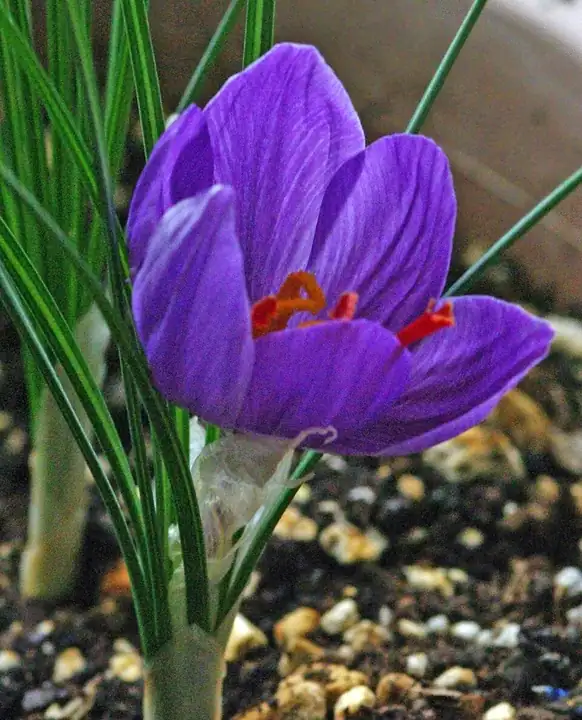
Saffron crocus
Crocus sativus · Iris family (Iridaceae)
| Hardiness zones | 4 to 8 |
|---|---|
| Sun | full sun |
| Water | low |
| Life cycle | perennial |
| Frost | Hardy: takes frost |
| Spacing | 3 to 4 inches |
About Saffron crocus
Saffron crocus is a small fall-blooming corm whose lavender flowers each hold three red-orange stigmas: the saffron spice. Planted in late summer, the corms bloom within weeks the same fall. It takes about 150 to 170 flowers to make one gram of spice. Don't confuse it with the poisonous autumn crocus (Colchicum), which also blooms in fall.
NC State lists zones 5-8; University of Vermont trials found it survives zones 4 and 5 without winter protection.
When to plant
Timing is counted from your average last spring frost (and first fall frost). Sow & Tell works out the actual dates for your ZIP code.
Plant corms in August or early September, as soon as you get them, about 3 to 6 inches deep and 3 to 4 inches apart (UVM, NC State); don't hold them until spring. They sprout in about 30 days and flower soon after. Leaves grow through winter and die back in June or July.
Soil
Light to medium, well-drained soil high in organic matter; standing water rots the corms (UVM).
Plant in light to medium, very well-drained soil high in organic matter; in a raised bed or container, a top layer of potting soil feeds the corms over the season and insulates them in winter.
Feeding
Standing water rots the corms, and corms held over until spring sprout and die; plant them in late summer.
Harvest
Each corm blooms for 1 to 2 weeks in mid to late fall. Pick flowers in the morning, after dew has dried and just before they open, then pull out the red stigmas and dry them.
Each fall the corms bloom for 1 to 2 weeks; pick flowers every morning while they last. The corms multiply, so the harvest grows over the years until clumps need dividing.
Pests to watch for
Tree squirrels, Voles, Mice (house mice and deer mice), Chipmunks, Rabbits, Deer
Diseases and problems
Root and crown rot, Corm rot in wet weather
In the kitchen
The dried red stigmas give flavor, scent and golden color to rice, fish stews such as bouillabaisse, butter, cheese, cream sauces and preserves.
Keeping it: Keep dried saffron in a glass or metal jar with a tight lid in a dark, dry place, and wait about a month before using new saffron.
Safety: Never eat a fall crocus you can't identify: the look-alike autumn crocus or meadow saffron (Colchicum) is poisonous (NC State, ASPCA). Use saffron in cooking amounts; a mouse study found high doses harmed nursing pups' kidneys and advised nursing mothers to avoid large amounts.
Pets: Saffron crocus (Crocus sativus) is not listed by the ASPCA, but its look-alike autumn crocus (Colchicum autumnale, also sold as meadow saffron) is toxic to dogs, cats and horses: bloody vomiting, diarrhea, shock, organ damage and bone marrow suppression (ASPCA).
Sources
- plants.ces.ncsu.edu
- uvm.edu
- uvm.edu
- class.ucanr.edu
- aspca.org
- pmc.ncbi.nlm.nih.gov
- aspca.org
- aspca.org
- aspca.org
Photo: Photo: Zeynel Cebeci / Wikimedia Commons, CC BY-SA 4.0 (CC BY-SA 4.0). Photo resized for the web.

Planting dates and advice are general guidance; check with your local Cooperative Extension office for your area.