
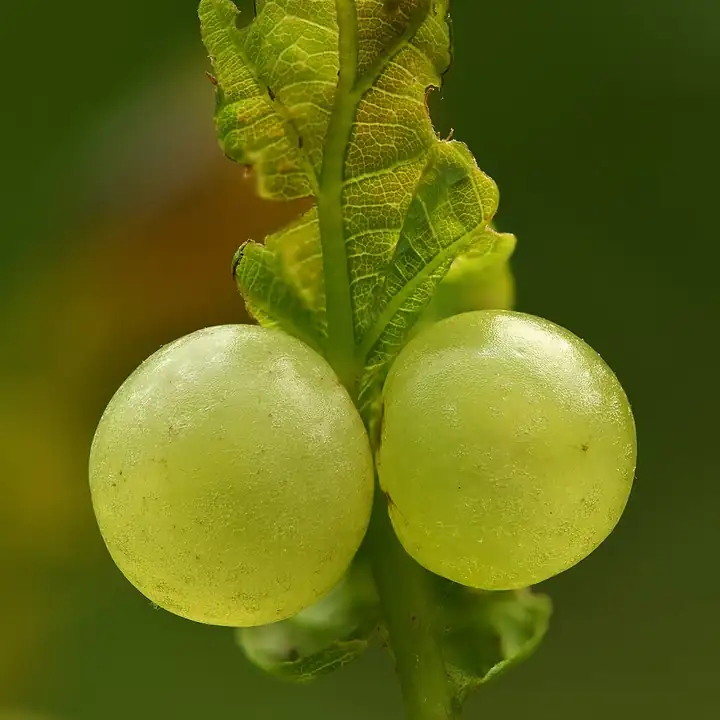
Oak galls (gall wasps)
Many tiny gall wasps, including horned oak gall wasp (Callirhytis cornigera, also written C. quercuscornigera), gouty oak gall wasp (Callirhytis quercuspunctata) and oak bullet gall wasp (Disholcaspis quercusglobulus)
| Type | Insect |
|---|---|
| When | Galls visible year-round; wasps active in spring and midsummer. |
| Pressure by region | Moderate: Northeast, Southeast, South Central, Midwest, Great Plains, California |
About
Galls are lumps, balls and swellings an oak grows around the eggs and larvae of tiny, stingless wasps (Missouri Botanical Garden). Most are just odd-looking, but a few woody twig galls, like horned and gouty oak galls on pin, red, black, scarlet, shingle and water oaks, can kill branches.
Spotting it
Damage
Light to moderate galling is mostly cosmetic. Woody twig galls up to about 2 inches across can girdle twigs and kill the growth beyond them, drop twigs in storms, and in heavy infestations cause decline; horned oak gall has killed many trees in southern Illinois (Missouri Botanical Garden, Illinois Extension). Bullet galls on white and bur oak rarely do serious harm.
How to find it early
Look for marble-like swellings on twigs, some with little horns in spring, dead twig tips beyond them, and blister-like galls along leaf veins. Squirrels chewing galls leave extra litter (Missouri Botanical Garden).
When
Galls visible year-round; wasps active in spring and midsummer.
Life cycle
Horned and gouty gall wasps alternate generations. In spring, wasps leave the woody galls and lay eggs in buds or leaf veins, where small leaf galls form; adults from those come out in midsummer, mate and lay eggs in young twigs, and the twig galls take two to three years to mature (Missouri Botanical Garden, Illinois Extension).
What to do, gentlest first
Start at the top. Sprays are a last step; always read and follow the product label.
Live with it and keep the oak healthy Prevent
Light galling needs no treatment. Water oaks in dry spells and choose oaks suited to your soil; pin oak, for example, wants acidic soil and turns yellow in alkaline Midwest soils (Missouri Botanical Garden).
Prune galls while small By hand
On small trees, cut out and destroy twig galls while they are small and rake up galls and fallen infested leaves. Bullet galls can simply be rubbed off (Illinois Extension, Missouri Botanical Garden).
Have a certified arborist look at a tree with heavy galling, thinning or falling limbs (Missouri Botanical Garden).
Natural enemies Natural enemies
Parasitic wasps and the oak gall borer, a moth larva, attack the gall wasp larvae and help keep numbers down (Missouri Botanical Garden, Illinois Extension).
Usually not worth it Conventional spray
Missouri Botanical Garden says no chemical treatment has been found effective, and Illinois Extension reports unpredictable results from bifenthrin at leaf-out or imidacloprid applied by arborists.
Both are highly toxic to bees (PNW 591). Follow the label if an arborist uses them.
Plants it goes after
Pressure by region
In Illinois, horned oak gall is common in the south of the state, gouty oak gall in the center and bullet gall in the north (Illinois Extension). Ratings elsewhere are estimates.
| Northeast | Moderate |
|---|---|
| Southeast | Moderate |
| South Central | Moderate |
| Midwest | Moderate |
| Great Plains | Moderate |
| Mountain West | Low |
| Southwest | Low |
| Pacific Northwest | Low |
| California | Moderate |
| Alaska | Low |
| Hawaii | Low |
Ratings come from extension sources where available; some are estimates, as noted above.
Sources
Photo: Photo: Ivar Leidus / Wikimedia Commons, CC BY-SA 4.0 (CC BY-SA 4.0). Photo resized for the web.

Planting dates and advice are general guidance; check with your local Cooperative Extension office for your area.