
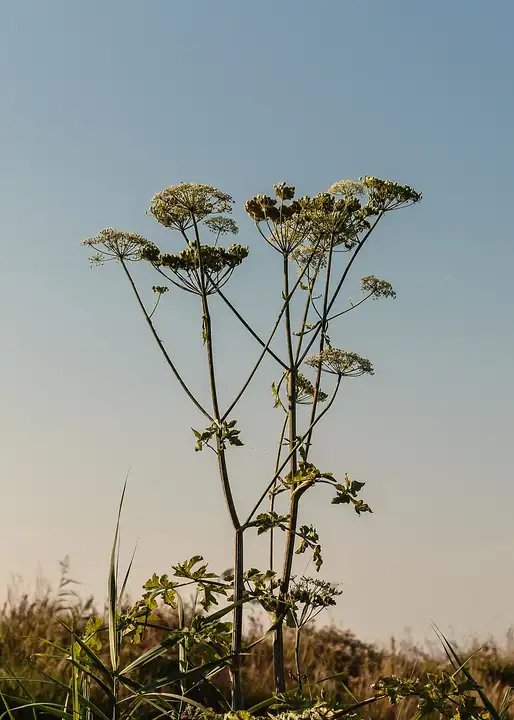
Angelica
Angelica archangelica · Carrot family (Apiaceae)
| Hardiness zones | 5 to 8 |
|---|---|
| Sun | full sun to part shade |
| Water | high |
| Life cycle | biennial |
| Frost | Hardy: takes frost |
| Soil pH | 4.5–7.3 |
| Spacing | 12 to 24 inches |
| Days to harvest | 80 to 90 days |
| Soil temperature to plant | at least 50°F |
About Angelica
Garden angelica is a tall, dramatic herb, 3 to 7 feet high, with big chartreuse leaves, hollow stems and round umbrellas of greenish-white flowers; its stems, leaves, roots and seeds all have a sweet, licorice-like flavor (NC State, UNH). It makes leaves the first year, flowers the second year and then dies after its seed ripens. Never gather angelica from the wild: it looks like deadly poison hemlock and water hemlock, which grow in the same wet places.
NC State lists zones 5-8; it likes a cool climate and wants part shade in warmer areas. Not on any U.S. invasive or noxious-weed list we found.
When to plant
Timing is counted from your average last spring frost (and first fall frost). Sow & Tell works out the actual dates for your ZIP code.
Seed needs light and a spell of cold to sprout: press it onto moist mix and barely cover it, or chill seed in the fridge 4-6 weeks before sowing about 1/4 inch deep outdoors; sprouting takes about 30 days in soil of 50-60 F (UNH). Missouri suggests sowing in fall. Move seedlings when 3-4 inches tall; UNH gives about 80-90 days to maturity.
Soil
Rich, moist, well-drained loam that never dries out; it is happy near running water (NC State, UNH, NMSU).
Work plenty of compost into deep, rich, moist loam; it needs soil that never dries out.
Feeding
- Early spring of the second year, as growth resumes: compost and a light amount of balanced fertilizer such as 10-10-10. Work a little compost and balanced fertilizer into the soil around the plants; most herbs need only moderate feeding, so follow a soil test.
Don't let the soil dry out between waterings, and wear gloves and long sleeves when cutting it, since the sap can cause a sun-triggered rash.
Harvest
Pick leaves and stalks while young and tender; growers often dig roots in the fall of the first year and cut leaves and stalks in spring of the second year (Purdue, UNH). Collect seeds when ripe in late summer or early fall; the plant dies after seeding.
Pick young leaves and stalks as you need them; roots are often dug in fall of the first year, and leaves and stalks are best in spring of the second year. The plant dies after it flowers and sets seed in year two.
In the kitchen
Young stems are candied to decorate cakes and puddings or cooked like celery; leaves go into salads, soups, stews and fish dishes; seeds and roots flavor liqueurs such as Benedictine and Chartreuse (NC State, Purdue, NMSU).
Keeping it: Use young stems and leaves soon after picking. Dried leaves keep in airtight containers in the dark; dried herbs lose quality after 2 to 3 years.
Safety: Make sure of the plant before eating: angelica is easily confused with poison hemlock (NC State) and water hemlock, which can kill (USDA ARS, University of Alaska). Its sap contains furocoumarins that can cause a sunburn-like rash on skin exposed to sunlight (NC State); Europe's medicines agency says angelica medicines shouldn't be used by children or pregnant women.
Pets: Not listed by the ASPCA (its 'Angelica Tree' entry is a different plant, Aralia spinosa).
Sources
- plants.ces.ncsu.edu
- extension.unh.edu
- hort.purdue.edu
- extension.missouri.edu
- pubs.nmsu.edu
- ema.europa.eu
- e-lactancia.org
- ankn.uaf.edu
- ars.usda.gov
- plants.ces.ncsu.edu
- aspca.org
- fieldreport.caes.uga.edu
Photo: Photo: Agnes Monkelbaan, CC BY-SA 4.0, via Wikimedia Commons (CC BY-SA 4.0). Photo resized for the web.

Planting dates and advice are general guidance; check with your local Cooperative Extension office for your area.