
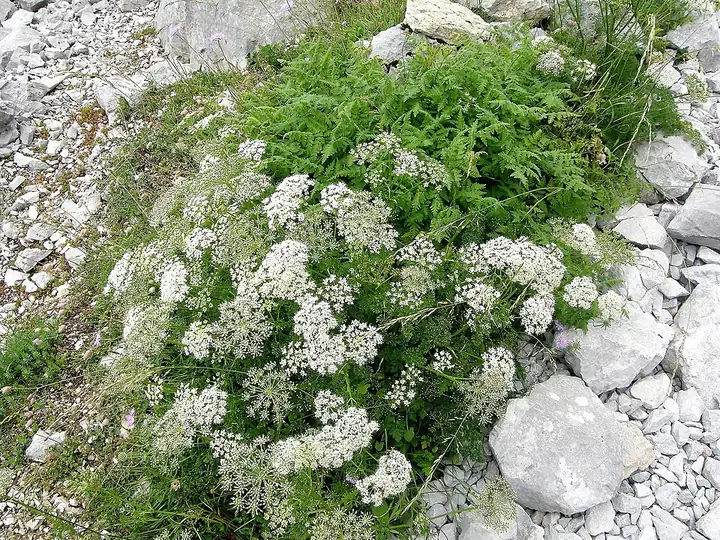
Anise
Pimpinella anisum · Carrot family (Apiaceae)
| Hardiness zones | 2 to 11 |
|---|---|
| Sun | full sun |
| Water | moderate |
| Life cycle | annual |
| Frost | Tender: killed by frost |
| Soil pH | 6.0–7.5 |
| Spacing | 6 to 10 inches |
| Days to harvest | 100 to 120 days |
| Soil temperature to plant | at least 50°F |
About Anise
Anise is a dainty annual herb whose leaves and seeds taste sweet and licorice-like. Most people grow it for the seed (aniseed), used in cookies, cakes and breads, and the young leaves make a nice garnish. It is not star anise, which is the star-shaped fruit of an unrelated tree.
Grown as a warm-season annual in every zone; sow after frost; the seed crop needs about 100 to 120 days.
When to plant
Timing is counted from your average last spring frost (and first fall frost). Sow & Tell works out the actual dates for your ZIP code.
Sow seed where it will grow once all danger of frost is past and the soil is above about 50 F; don't transplant it. Days count from seeding: about 100 to 120 days for seed, or 50 to 70 days to pick leaves (Ontario ag ministry).
Soil
Well-drained sandy to loam soil; Missouri Extension notes it likes alkaline soil.
Use well-drained sandy to loam soil (pH about 6.0 to 7.5); work in compost and base any lime or fertilizer on a soil test.
Feeding
Don't start anise indoors to transplant; sow it where it will grow after frost.
Harvest
Snip green leaves once plants are big enough. For seed, cut the heads about a month after flowering, when they turn yellow; dry them about a week, rub off the chaff, and let the seeds dry another week.
Grown for seed, anise is cut once, when the seed heads turn yellow about a month after bloom. You can snip some leaves earlier for salads and garnish.
Pests to watch for
Aphids, Leafhoppers
Diseases and problems
Root and crown rot
In the kitchen
The crushed seeds flavor cookies, cakes, breads, pastries, fruit dishes and cheese, and the leaves go into salads, soups and sauces or serve as a garnish.
Keeping it: Keep dried seed in a cool, dry, dark place. Fresh leaves keep about 10 to 14 days chilled near 32 F in high humidity.
Safety: FDA lists anise as safe as a food flavoring (NIH LactMed). Skip anise medicines in pregnancy and while breastfeeding, and avoid it if you are allergic to celery, fennel, dill, coriander or caraway (European Medicines Agency). In the wild it is easily mistaken for deadly poison hemlock (NC State).
Pets: Not listed by the ASPCA
Sources
- plants.ces.ncsu.edu
- extension.umd.edu
- extension.missouri.edu
- class.ucanr.edu
- omafra.gov.on.ca
- ncbi.nlm.nih.gov
- ema.europa.eu
- ema.europa.eu
- aspca.org
- aspca.org
- aspca.org
- hgic.clemson.edu
Photo: Photo: Guillermo César Ruiz / Wikimedia Commons, CC BY-SA 4.0 (CC BY-SA 4.0). Photo resized for the web.

Planting dates and advice are general guidance; check with your local Cooperative Extension office for your area.