
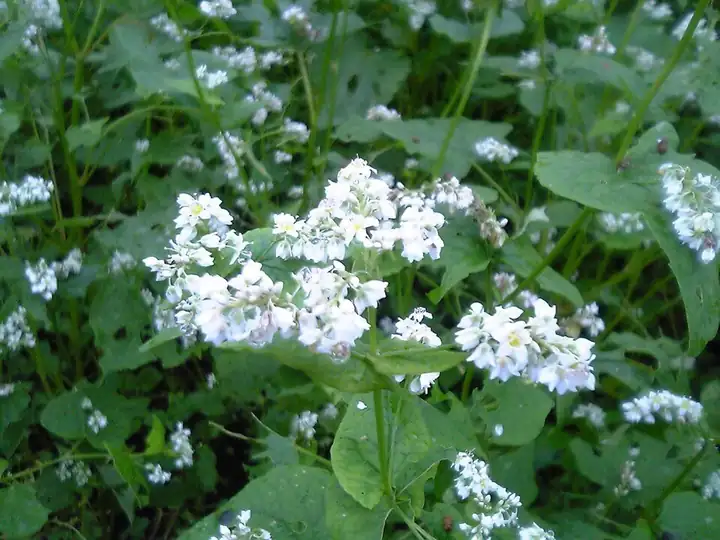
Buckwheat (flowering cover crop)
Fagopyrum esculentum · Buckwheat family (Polygonaceae)
| Hardiness zones | 6 to 12 |
|---|---|
| Sun | full sun |
| Water | moderate |
| Life cycle | annual |
| Frost | Tender: killed by frost |
About Buckwheat (flowering cover crop)
Buckwheat is a fast summer cover crop that blooms about three weeks after sowing and keeps flowering for weeks. Its small white flowers feed honey bees and many pest-eating insects, including hover flies, lady beetles, minute pirate bugs and tachinid flies, and it smothers weeds. Turn it under soon after it starts blooming, or it drops seed and becomes a weed.
A frost-tender summer annual sown after the last frost; NC State lists zones 6-12. It is not listed as invasive, but SARE warns it can become a weed if seeds ripen.
When to plant
Timing is counted from your average last spring frost (and first fall frost). Sow & Tell works out the actual dates for your ZIP code.
Sow after all danger of frost; seed sprouts in 3-5 days (SARE, NC State). Flowering can begin within three weeks of sowing and run up to 10 weeks, and the whole cycle takes 70-90 days. Buckwheat is not frost or drought tolerant.
Soil
Light to medium, well-drained soil such as sandy loam or loam; it does well in low-fertility soil but poorly in very limy soil (SARE, NC State).
Sow into a loose, well-drained seedbed; buckwheat does well in low-fertility soil and does not need fertilizer (NC State, SARE).
Feeding
Letting seeds ripen turns it into a weed; mow or turn it under within 7-10 days after bloom starts (SARE).
Harvest
Let it bloom to feed bees and beneficial insects, then mow or turn it under within 7-10 days after flowering starts, before the first seeds harden and turn brown (SARE). Grain growers harvest the seeds instead.
Pests to watch for
Tarnished plant bug
Diseases and problems
Leaf spot, Rhizoctonia root rot
In the kitchen
The dehulled seeds (groats) are cooked and eaten as a grain (NC State).
Keeping it: Keep dry, dehulled groats and flour airtight in a cool, dark place, and use within about 6 months to a year; flour keeps best in the fridge or freezer. Cooked groats last about 5 days in the fridge.
Safety: Buckwheat contains fagopyrin, which can cause a skin rash after eating it and then being in sunlight in susceptible people (NC State).
Pets: Toxic to dogs, cats and horses (ASPCA): fagopyrin can cause sunburn-like skin damage and dermatitis (photosensitization).
Sources
Photo: Photo: Koba-chan, CC BY 2.5, via Wikimedia Commons (CC BY 2.5). Photo resized for the web.

Planting dates and advice are general guidance; check with your local Cooperative Extension office for your area.