
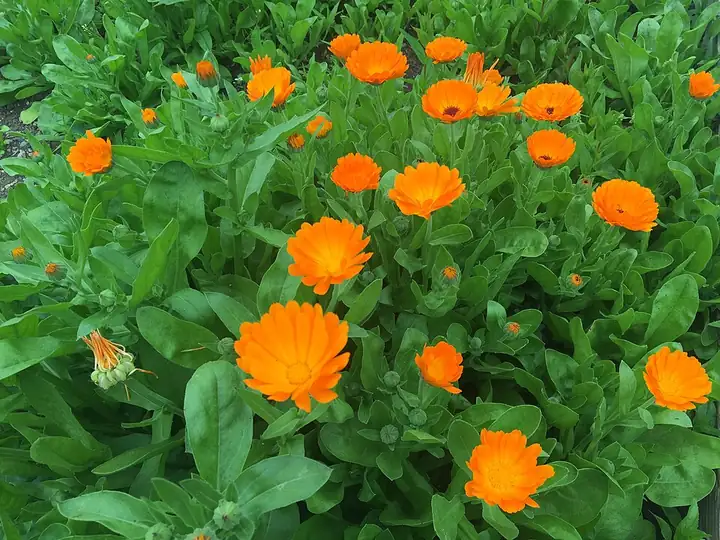
Calendula (pot marigold)
Calendula officinalis · Daisy family (Asteraceae)
| Hardiness zones | 2 to 11 |
|---|---|
| Sun | full sun to part shade |
| Water | moderate |
| Life cycle | annual |
| Frost | Half-hardy: takes a light frost |
About Calendula (pot marigold)
Calendula is a cool-season annual with orange and yellow daisy-like flowers whose petals are edible. Despite the name pot marigold, it is a different plant from the Tagetes marigolds, and it has a long history of use on the skin.
Grown as an annual in every zone (NC State lists 2-11); it sulks in summer heat and often perks up again in fall.
When to plant
Timing is counted from your average last spring frost (and first fall frost). Sow & Tell works out the actual dates for your ZIP code.
- Start seeds indoors: 6 to 8 weeks before the last frost
- Set out plants: up to 1 weeks after the last frost
- Sow seeds outdoors: up to 1 weeks before the last frost
Start seed indoors 6-8 weeks before the last frost and set plants out just after it, or sow directly just before the last frost date. Cover seed 1/4 to 1/2 inch deep because light slows germination; seedlings appear in 5-15 days. It often reseeds.
Soil
Adapts to clay, loam or sandy soil with good drainage; does poorly in drought and hot weather.
Follow a soil test; work in no more than 1 inch of well-rotted compost per 100 sq ft. Calendula likes well-drained, moderately rich soil with a pH of 6 to 7.
Feeding
- about once a month through the growing season: complete water-soluble fertilizer. Give a light feeding about monthly, following the label rate, to keep plants blooming.
Plants flower best when they are not heavily fertilized.
Harvest
Pick flowers as they open and deadhead often for more blooms; pinch young plants to make them bushier.
Varieties (19)
| Variety | Type | Days | Notes |
|---|---|---|---|
| Bon Bon | Pot marigold (Calendula officinalis) | Petals are edible; NC State describes calendula flowers as slightly bitter, tangy and peppery (not a variety-specific note). Uniformly compact 12 in plants with 2.5-3 in flowers in apricot, yellow and orange. | |
| Citrus Cocktail | Pot marigold (Calendula officinalis) | Petals are edible; NC State describes calendula flowers as slightly bitter, tangy and peppery (not a variety-specific note). Dwarf, compact plants with orange and yellow flowers. | |
| Coronet | Pot marigold (Calendula officinalis) | Petals are edible; NC State describes calendula flowers as slightly bitter, tangy and peppery (not a variety-specific note). Calendula noted for better heat tolerance. | |
| Erfurter Orangefarbige | Pot marigold (Calendula officinalis) | Petals are edible; NC State describes calendula flowers as slightly bitter, tangy and peppery (not a variety-specific note). Orange-flowered calendula with a high resin content. | |
| Flashback Mix | Pot marigold (Calendula officinalis) | Petals are edible; NC State describes calendula flowers as slightly bitter, tangy and peppery (not a variety-specific note). Mostly double and semi-double flowers in pastel and bright shades, with burgundy on the petal backs. | |
| Golden Princess | Pot marigold (Calendula officinalis) | Petals are edible; NC State describes calendula flowers as slightly bitter, tangy and peppery (not a variety-specific note). Golden flowers with black centers. | |
| Greenheart Orange | Pot marigold (Calendula officinalis) | Petals are edible; NC State describes calendula flowers as slightly bitter, tangy and peppery (not a variety-specific note). Orange petals around a green center. | |
| Indian Prince | Pot marigold (Calendula officinalis) | Petals are edible; NC State describes calendula flowers as slightly bitter, tangy and peppery (not a variety-specific note). 14-24 in plants with 2-3 in dark orange flowers edged dark red, red undersides and a dark center. | |
| Kablouna Mix | Pot marigold (Calendula officinalis) | Petals are edible; NC State describes calendula flowers as slightly bitter, tangy and peppery (not a variety-specific note). About 20 in tall with short petals around a large, quilled center in white, yellow, orange and apricot. | |
| Neon | Pot marigold (Calendula officinalis) | Petals are edible; NC State describes calendula flowers as slightly bitter, tangy and peppery (not a variety-specific note). Double flowers in vivid red-orange. | |
| Orange Porcupine | Pot marigold (Calendula officinalis) | Petals are edible; NC State describes calendula flowers as slightly bitter, tangy and peppery (not a variety-specific note). About 24 in tall with 2.5-3.5 in double, quilled bright orange flowers. | |
| Orange Salad | Pot marigold (Calendula officinalis) | Petals are edible; NC State describes calendula flowers as slightly bitter, tangy and peppery (not a variety-specific note). Orange flowers grown for kitchen use. | |
| Pacific Beauty | Pot marigold (Calendula officinalis) | Petals are edible; NC State describes calendula flowers as slightly bitter, tangy and peppery (not a variety-specific note). Tall-stemmed series about 18 in with flowers in yellow, orange and apricot. | |
| Pink Surprise | Pot marigold (Calendula officinalis) | Petals are edible; NC State describes calendula flowers as slightly bitter, tangy and peppery (not a variety-specific note). 20-24 in plants with light orange to apricot flowers tinged pink and deep apricot centers. | |
| Powerdaisy series | Pot marigold (Calendula officinalis) | Petals are edible; NC State describes calendula flowers as slightly bitter, tangy and peppery (not a variety-specific note). Long-blooming, sterile plants grown from cuttings; colors include 'Buttermilk', 'Mango', 'Sunny' and 'Tango'. | |
| Radio | Pot marigold (Calendula officinalis) | Petals are edible; NC State describes calendula flowers as slightly bitter, tangy and peppery (not a variety-specific note). Semi-double orange flowers with notched petal edges. | |
| Resina | Pot marigold (Calendula officinalis) | Petals are edible; NC State describes calendula flowers as slightly bitter, tangy and peppery (not a variety-specific note). Yellow or orange flowers with a high resin content. | |
| Sherbet Fizz | Pot marigold (Calendula officinalis) | Petals are edible; NC State describes calendula flowers as slightly bitter, tangy and peppery (not a variety-specific note). Buff flowers with red-tipped petals and dark red undersides. | |
| Touch of Red | Pot marigold (Calendula officinalis) | Petals are edible; NC State describes calendula flowers as slightly bitter, tangy and peppery (not a variety-specific note). About 14 in tall with 2 in double flowers in yellow, orange and cream tinged red; petal backs deep mahogany-red. |
Pests to watch for
Aphids, Slugs, Whiteflies
Diseases and problems
Powdery mildew, Cucumber mosaic virus, Gray mold (Botrytis), Sooty mold
In the kitchen
Petals and leaves are edible; petals add color to soups, rice and custards and were a traditional cheese colorant.
Keeping it: Pick edible flowers the day you use them; if you must hold them, keep them in a plastic bag in the fridge for a day or so.
Safety: Calendula can cause allergic reactions; avoid it if you are allergic to daisy-family plants such as ragweed. MSKCC advises not taking calendula if pregnant or breastfeeding.
Pets: Not toxic to dogs or cats (ASPCA, 'Garden Marigold' / pot marigold, Calendula officinalis)
Sources
Photo: Photo: Betty Cai, CC BY-SA 4.0, via Wikimedia Commons (CC BY-SA 4.0). Photo resized for the web.

Planting dates and advice are general guidance; check with your local Cooperative Extension office for your area.