
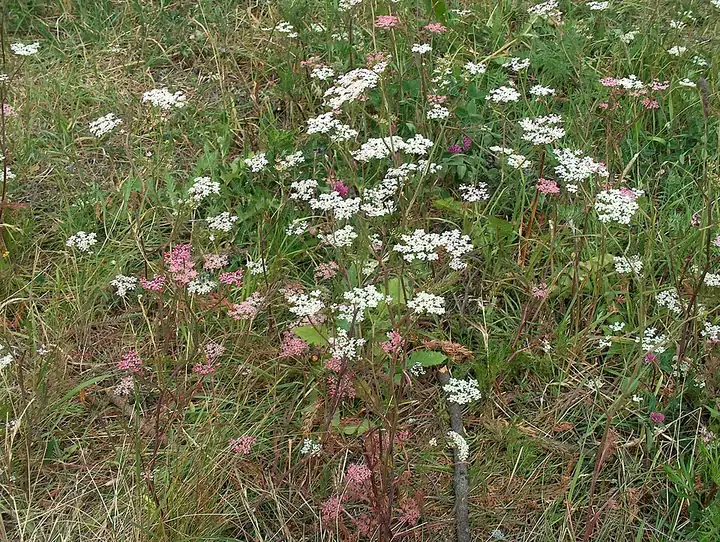
Caraway
Carum carvi · Carrot family (Apiaceae)
| Hardiness zones | 4 to 9 |
|---|---|
| Sun | full sun |
| Water | moderate |
| Life cycle | biennial |
| Frost | Hardy: takes frost |
| Soil pH | 4.8–7.6 |
| Spacing | 8 to 12 inches |
About Caraway
Caraway is a biennial grown for its warm, aromatic seeds, the flavor in rye bread and coleslaw. The first year it makes a low, carrot-like clump of leaves; the second year it sends up white flower umbrellas and sets seed. It reseeds freely, and wild caraway is a List B noxious weed in Colorado, where state law requires it to be managed to stop its spread.
NC State lists zones 4-9; mulch the roots for winter so plants survive to flower the second year. In Colorado it is a state-listed noxious weed (List B).
When to plant
Timing is counted from your average last spring frost (and first fall frost). Sow & Tell works out the actual dates for your ZIP code.
Sow seed where it will grow in spring or fall; the deep taproot hates being moved. Seed sprouts slowly, so keep the bed moist. Plants usually bear seed the year after sowing, not the first year.
Soil
Well-drained soil rich in organic matter, kept evenly moist; NC State lists a pH of 4.8 to 7.6.
Use well-drained soil with plenty of organic matter; work in compost and base any lime or fertilizer on a soil test.
Feeding
Don't move plants (the long taproot resents it), and don't let the seedbed dry out while the slow seed is sprouting.
Harvest
Pick leaves as needed and dig a few roots while they are young in the first year. Seeds ripen about a month after the second-year flowers, when they turn from green to grayish brown; cut the heads, dry them in a paper bag and rub the seeds loose.
Seeds are cut once, in the second summer, when the heads turn brown. In the first year you can pick some leaves and dig a few young roots.
Pests to watch for
Carrot rust fly, Aphids
Diseases and problems
Anthracnose, White mold
In the kitchen
The seeds flavor rye and other breads, cakes, cheese, slaw, potatoes and stews; young leaves go into salads and soups or are cooked like spinach, and young roots can be boiled like parsnips.
Keeping it: Make sure seeds are completely dry before you store them.
Safety: Caraway seed is a common food spice; Europe's medicines agency reported no known side effects from caraway medicines. People allergic to carrot-family plants (fennel, anise, celery, coriander, dill) or to mugwort or birch should avoid it.
Pets: Toxic to dogs, cats and horses (ASPCA): its oils (carvone and limonene) can cause mild vomiting and diarrhea.
Sources
- plants.ces.ncsu.edu
- extension.illinois.edu
- extension.umd.edu:443
- extension.missouri.edu
- class.ucanr.edu
- ema.europa.eu
- aspca.org
- ag.colorado.gov
- gilpin.extension.colostate.edu
Photo: Photo: Anneli Salo / Wikimedia Commons, CC BY-SA 3.0 (CC BY-SA 3.0). Photo resized for the web.

Planting dates and advice are general guidance; check with your local Cooperative Extension office for your area.