
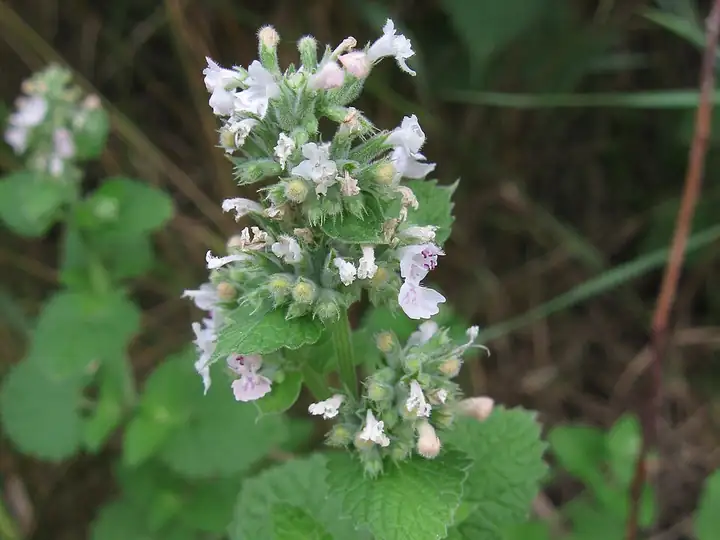
Catnip
Nepeta cataria · Mint family (Lamiaceae)
| Hardiness zones | 3 to 9 |
|---|---|
| Sun | full sun to part shade |
| Water | low |
| Life cycle | perennial |
| Frost | Hardy: takes frost |
| Spacing | 18 inches |
About Catnip
Catnip is a hardy, mint-family perennial with soft, gray-green, heart-shaped leaves and spikes of small pale flowers. People grow it for a minty herbal tea and to delight their cats. It spreads fast: West Virginia's DNR ranks it as occasionally invasive and Kentucky's exotic pest plant council lists it as a moderate threat (advisory lists, not bans), so a pot is a good home for it. Garden catmint (Nepeta x faassenii) is a different plant.
NC State lists zones 3-9; in hot, humid summers it does better with some afternoon shade.
When to plant
Timing is counted from your average last spring frost (and first fall frost). Sow & Tell works out the actual dates for your ZIP code.
Sow seed in spring, or start new plants from stem-tip cuttings or divisions. Plants grow about 3 feet tall and wide; cats love to roll on young plants, so cage them with chicken wire or grow them in a hanging basket until they're big.
Soil
Any well-drained soil, from sand to clay; it handles dry, rocky ground once rooted (NC State).
Any well-drained soil works; most herbs don't need rich soil, so base any lime or fertilizer on a soil test.
Feeding
Very fertile soil gives lush leaves with less flavor; divide older, untidy clumps and cut plants back in spring as new growth starts.
Harvest
Leaves have the most flavor and scent when the plant is in full bloom. Cut stems and hang them in a cool, airy place to dry. Shearing after the first flush of flowers brings more blooms, and cutting back keeps plants compact.
Cut stems when plants are in full bloom, when the scent is strongest. Shearing after the first flush of flowers brings new growth and more blooms.
Varieties (1)
Catnip is almost always sold as the plain species. Illinois Extension describes one named form, lemon catnip. Catmints such as 'Walker's Low' (Nepeta x faassenii) are a different plant and are not listed here.
| Variety | Type | Days | Notes |
|---|---|---|---|
| Lemon catnip | Scented form | Leaves have a clear lemon scent. |
In the kitchen
The leaves make an herbal tea and can season soups, stews, sauces, pasta and vegetables; the flowers are edible too.
Safety: The sources we checked give no research-based guidance on catnip in pregnancy, with medicines or for allergies. As with other herbal teas, don't give it to babies or young children without a doctor's advice.
Pets: Toxic to cats (ASPCA): it can cause vomiting and diarrhea, and it makes some cats sleepy and others wound up. The ASPCA gives no listing for dogs or horses.
Sources
- plants.ces.ncsu.edu
- extension.illinois.edu
- extension.missouri.edu
- hgic.clemson.edu
- class.ucanr.edu
- aspca.org
- wvdnr.gov
- gardenclubky.org
Photo: Photo: Cbaile19 / Wikimedia Commons, CC0 (CC0). Photo resized for the web.

Planting dates and advice are general guidance; check with your local Cooperative Extension office for your area.