
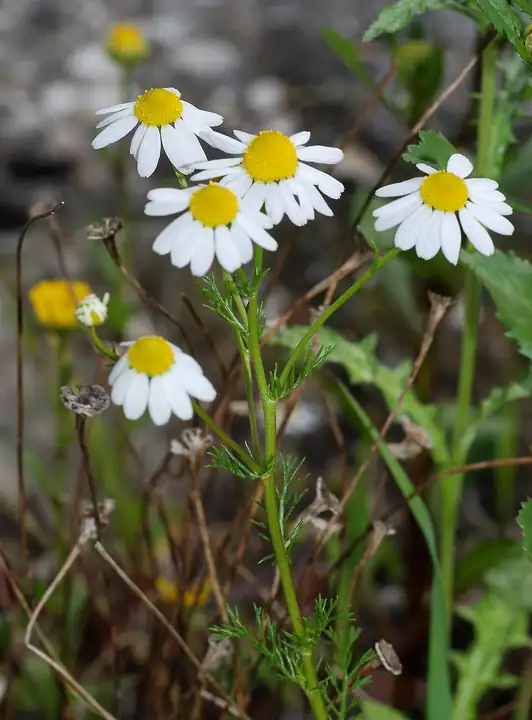
Chamomile (German)
Matricaria chamomilla (German chamomile); Roman chamomile is Chamaemelum nobile · Daisy family (Asteraceae)
| Hardiness zones | 2 to 11 |
|---|---|
| Sun | full sun |
| Water | low |
| Life cycle | annual |
| Frost | Half-hardy: takes a light frost |
| Soil pH | 6.0–7.5 |
About Chamomile (German)
German chamomile is a small, airy annual with apple-scented, daisy-like flowers that are dried for tea. It blooms from early summer into fall and often reseeds itself.
Grown as an annual in every zone; seed that drops in late summer can come back the next year.
When to plant
Timing is counted from your average last spring frost (and first fall frost). Sow & Tell works out the actual dates for your ZIP code.
- Start seeds indoors: 6 to 8 weeks before the last frost
- Sow seeds outdoors: up to 1 weeks before the last frost
Seed needs light to sprout, so press it onto the surface. It does not transplant well, so start it indoors in individual pots or sow outdoors just before the last frost.
Soil
Loam or sandy soil that is well drained, moist to dry; it tolerates poor soil but not heavy, rich or wet ground.
Plant in full sun and well-drained, sandy or loamy soil; chamomile grows well in poor soil, so no extra fertilizer is needed.
Feeding
Avoid rich, heavy or wet soil; chamomile does not need much fertilizer.
Harvest
Pick the flowers as they open; plants bloom from about June through October.
Varieties (4)
Extension sources describe German and Roman chamomile but few cultivars; Wisconsin notes improved high-oil cultivars exist but are rarely available to gardeners. Only 2 named cultivars ('Bodegold', 'Bona') were found in a university trial.
| Variety | Type | Days | Notes |
|---|---|---|---|
| Bodegold | German chamomile | More upright than 'Bona' and blooms later. | |
| Bona | German chamomile | The first to flower each year and less upright than 'Bodegold'. | |
| German chamomile | German chamomile (Matricaria chamomilla) | Flowers are dried for tea. Airy cool-season annual 6-24 inches tall with small white-and-yellow daisy flowers; reseeds itself. | |
| Roman chamomile | Roman chamomile (Chamaemelum nobile) | Apple-scented leaves; tea is more bitter than German chamomile. Low, evergreen perennial that creeps and roots as it spreads; used as a groundcover. |
Pests to watch for
Aphids
Diseases and problems
Powdery mildew
In the kitchen
The flowers are brewed into herbal tea.
Keeping it: Use fresh flowers the day you pick them, or dry them and keep them in an airtight jar in a cool, dark spot for about a year.
Safety: It is a daisy-family plant: people allergic to ragweed, chrysanthemums, marigolds or daisies are more likely to react. Interactions with warfarin and some liver-processed drugs have been reported, and little is known about use in pregnancy (NCCIH).
Pets: Toxic to dogs, cats and horses (ASPCA, listed as Roman chamomile): can cause skin irritation, vomiting, diarrhea and allergic reactions, and long-term eating can lead to bleeding problems
Sources
Photo: Photo: Alvesgaspar, CC BY-SA 3.0, via Wikimedia Commons (CC BY-SA 3.0). Photo resized for the web.

Planting dates and advice are general guidance; check with your local Cooperative Extension office for your area.