
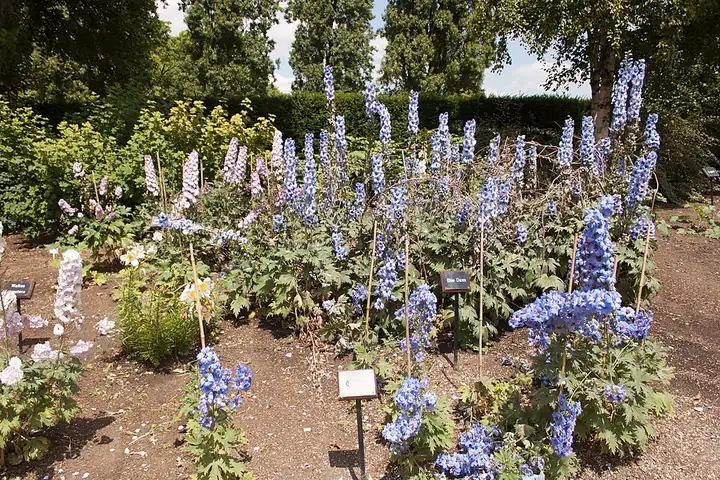
Delphinium
Delphinium elatum hybrids (garden delphiniums), D. x belladonna and Chinese delphinium (D. grandiflorum) · Buttercup family (Ranunculaceae)
| Hardiness zones | 3 to 7 |
|---|---|
| Sun | full sun |
| Water | moderate |
| Life cycle | perennial |
| Frost | Hardy: takes frost |
About Delphinium
Delphiniums are the tall blue spires of the cottage garden, with spurred flowers packed onto spikes up to 6 ft tall in early summer (NC State, Iowa State). Most garden plants are D. elatum hybrids; Belladonna and Chinese delphiniums are shorter and bushier. They love cool summers, are short-lived (often just 2-3 years), need staking, and all parts are poisonous. Annual larkspur is a close cousin with its own entry.
Garden delphiniums are hardy in zones 3-7 and are hard to grow in humid summers south of zone 7 (NC State); give them afternoon shade in hot areas. Chinese delphinium was bred to take more heat.
When to plant
Timing is counted from your average last spring frost (and first fall frost). Sow & Tell works out the actual dates for your ZIP code.
Plant nursery plants in early spring after the killing frosts, or in fall at least 6 weeks before hard freezes, with the crown level with the soil (Clemson). Put stakes in early so they don't damage roots later (Iowa State). Pacific Giant types are usually grown from seed, so colors vary (Nebraska Extension). We found no sourced day count from seed to first bloom.
Soil
Fertile, humus-rich, well-drained soil in a spot sheltered from strong wind; soggy soil or planting too deep leads to crown rot. It tolerates neutral to alkaline soil (NC State, Nebraska Extension).
Dig in plenty of organic matter for fertile, humus-rich, well-drained soil (Nebraska Extension), and test the soil.
Feeding
- Early spring as new growth starts: balanced fertilizer such as 10-10-10. Iowa State and Nebraska Extension call delphiniums heavy feeders; spread at the label rate around the plant, keep it off the crown and water in, following a soil test.
- Right after the first bloom, when you cut the old stalks back: liquid fertilizer. MSU suggests a spot feeding with liquid fertilizer for plants cut back for a second bloom; Iowa State says a second feeding later in the season helps.
Don't feed in late summer or early fall, when soft new growth won't harden before winter (MSU). Stunted, yellowing plants usually need more food (Iowa State).
Harvest
Most hybrids bloom early to midsummer. Right after flowering, cut the old stalk down to the leaves at the base, and many plants send up a smaller second round in late summer or early fall (Iowa State, NC State). For the vase, cut spikes when about half the florets are open; they last about 6-8 days (Oklahoma State, Nebraska Extension). To dry them, cut when about four-fifths are open, strip the leaves and hang small bunches upside down in a dark, airy place.
Varieties (17)
| Variety | Type | Days | Notes |
|---|---|---|---|
| Belladonna delphinium (D. x belladonna) | Belladonna hybrid (D. elatum x D. grandiflorum) | Several stems 3-4 ft tall with single, cup-shaped flowers; blooms midsummer to fall. | |
| Blue Butterfly | Chinese delphinium (D. grandiflorum) | Compact, 12-18 in, deep ultramarine blue; more heat tolerant than other delphiniums. | |
| King Arthur | D. elatum | Red-purple flowers with a creamy white center. | |
| Black Knight | D. elatum hybrid | Dark blue-purple flowers with a darker center. | |
| Bluebird | D. elatum hybrid | Double blue flowers about 3 inches across with a white center. | |
| Centurion series | D. elatum hybrid | About 3 ft, upright stems, semi-double flowers. | |
| Galahad | D. elatum hybrid | Pure white flowers with a white center. | |
| Million Dollar series | D. elatum hybrid | 2.5-3 ft with sturdy stems and semi-double to double flowers; very heat tolerant. | |
| New Millennium series | D. elatum hybrid | 3-4 ft, in many colors. | |
| Magic Fountains | D. elatum hybrid, medium | 2.5-3 ft; white, white with a dark center, dark blue, sky blue and pink. | |
| Connecticut Yankee series | D. elatum hybrid, short | 2-2.5 ft, heavily branched, many colors. | |
| Dwarf Pacific hybrids | D. elatum hybrid, short | About 2 ft tall. | |
| Mid-century hybrids | D. elatum hybrid, tall | 4-5 ft with stronger stems than other tall types and more resistance to powdery mildew. | |
| Pacific Giant series | D. elatum hybrid, tall | 3-6 ft; usually grown from seed, so colors vary. | |
| Finsteraarhorn | D. elatum, medium | Dark indigo-blue flowers with a black center; wind resistant. | |
| Summer Cloud | Short delphinium (grouped with Belladonna types by Nebraska Extension) | Deep blue with a white eye, 10-12 in. | |
| Summer Nights | Short delphinium (grouped with Belladonna types by Nebraska Extension) | Midnight blue, 10-12 in. |
Pests to watch for
Slugs, Brown garden snail, Aphids, Leafminers, Twospotted spider mite
Diseases and problems
Powdery mildew, Crown rot, Leaf spot, Botrytis blight, Stem rot, Cucumber mosaic
In the kitchen
Safety: All parts are poisonous (Iowa State, Nebraska Extension). NC State rates it high severity: alkaloids such as delphinine can burn the mouth, cause severe vomiting and diarrhea, muscle weakness, a weak pulse, convulsions and breathing paralysis. Handling it can irritate skin, so wear gloves (NC State). Keep it away from small children.
Pets: Toxic to dogs, cats and horses (ASPCA, listed as larkspur, Delphinium species): diterpene alkaloids can cause drooling, colic, constipation, muscle tremors and weakness, collapse, convulsions, and death from heart failure or breathing paralysis.
Sources
- plants.ces.ncsu.edu
- plants.ces.ncsu.edu
- plants.ces.ncsu.edu
- yardandgarden.extension.iastate.edu
- lancaster.unl.edu
- hgic.clemson.edu
- extension.okstate.edu
- aspca.org
- extension.rutgers.edu
- homesoiltest.msu.edu
Photo: Photo: Captain-tucker / Wikimedia Commons, CC BY-SA 4.0 (CC BY-SA 4.0). Photo resized for the web.

Planting dates and advice are general guidance; check with your local Cooperative Extension office for your area.